Olivier v. City of Brandon, Mississippi
Petitioner Gabriel Olivier · Respondent City of Brandon, Mississippi, et al.
- Reporter
- 607 U.S. ___ (2026)
- From
- United States Court of Appeals for the Fifth Circuit
- How it got here
- writ of <i>certiorari</i>
Does Heck v. Humphrey bar Section 1983 claims for purely prospective relief when the plaintiff has already been punished under the challenged law, and does that bar apply even if the plaintiff lacked access to federal habeas relief?
Question before the CourtWhat happened
Gabriel Olivier was an evangelical Christian who regularly preached in public using signs and loudspeakers to convey religious messages. Between 2018 and 2019, he evangelized several times outside the Brandon Amphitheater, a city-owned venue in Brandon, Mississippi. In 2019, the city enacted an ordinance requiring protestors during live events to remain in a designated protest area, restricting use of loudspeakers and prohibiting non-handheld signs. In May 2021, Olivier returned to the Amphitheater during a concert to preach and was ordered by the police chief to move to the protest area. After briefly complying, Olivier returned to a more populated area, resulting in a citation for violating the ordinance. He pleaded no contest in municipal court, paid a fine, and did not appeal the conviction. Olivier then filed a lawsuit in the U.S. District Court for the Southern District of Mississippi, seeking damages and an injunction to prevent future enforcement of the ordinance, arguing it violated his First and Fourteenth Amendment rights. The district court held that his claims were barred by the doctrine established in Heck v. Humphrey because success on them would necessarily imply the invalidity of his still-standing conviction. The U.S. Court of Appeals for the Fifth Circuit affirmed, modifying the dismissal to be with prejudice only until the conditions set by Heck were met.
Unanimous.
All nine justices agreed on the outcome. Concurrences may differ on reasoning, but the Court spoke with one voice on the judgment.
The opinions 1
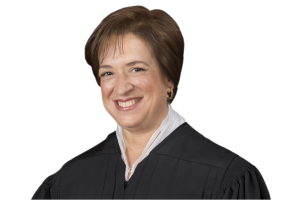
Elena Kagan
Joined by Roberts, Thomas, Alito, Sotomayor, Gorsuch, Kavanaugh, Barrett, and Jackson.
The holding
A person previously convicted under a law may use 42 U.S.C. § 1983 to seek a court order blocking that law's future enforcement, even if winning the lawsuit would implicitly show the prior conviction was unconstitutional. Justice Elena Kagan authored the 9-0 majority opinion. The so-called Heck bar—a legal rule from Heck v. Humphrey (1994) that blocks § 1983 suits seeking to undermine a prior criminal conviction—exists for a specific, limited reason: to prevent people from using civil rights lawsuits as a backdoor way to attack their past convictions and obtain release from custody or money damages. Heck targets suits that look backward, forcing courts to relitigate whether a prior conviction was valid. A lawsuit seeking only a forward-looking injunction—as here—does none of those things. It does not ask a court to reverse, erase, or compensate for any past conviction. It creates no competing legal proceedings about past conduct, and it risks no contradictory judgments about what already happened. The concerns that Heck was designed to address simply do not arise. The City of Brandon argued that Heck should still apply because a successful lawsuit would implicitly show that Olivier's prior conviction was wrong—and Heck language bars suits that “necessarily imply the invalidity” of a prior conviction. That reading stretches Heck too far. General language in a judicial opinion must be read in the context of the facts that produced it, and Heck arose from a prisoner seeking money damages tied directly to his allegedly wrongful conviction. Beyond that, the City’s reading produces an absurd result: under its logic, any citizen—even one with no prior conviction—could be blocked from challenging the ordinance, simply because winning would cast doubt on Olivier’s old case. That cannot be right. A purely forward-looking injunction does not collaterally attack a prior conviction; it only prevents future ones, and § 1983 is the proper vehicle for exactly that kind of claim.
Argued by
- Allyson N. Ho for the Petitioner
- G. Todd Butler for the Respondents
- Ashley Robertson for the United States, as amicus curiae, supporting vacatur
Case path
- Jul 3, 2025 granted
- Dec 3, 2025 argued
- Mar 20, 2026 decided