Hamm v. Smith
Petitioner John Q. Hamm, Commissioner, Alabama Department of Corrections · Respondent Joseph Clifton Smith
- From
- United States Court of Appeals for the Eleventh Circuit
- How it got here
- writ of <i>certiorari</i>
When a capital defendant has taken multiple IQ tests with varying results, how should courts evaluate the cumulative effect of those scores to determine whether the defendant has significantly subaverage intellectual functioning under Atkins v. Virginia?
Question before the CourtWhat happened
Joseph Clifton Smith was convicted of capital murder and sentenced to death in Alabama. Years later, Smith filed a federal habeas corpus petition under 28 U.S.C. § 2254, seeking to overturn his death sentence on grounds that he is intellectually disabled and therefore cannot be executed under the Eighth and Fourteenth Amendments. The central issue in Smith’s case involved determining whether he met the three-prong test for intellectual disability: significantly subaverage intellectual functioning, significant deficits in adaptive behavior, and manifestation of these qualities before age 18. Smith's IQ testing revealed multiple scores—72, 74, 75, 74, and 78—that fell within or near the range associated with intellectual disability when accounting for standard error of measurement. His experts testified that four of his five scores were consistent with mild intellectual disability, while the state’s expert, Dr. King, argued that Smith’s multiple scores placed him in the borderline range just above intellectual disability. After extensive evidentiary hearings featuring competing expert testimony about both Smith’s IQ scores and his adaptive functioning deficits, the district court found Smith intellectually disabled. The U.S. District Court for the Southern District of Alabama granted Smith’s habeas petition and vacated his death sentence. The U.S. Court of Appeals for the Eleventh Circuit affirmed this decision, but the Supreme Court granted certiorari and remanded the case, asking the Eleventh Circuit to clarify whether its ruling relied solely on the lower end of Smith's IQ score range or on a holistic analysis of all evidence. On remand, the Eleventh Circuit explained that its reasoning was based on a holistic analysis.
2–0.
A narrow margin — the Court split hard on this one. Read the concurrences carefully.
The opinions 3
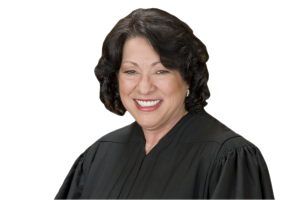
Sonia Sotomayor
Joined by Jackson.
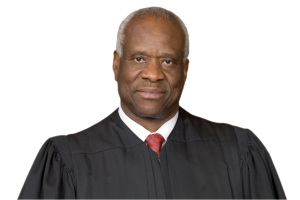
Clarence Thomas
Joined by Roberts and Gorsuch.

Samuel A. Alito Jr.
Joined by Roberts and Gorsuch.
The holding
The Court dismissed the case as improvidently granted (meaning the Court concluded, after accepting the case, that it was not the right vehicle to decide the question) in a 5-4 per curiam (unsigned) opinion. Justice Sonia Sotomayor, joined by Justice Ketanji Brown Jackson, concurring, argued the case was an inappropriate vehicle for new guidance because the precise methodology question was never raised below, all parties agreed no single mandatory formula exists, and the lower courts' holistic approach was fully consistent with prior precedent, medical consensus, and Alabama state law. Justice Samuel Alito, joined by Justice Clarence Thomas in full and by Chief Justice John Roberts and Justice Neil Gorsuch as to Parts I, III, and IV, dissenting, argued the Court should have provided workable rules for evaluating multiple IQ scores, offered three psychometrically sound approaches (composite scoring, median, and expert central-tendency judgment), and contended that the lower courts' reliance on the lowest score's error range and on adaptive-functioning evidence to deflate IQ estimates violated both statistics and the Court's holdings in Hall v. Florida and Moore v. Texas. Justice Thomas, dissenting, argued that Atkins v. Virginia should be overruled entirely because it has no basis in the Eighth Amendment's original meaning, the common-law protection it invokes applied only to people with far more severe cognitive disabilities than those protected by Atkins, and the doctrine has proven unworkable.
Argued by
- Robert M. Overing for the Petitioner
- Harry Graver for the United States, as amicus curiae, supporting the Petitioner
- Seth P. Waxman for the Respondent
Case path
- Jun 6, 2025 granted
- Dec 10, 2025 argued
- May 21, 2026 decided