Enbridge Energy, LP v. Nessel
Petitioner Enbridge Energy, LP · Respondent Dana Nessel, Attorney General of Michigan
- Reporter
- 608 U.S. ___ (2026)
- From
- United States Court of Appeals for the Sixth Circuit
- How it got here
- writ of <i>certiorari</i>
Do district courts have the authority to excuse the thirty-day procedural time limit for removal in 28 U.S.C. § 1446(b)(1)?
Question before the CourtWhat happened
Enbridge Energy, LP, owns and operates Line 5, an oil pipeline that transports petroleum products through Wisconsin and Michigan before terminating in Ontario, Canada. Since 1953, Line 5 has run across the bottomlands of the Straits of Mackinac under an easement granted by the State of Michigan, which owns the submerged lands. In recent years, concerns over Line 5’s safety and environmental impact led to increased scrutiny and legal challenges regarding the pipeline’s continued operation, including questions about Michigan’s regulatory authority and the potential preemption of state law by federal pipeline laws and international treaties. On June 27, 2019, Michigan Attorney General Dana Nessel filed a lawsuit in Michigan state court, seeking to enjoin Enbridge from operating Line 5 in the Straits. The Attorney General alleged violations of the public-trust doctrine, common-law public nuisance, and the Michigan Environmental Protection Act. Both parties filed dispositive motions, with Enbridge asserting, in part, that federal law preempted Michigan’s claims. Separate but closely related litigation followed when Governor Gretchen Whitmer issued an easement-revocation notice in November 2020 and filed her own state-court suit against Enbridge. After engaging in nearly two years of state-court proceedings in the Attorney General’s case, Enbridge removed the case to the U.S. District Court for the Western District of Michigan in December 2021, arguing federal-question jurisdiction. The district court rejected the Attorney General’s motion to remand, holding that removal was proper either under statutory timing rules or equitable exceptions. The U.S. Court of Appeals for the Sixth Circuit reversed, holding Enbridge’s removal was untimely and that statutory deadlines for removal are mandatory and immune to equitable exceptions, and ordered the case remanded to Michigan state court.
Unanimous.
All nine justices agreed on the outcome. Concurrences may differ on reasoning, but the Court spoke with one voice on the judgment.
The opinions 1
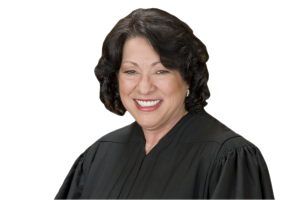
Sonia Sotomayor
Joined by Roberts, Thomas, Alito, Kagan, Jackson, Kavanaugh, Gorsuch, and Jackson.
The holding
The thirty-day deadline for a defendant to move a lawsuit from state court to federal court is a strict requirement that judges cannot extend for fairness reasons. Justice Sonia Sotomayor authored the opinion for a unanimous Court. The statutory text and structure of federal removal law prevent the use of equitable tolling—a legal principle that allows a court to forgive a missed deadline if a party acted diligently but faced extraordinary hurdles. Although the thirty-day limit is nonjurisdictional, meaning it does not define the fundamental power of the court to hear a case, it remains a mandatory rule. The law contains a specific, detailed list of exceptions that already account for fairness, such as allowing extra time if a defendant discovers a case is removable later in the process or if a plaintiff acts in bad faith. This explicit list of exceptions implies that Congress chose to exclude any other unwritten, open-ended reasons for a delay. Legal context from other statutes confirms that this deadline is not flexible. In specific types of cases, such as those involving foreign governments or criminal charges, the law grants courts the express power to extend filing windows “for cause.” The absence of similar language in the general civil removal statute indicates a deliberate choice to deny that flexibility. Furthermore, the removal process requires a clear and early determination of where a trial will occur. Allowing judges to toll the deadline would undermine the law’s interest in efficiency and finality, potentially forcing parties to waste significant time and money litigating in one court only to have the case moved years later.
Argued by
- John J. Bursch for the Petitioners
- Ann M. Sherman for the Respondent
Case path
- Jun 30, 2025 granted
- Feb 24, 2026 argued
- Apr 22, 2026 decided