First Choice Women's Resource Centers v. Platkin
Petitioner First Choice Women's Resource Centers, Inc. · Respondent Matthew J. Platkin, Attorney General of New Jersey
- Reporter
- 608 U.S. ___ (2026)
- From
- United States Court of Appeals for the Third Circuit
- How it got here
- writ of <i>certiorari</i>
When the recipient of a state investigatory subpoena demonstrates an objectively reasonable chill of its First Amendment rights, does a federal court lack jurisdiction to hear the case because those constitutional claims must first be resolved in state court?
Question before the CourtWhat happened
First Choice Women’s Resource Centers, Inc. is a nonprofit organization in New Jersey that operates a network of centers offering pregnancy-related services. In 2023, the New Jersey Division of Consumer Affairs began investigating First Choice over concerns that its client-facing websites downplayed its pro-life mission and may have misled donors and clients about its services, staff qualifications, and medical practices. State investigators identified possible discrepancies between what First Choice told donors—emphasizing a pro-life mission—and what was publicly communicated to potential clients on other websites. The investigation also scrutinized potentially misleading medical statements and questioned whether unlicensed staff were performing services that require medical credentials. As part of its investigation, the State issued a non-self-executing subpoena to First Choice seeking internal documents, advertising material, substantiation for medical claims, and information on donors and licensed personnel. First Choice objected to the subpoena—particularly the requests for donor identities—arguing that complying would violate its constitutional rights, including freedom of association and donor privacy. While First Choice continued to raise these objections, the state filed a motion in New Jersey Superior Court to compel enforcement. The state court denied First Choice’s motion to quash the subpoena in full but did not order immediate production of documents. Instead, it instructed the parties to negotiate the subpoena’s scope, specifically reserved constitutional arguments for future resolution, and clarified that donor identities would be sought only for those who contributed through two specific websites. As a result, First Choice remained under no court order to turn over the disputed materials while negotiations continued. While contesting the subpoena in state court, First Choice filed suit in the U.S. District Court for the District of New Jersey, seeking federal relief to block enforcement on constitutional grounds. The district court twice dismissed the federal suit as unripe, and the U.S. Court of Appeals for the Third Circuit affirmed, holding that the ongoing state court proceedings and the lack of any order compelling compliance rendered First Choice’s claims not ready for federal adjudication.
Unanimous.
All nine justices agreed on the outcome. Concurrences may differ on reasoning, but the Court spoke with one voice on the judgment.
The opinions 1
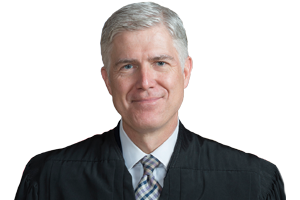
Neil Gorsuch
Joined by Roberts, Thomas, Alito, Sotomayor, Kagan, Kavanaugh, Barrett, and Jackson.
The holding
A government demand for a private organization’s donor records inflicts an immediate, concrete injury to First Amendment freedom of association rights, giving the organization the legal right to challenge the demand in federal court. Justice Neil Gorsuch authored the unanimous 9-0 opinion. The U.S. Constitution limits federal courts to hearing actual disputes. This rule requires a plaintiff to demonstrate “injury in fact”—that is, a concrete, ongoing, or imminent harm. The First Amendment guarantees the right to assemble and associate freely, a protection that necessarily includes the right to keep those associations private. Government demands for private donor lists inherently threaten these rights. Forcing an advocacy group to reveal its supporters discourages individuals from donating and deters organizations from expressing unpopular views. This deterrent effect creates a real constitutional harm the moment a government official issues a demand for private information. An official subpoena demanding donor information immediately triggers this constitutional injury, regardless of whether a judge has ordered the group to comply yet. The outstanding threat of financial penalties or eventual public disclosure forces an organization to change its behavior to avoid government scrutiny. Government promises to keep the donor information confidential or to limit the scope of the demand do not erase this harm. The pressure to abandon protected speech remains constant as long as the demand exists, giving organizations the immediate right to sue to protect their constitutional freedoms.
Argued by
- Erin M. Hawley for the Petitioner
- Vivek Suri for the United States, as amicus curiae, supporting the Petitioner
- Sundeep Iyer for the Respondent
Case path
- Jun 16, 2025 granted
- Dec 2, 2025 argued
- Apr 29, 2026 decided