Pitchford v. Cain
Petitioner Terry Pitchford · Respondent Burl Cain, Commissioner, Mississippi Department of Corrections
- From
- United States Court of Appeals for the Fifth Circuit
- How it got here
- writ of <i>certiorari</i>
Did the Mississippi Supreme Court unreasonably decide—under the standards set by federal habeas law—that Terry Pitchford gave up his right to argue that the prosecutor’s explanations for striking four Black jurors were false or racially biased?
Question before the CourtWhat happened
Terry Pitchford was convicted of capital murder and sentenced to death for his involvement in the 2004 armed robbery and killing of Reuben Britt, a store owner in Grenada County, Mississippi. At the time of the crime, Pitchford was 18 years old. He confessed to participating in the robbery, although the fatal shot was fired by his accomplice. At Pitchford’s 2006 trial in the Grenada County Circuit Court, the jury was selected from a pool that included 36 white and five Black potential jurors. The prosecution used peremptory strikes to remove four of the five Black prospective jurors. Pitchford’s counsel raised a Batson objection, alleging that the strikes were racially discriminatory. The trial court found Pitchford had made a prima facie showing of discrimination and required the prosecution to provide race-neutral reasons for each strike. The prosecutor cited explanations such as the venirepersons’ criminal histories, perceived mental health issues, or similarities to the defendant. The trial judge accepted those explanations and allowed the strikes, ultimately empaneling a jury that included only one Black juror. Pitchford’s counsel sought to preserve Batson-related objections during a bench conference, emphasizing the racial composition of the jury and the county, but did not conduct a further comparative analysis or expressly argue that the prosecution’s stated reasons were pretextual. Pitchford’s conviction and sentence were affirmed on direct appeal by the Mississippi Supreme Court, which held that any pretext arguments had been waived for failure to raise them clearly at trial. A federal district court later granted habeas relief, but the U.S. Court of Appeals for the Fifth Circuit reversed, ruling the Mississippi Supreme Court had reasonably applied Batson and its waiver rule. The U.S. Supreme Court granted certiorari, limited to the question of whether the Mississippi Supreme Court unreasonably determined, under AEDPA, that Pitchford waived his right to rebut the prosecution’s race-neutral justifications for the challenged juror strikes.
Cross-aisle coalition.
The split did not track the usual ideological lines — justices from both wings landed on the same side.
The opinions 2
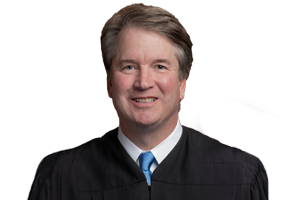
Brett M. Kavanaugh
Joined by Roberts, Sotomayor, Kagan, and Jackson.
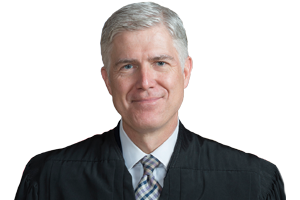
Neil Gorsuch
Joined by Thomas, Alito, and Barrett.
The holding
When a trial court prevents a defendant from completing the three-step Batson process for challenging racially discriminatory jury strikes, a state appellate court's subsequent finding that the defendant waived that challenge constitutes an unreasonable application of clearly established federal law under the Antiterrorism and Effective Death Penalty Act (AEDPA), entitling the defendant to federal habeas relief. Justice Brett Kavanaugh authored the 5-4 majority opinion of the Court. The Equal Protection Clause bars prosecutors from removing potential jurors based on race through peremptory strikes—tools that allow lawyers to dismiss jurors without giving any reason. Batson v. Kentucky established a mandatory three-step process to police this prohibition: the defense first makes a preliminary showing that race motivated the strikes; the prosecutor then offers race-neutral explanations; and finally, at step three, the defense must have a meaningful opportunity to argue those explanations are pretextual (i.e., fake cover stories for actual racial bias), after which the judge decides the issue. Here, the Mississippi trial court completed only steps one and two, then cut off defense counsel twice when they attempted to reach step three. Because a Batson objection at that stage of proceedings is a pretext argument—the only way to challenge the prosecution's race-neutral explanations is to show they don't hold up—the defense cannot logically preserve a general Batson objection while simultaneously waiving the pretext component. The trial court's explicit assurance that the objection was "clear in the record" made the Mississippi Supreme Court's waiver ruling even more unreasonable. AEDPA sets a demanding standard for federal courts reviewing state convictions: a state court's decision must represent not just legal error, but an unreasonable application of clearly established Supreme Court precedent, or rest on an unreasonable factual determination. While that standard demands significant deference to state courts, deference does not mean federal courts must rubber-stamp every state ruling. On this record—where the trial court skipped a mandatory step, twice cut off the defense, and then assured counsel the objection was preserved—the Mississippi Supreme Court's waiver finding falls outside the bounds of reasonable disagreement under both prongs of AEDPA. Justice Neil Gorsuch dissented, joined by Justices Clarence Thomas, Samuel Alito, and Amy Coney Barrett, arguing that the Mississippi Supreme Court reasonably applied its own permissible preservation rules when it found that Pitchford waived a comparative-juror pretext argument he never actually raised during jury selection, and that the majority failed to meet AEDPA's demanding standard requiring the record to compel the petitioner's reading of events rather than merely permit it.
Argued by
- Joseph J. Perkovich for the Petitioner
- Scott G. Stewart for the Respondents
- Emily M. Ferguson for the United States, as amicus curiae, supporting the Respondents
Case path
- Dec 15, 2025 granted
- Mar 31, 2026 argued
- May 28, 2026 decided