Hain Celestial Group v. Palmquist
Petitioner The Hain Celestial Group, Inc., et al. · Respondent Sarah Palmquist, Individually and as Next Friend of E.P., a Minor
- Reporter
- 607 U.S. ___ (2026)
- From
- United States Court of Appeals for the Fifth Circuit
- How it got here
- writ of <i>certiorari</i>
Must a federal court’s final judgment be set aside if the case did not have complete diversity when it was removed from state court, and can a plaintiff block diversity jurisdiction by updating the complaint after removal to include a valid claim against a nondiverse defendant?
Question before the CourtWhat happened
Grant and Sarah Palmquist’s son Ethan developed normally until about 30 months of age, when he experienced sudden and severe developmental regression, including cognitive, behavioral, and physical impairments. He was later diagnosed with a range of conditions—some physical, like seizures and hypotonia, and others mental, like autism and neurocognitive disorders. Tests also revealed high levels of toxic heavy metals in Ethan’s system, which some physicians attributed to heavy-metal poisoning. The Palmquists linked his symptoms to his nearly exclusive consumption of Earth’s Best Organic baby food—manufactured by Hain Celestial Group, Inc. and sold by Whole Foods Market, Inc.—from infancy through toddlerhood. In 2021, a U.S. House Oversight Committee report revealed that Hain’s baby foods contained high levels of arsenic, lead, cadmium, and mercury and that Hain had not tested final products for such contaminants until 2019. In 2021, the Palmquists sued Hain and Whole Foods in Texas state court, raising various state-law claims. Hain removed the case to federal court, alleging that Whole Foods had been improperly joined to defeat diversity jurisdiction. The district court agreed, dismissed Whole Foods, and denied the Palmquists’ motion to remand. It later granted judgment as a matter of law for Hain during trial. On appeal, the U.S. Court of Appeals for the Fifth Circuit reversed, holding that the Palmquists had adequately stated claims against Whole Foods, defeating diversity jurisdiction. It vacated the judgment and remanded the case with instructions to return it to state court.
Unanimous.
All nine justices agreed on the outcome. Concurrences may differ on reasoning, but the Court spoke with one voice on the judgment.
The opinions 2
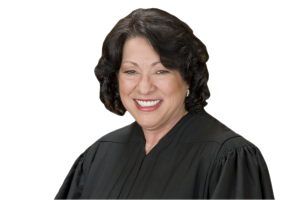
Sonia Sotomayor
Joined by Roberts, Alito, Kagan, Gorsuch, Kavanaugh, Barrett, and Jackson.
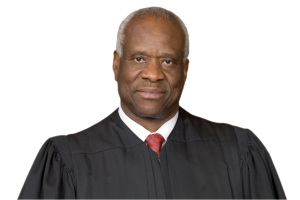
Clarence Thomas
Joined by Roberts, Alito, Kagan, Gorsuch, Kavanaugh, Barrett, and Jackson.
The holding
A federal court cannot create jurisdiction over a lawsuit through its own erroneous ruling, and when an appellate court reverses a district court's mistaken dismissal of a party who destroyed complete diversity—meaning all plaintiffs and defendants must be from different states for federal court to hear the case—the jurisdictional defect never disappears and any trial verdict must be thrown out. Justice Sonia Sotomayor authored the unanimous majority opinion. Federal courts can hear a lawsuit between citizens of different states only if every plaintiff is from a different state than every defendant—a requirement called "complete diversity." When a defendant moves a case from state court to federal court ("removal"), that diversity must exist at the moment of removal. If it does not, an appellate court reviewing the case can excuse that original defect only if the district court genuinely fixed it before trial ended—for example, by properly dismissing the nondiverse party with everyone's agreement, as happened in Caterpillar Inc. v. Lewis (1996). A defect that is never truly fixed is said to "linger through judgment," which requires the appellate court to void the verdict entirely. Here, the district court's dismissal of Whole Foods—a Texas company sued alongside the Texas-citizen plaintiffs—was an interlocutory order, meaning it did not fully resolve the case and remained open to reversal on appeal. When the Fifth Circuit reversed that dismissal as incorrect, Whole Foods was legally restored to the case, and the parties were no longer completely diverse. The jurisdictional defect had therefore never been cured. Hain argued that efficiency justified preserving the verdict because the parties happened to be fully diverse at the moment the final judgment was entered. That argument fails because no principle of law allows a court to manufacture jurisdiction through its own mistake—permitting that would let courts expand their own power beyond the limits Congress set. Hain also asked the appellate court to use Federal Rule of Civil Procedure 21 to drop Whole Foods from the case and salvage the verdict. That remedy was unavailable here because plaintiffs, not defendants, hold the right to choose their forum and to decide whom to sue. The Palmquists deliberately sued Whole Foods—a Texas company—precisely to keep the case in state court, and they promptly moved to send it back there. Allowing a competing defendant to forcibly drop Whole Foods over the plaintiffs' objection would strip the plaintiffs of their recognized right to control the structure of their own lawsuit. Justice Clarence Thomas concurred in full but wrote separately to flag his skepticism of the "improper joinder" doctrine itself, arguing that federal courts likely cannot expand their own jurisdiction by assessing the merits of claims against nondiverse parties before deciding whether they have power to hear the case at all, and inviting a future case to squarely address that doctrine's validity.
Argued by
- Sarah E. Harrington for the Petitioners
- Russell S. Post for the Respondents
Case path
- Apr 28, 2025 granted
- Nov 4, 2025 argued
- Feb 24, 2026 decided