Barrett v. United States
Petitioner Dwayne Barrett · Respondent United States of America
- Reporter
- 607 U.S. ___ (2026)
- From
- United States Court of Appeals for the Second Circuit
- How it got here
- writ of <i>certiorari</i>
May a defendant who commits a single act that violates two statutory provisions be convicted under both provisions?
Question before the CourtWhat happened
Between August 2011 and January 2012, Dwayne Barrett and several co-conspirators carried out a string of armed robberies in New York, often using guns, knives, and threats of violence. On December 12, 2011, Barrett and two associates followed a minivan carrying the proceeds from a sale of untaxed cigarettes. While Barrett waited in the car, his accomplices held two men at gunpoint and stole the vehicle, which also contained $10,000 and a third victim, Gamar Dafalla. As he tried to discard some of the money during the getaway, Dafalla was fatally shot by one of the robbers. Later that day, Barrett took part in another robbery, threatening a victim’s life. He also helped dispose of the murder weapon and clean their vehicle with latex gloves and cleaning fluid to eliminate evidence. Barrett was indicted on multiple counts, including conspiracy to commit Hobbs Act robbery, two substantive counts of Hobbs Act robbery (one involving Dafalla’s murder), and separate firearms offenses, including a murder charge under 18 U.S.C. § 924(j). He was convicted in 2014 and originally sentenced to 90 years in prison. On appeal, the U.S. Court of Appeals for the Second Circuit vacated one firearms conviction under the Supreme Court’s then-new decision in United States v. Davis. Barrett was resentenced to 50 years in 2021. After further appellate proceedings, the Second Circuit affirmed most of his convictions and sentence but vacated and remanded for resentencing in light of the Supreme Court’s 2023 decision in Lora v. United States, which held that § 924(j) does not require consecutive sentencing under § 924(c).
Unanimous.
All nine justices agreed on the outcome. Concurrences may differ on reasoning, but the Court spoke with one voice on the judgment.
The opinions 2

Ketanji Brown Jackson
Joined by Roberts, Thomas, Alito, Kagan, Sotomayor, Kavanaugh, and Barrett.
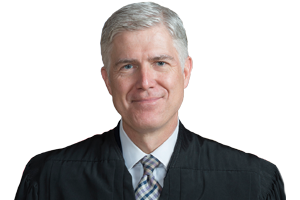
Neil Gorsuch
Joined by Roberts, Thomas, Alito, Kagan, Sotomayor, Kavanaugh, and Barrett.
The holding
Congress did not clearly authorize convictions under both 18 U.S.C. §§ 924(c)(1)(A)(i) and 924(j) for a single act that violates both provisions, meaning only one conviction may result from such conduct. Justice Ketanji Brown Jackson authored the majority opinion, which was unanimous in judgment but divided on reasoning, with only a plurality joining the legislative history portion of the opinion. The case turns on the Blockburger presumption, a longstanding rule of statutory construction holding that Congress ordinarily does not intend to punish the same offense under two different statutes. Two provisions define the “same offense” under Blockburger when one does not require proof of any element the other lacks. All parties agreed that § 924(c)(1)(A)(i)—which criminalizes using, carrying, or possessing a firearm during a federal crime of violence or drug trafficking crime—and § 924(j)—which prescribes different penalties when such a violation causes death—define the same offense because § 924(c)(1)(A)(i) is fully subsumed within § 924(j). The presumption against dual convictions may yield only to clearly expressed contrary congressional intent. The statutory text strongly suggests Congress did not intend to overcome the Blockburger presumption here. Congress twice included explicit Blockburger-surmounting language elsewhere in § 924, specifying that certain convictions must be “in addition to” other punishments. No similar language addresses the relationship between subsections (c)(1) and (j). The consecutive-sentence mandate in § 924(c)—requiring that a subsection (c) sentence run consecutively to other sentences—does not authorize dual convictions; it merely instructs how to arrange sentences once a court determines that two convictions may coexist. The statute's structure reinforces this conclusion: subsection (j) provides a comprehensive, independent penalty scheme reflecting Congress's choice to trade mandatory minimums for sentencing flexibility in death-causing cases, suggesting prosecutors must choose between the provisions rather than stack them. Justice Gorsuch authored an opinion concurring in part, arguing that the Court should clarify whether the Blockburger rule operates as a mere presumption in concurrent prosecutions or as a constitutional bar, as it does in successive prosecutions.
Argued by
- Matthew B. Larsen for the Petitioner
- Aimee W. Brown for the Respondent, in support of the Petitioner
- Charles L. McCloud Court-appointed amicus curiae, in support of the judgment below
Case path
- Mar 3, 2025 granted
- Oct 7, 2025 argued
- Jan 14, 2026 decided