Bost v. Illinois State Board of Elections
Petitioner Michael J. Bost · Respondent Illinois State Board of Elections
- Reporter
- 607 U.S. ___ (2026)
- From
- United States Court of Appeals for the Seventh Circuit
- How it got here
- writ of <i>certiorari</i>
Do federal candidates have Article III standing to challenge state laws that allow mail-in ballots to be received and counted for two weeks after Election Day based on claims that such laws dilute their votes and force them to incur additional campaign expenses for extended ballot monitoring?
Question before the CourtWhat happened
Michael Bost, a multi-term U.S. Representative from Illinois’s 12th District, along with Laura Pollastrini and Susan Sweeney, political activists who served as presidential electors in 2020, challenged Illinois’s mail-in ballot receipt procedure. Under Illinois law, election officials can receive and count mail-in ballots for up to fourteen days after Election Day if the ballots are postmarked or certified by Election Day. Plaintiffs argued this procedure violates federal election statutes by impermissibly extending Election Day beyond the federally mandated date. They claimed the counting of these “untimely” ballots dilutes their votes and forces them to expend additional campaign resources to monitor ballot counting for two weeks after Election Day. Plaintiffs filed suit in May 2022 against the Illinois State Board of Elections and its Executive Director. The U.S. District Court for the Northern District of Illinois dismissed the case, finding that Plaintiffs lacked Article III standing. The court also rejected their claims on the merits. The U.S. Court of Appeals for the Seventh Circuit affirmed the dismissal on jurisdictional grounds.
Cross-aisle coalition.
The split did not track the usual ideological lines — justices from both wings landed on the same side.
The opinions 3
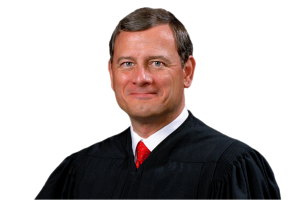
John G. Roberts Jr.
Joined by Thomas, Alito, Kagan, Gorsuch, and Kavanaugh.
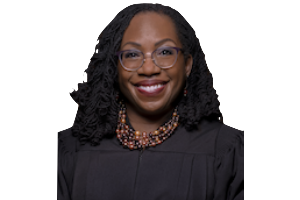
Ketanji Brown Jackson
Joined by Sotomayor.

Amy Coney Barrett
Joined by Thomas, Alito, Kagan, Gorsuch, and Kavanaugh.
The holding
A candidate for elected office has standing under Article III of the Constitution to challenge election rules that govern the counting of votes in his election, regardless of whether those rules harm his electoral prospects or increase the cost of his campaign. Chief Justice John Roberts authored the 5-4 majority opinion of the Court. Article III requires plaintiffs to demonstrate a “personal stake” in a case to have standing to sue. Candidates possess such a stake because they have an interest not only in winning elections but also in a fair electoral process. When election rules depart from the law, candidates suffer distinct harms separate from those experienced by the general public. Unlike voters, who share a general interest in accurate vote tallies, candidates invest substantial time and resources seeking the right to represent the people, giving them a more particularized interest in knowing the true will of the electorate. Additionally, unlawful election rules undermine the political legitimacy of winners by eroding public confidence in election results, causing concrete reputational harm to elected officials whose jobs depend on public support. Requiring candidates to demonstrate a substantial risk that an election rule will cause them to lose the election or miss a vote threshold would create significant practical problems. Such a requirement would push many election disputes to the eve of elections or afterward, when candidates can better predict outcomes—yet the Court has repeatedly cautioned against last-minute judicial changes to election rules. This approach would also force judges to make political predictions about electoral outcomes, a task outside judicial expertise. Candidates have a concrete and particularized interest in election integrity and the democratic process by which they earn or lose public support, and that interest satisfies Article III regardless of whether specific rules harm their electoral prospects. Justice Amy Coney Barrett authored an opinion concurring in the judgment, joined by Justice Elena Kagan, arguing that Congressman Bost has standing based on traditional pocketbook injury from costs incurred to monitor late-arriving ballots rather than from his status as a candidate. Justice Ketanji Brown Jackson authored a dissenting opinion, joined by Justice Sonia Sotomayor, arguing that the majority creates an unprecedented harm-free standing rule for candidates that departs from established Article III requirements and improperly thrusts the judiciary into the political arena.
Argued by
- Paul D. Clement for the Petitioners
- Michael Talent for the United States, as amicus curiae, supporting the Petitioners
- Jane E. Notz for the Respondents
Case path
- Jun 2, 2025 granted
- Oct 8, 2025 argued
- Jan 14, 2026 decided