Villarreal v. Texas
Petitioner David Asa Villarreal · Respondent State of Texas
- Reporter
- 607 U.S. ___ (2026)
- From
- Texas Court of Criminal Appeals
- How it got here
- writ of <i>certiorari</i>
Does a trial court violate a defendant’s Sixth Amendment right to counsel by preventing the defendant and his lawyer from discussing the defendant’s testimony during an overnight break in the trial?
Question before the CourtWhat happened
David Asa Villarreal was charged with murder in Bexar County, Texas. During his trial, Villarreal took the stand in his own defense shortly before a planned midday recess. Because Villarreal was still in the middle of his direct examination when the court adjourned for an overnight recess, the trial judge instructed his attorneys not to confer with him regarding his ongoing testimony but permitted them to discuss other trial-related matters. Villarreal’s lead counsel objected to this limitation under the Sixth Amendment but otherwise indicated understanding of the court's directive. The next day, Villarreal resumed his testimony, and no further objections about the limitation were raised. Villarreal was ultimately convicted and sentenced to sixty years in prison. Following his conviction, Villarreal appealed, arguing that the trial court’s restriction violated his Sixth Amendment right to counsel. A divided appeals court affirmed his conviction, and Villarreal petitioned for discretionary review, and the Court of Criminal Appeals of Texas held that the trial judge’s limited no-conferral order did not violate Villarreal’s Sixth Amendment right to counsel.
Unanimous.
All nine justices agreed on the outcome. Concurrences may differ on reasoning, but the Court spoke with one voice on the judgment.
The opinions 3
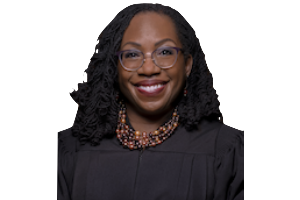
Ketanji Brown Jackson
Joined by Roberts, Gorsuch, Sotomayor, Kavanaugh, Kagan, and Barrett.
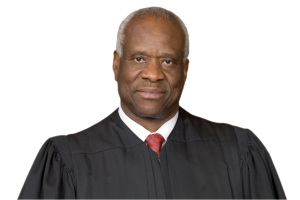
Clarence Thomas
Joined by Roberts, Gorsuch, Sotomayor, Kavanaugh, Kagan, and Barrett.
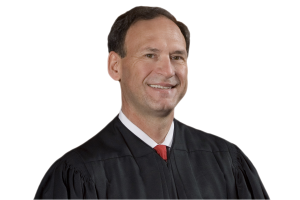
Samuel A. Alito Jr.
Joined by Roberts, Gorsuch, Sotomayor, Kavanaugh, Kagan, and Barrett.
The holding
A trial judge may order a defendant's lawyers not to coach or manage the defendant's ongoing testimony during an overnight recess, as long as the order still allows the defendant to discuss all other topics—such as trial strategy, other witnesses, or whether to accept a plea deal—with their attorneys. Justice Ketanji Brown Jackson authored the majority opinion that was unanimous in the judgment. The Sixth Amendment guarantees every criminal defendant the right to consult with their lawyer. But when a defendant voluntarily takes the witness stand, they also take on the responsibilities of any other witness—including the responsibility to give testimony that has not been shaped or coached mid-stream. Two prior cases set the boundaries here. In Geders v. United States (1976), a judge violated the Sixth Amendment by cutting off all communication between a defendant and their lawyer during an overnight recess, because overnight breaks naturally involve legitimate strategy discussions that go far beyond testimony. In Perry v. Leeke (1989), a judge permissibly banned all communication during a short daytime break, because a brief pause almost certainly produces only one topic of conversation: coaching the ongoing testimony. The key distinction between those two cases is not how long the break lasts—it is what topics the break realistically makes available. Discussions about testimony itself carry no Sixth Amendment protection while a defendant is on the stand, because such conversations threaten to corrupt the truth-seeking purpose of a trial. But discussions that merely touch on testimony while addressing a protected topic—like whether to plead guilty, or what a new piece of evidence means for overall strategy—remain fully protected. Applying that framework here, the trial judge's order prohibited attorneys from "managing" Villarreal's ongoing testimony, while explicitly leaving open every other subject of conversation. That narrow restriction mirrors the traditional practice of witness sequestration—keeping a witness's story unaltered by outside input—adapted to respect a defendant's unique constitutional rights. Critically, the order did not bar attorneys from discussing trial strategy, evaluating a plea, or gathering factual information relevant to defense decisions, even if those conversations incidentally touched on how the testimony was going. Restricting only testimony coaching for its own sake falls well within the Constitution's limits. Justice Samuel Alito concurred, writing separately to emphasize that a defendant who takes the stand accepts a baseline rule that the jury hears their story in their own words—not a version edited by counsel—and to provide concrete examples of what attorneys may and may not say to a testifying client during an overnight break. Justice Clarence Thomas wrote an opinion concurring in the judgment, joined by Justice Neil Gorsuch, arguing that the existing precedents of Geders and Perry already resolved this case without the majority needing to announce a broader new rule, and that the majority unnecessarily expanded those precedents by opining on hypothetical scenarios not present in this case.
Argued by
- Stuart Banner for the Petitioner
- Andrew N. Warthen for the Respondent
- Kevin J. Barber for the United States, as amicus curiae, supporting the Respondent
Case path
- Apr 7, 2025 granted
- Oct 6, 2025 argued
- Feb 25, 2026 decided