Bowe v. United States
Petitioner Michael Bowe · Respondent United States of America
- Reporter
- 607 U.S. ___ (2026)
- From
- United States Court of Appeals for the Eleventh Circuit
- How it got here
- writ of <i>certiorari</i>
1. Does a rule requiring dismissal of repeat claims in state prisoner habeas petitions also apply to repeat claims in federal prisoner motions to vacate their sentences? 2. Does the Court have jurisdiction to review lower court decisions allowing or denying federal prisoners permission to file repeat challenges to their sentences?
Question before the CourtWhat happened
In 2008, Michael Bowe was charged with conspiracy to commit Hobbs Act robbery, attempted Hobbs Act robbery, and using a firearm during a crime of violence. He pleaded guilty in 2009 and received a 288-month sentence, which included a mandatory consecutive 120-month term for the firearm conviction under 18 U.S.C. § 924(c). Starting in 2016, Bowe made multiple attempts to challenge his § 924(c) conviction through a series of motions and applications, arguing that changes in Supreme Court precedent (particularly Johnson v. United States and United States v. Davis) meant that his underlying crimes no longer qualified as “crimes of violence” that could support the firearm conviction. The district court initially denied Bowe’s first § 2255 motion in 2016, finding that attempted Hobbs Act robbery still qualified as a crime of violence. The U.S. Court of Appeals for the Eleventh Circuit then denied several subsequent applications from Bowe to file additional challenges, ultimately concluding in that it lacked jurisdiction to consider his latest application because he was attempting to raise the same claim he had already presented in previous applications.
Cross-aisle coalition.
The split did not track the usual ideological lines — justices from both wings landed on the same side.
The opinions 3

Sonia Sotomayor
Joined by Roberts, Kagan, and Kavanaugh.

Ketanji Brown Jackson
Joined by Roberts, Kagan, and Kavanaugh.
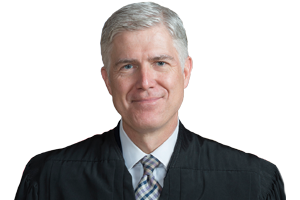
Neil Gorsuch
Joined by Thomas, Alito, and Barrett.
The holding
The statutory bar in 28 U.S.C. § 2244(b)(3)(E) that prohibits certiorari review of court of appeals decisions on second or successive habeas applications does not apply to federal prisoners, and § 2244(b)(1)’s bar on claims previously presented does not apply to federal prisoners’ motions under § 2255(h). Justice Sonia Sotomayor authored the 5-4 majority opinion of the Court, joined by Chief Justice John Roberts and Justices Elena Kagan, Brett Kavanaugh, and Ketanji Brown Jackson. The Antiterrorism and Effective Death Penalty Act of 1996 (AEDPA) establishes a gatekeeping system requiring prisoners to obtain certification from a court of appeals panel before filing second or successive challenges to their convictions. Section 2255(h), which governs federal prisoners, states that such motions “must be certified as provided in section 2244 by a panel of the appropriate court of appeals” and must contain either newly discovered evidence of innocence or a new rule of constitutional law made retroactive by the Supreme Court. The cross-reference to § 2244 incorporates only the procedures for how a panel certifies a filing—not every provision in § 2244. Because § 2244(b)(3)(E)’s certiorari bar addresses what happens after a panel decision rather than how certification occurs, and because Congress must speak clearly to strip the Supreme Court of jurisdiction, the bar does not extend to federal prisoners through the cross-reference. Section 2244(b)(1), which directs dismissal of claims “presented in a second or successive habeas corpus application under section 2254 that was presented in a prior application,” explicitly references § 2254—the provision governing state prisoners. Congress deliberately distinguished between § 2254 “applications” for state prisoners and § 2255 “motions” for federal prisoners elsewhere in AEDPA, and differences in statutory language are presumed to convey differences in meaning. The cross-reference in § 2255(h) incorporates only certification procedures, not the substantive gatekeeping requirements of § 2244(b)(1). Federal prisoners must still satisfy § 2255(h)’s demanding threshold requirements and strict statute of limitations, which provide sufficient safeguards against repetitive filings. Justice Jackson filed a concurring opinion arguing that even if §2244(b)(3)(E) applied to federal prisoners, the panel below did not make a “grant or denial” of authorization because it dismissed rather than evaluated the motion under the correct statutory criteria. Justice Neil Gorsuch filed a dissenting opinion, joined by Justices Clarence Thomas and Samuel Alito, and joined by Justice Amy Coney Barrett as to Part I, arguing that the statutory text clearly bars certiorari review for federal prisoners through §2255(h)’s cross-reference to §2244 and that §2244(b)(1)’s bar on previously presented claims applies to federal prisoners because §2244(b)(3)(C) requires satisfaction of “the requirements of this subsection,” which includes the old-claim bar.
Argued by
- Andrew L. Adler for the Petitioner
- Anthony A. Yang for the Respondent
- Kasdin M. Mitchell Court-appointed amicus curiae, supporting the judgment below as to Question 1
Case path
- Jan 17, 2025 granted
- Oct 14, 2025 argued
- Jan 9, 2026 decided