Chiles v. Salazar
Petitioner Kaley Chiles · Respondent Patty Salazar
- Reporter
- 607 U.S. ___ (2026)
- From
- United States Court of Appeals for the Tenth Circuit
- How it got here
- writ of <i>certiorari</i>
Does a Colorado law banning “conversion therapy”—i.e., attempts to “convert” someone’s sexual orientation or gender identity—violate the Free Speech Clause of the First Amendment?
Question before the CourtWhat happened
Kaley Chiles is a licensed professional counselor practicing in Colorado Springs. She holds a master's degree in clinical mental health and provides talk therapy, specializing in clients dealing with addiction, trauma, sexuality, gender dysphoria, and other mental health concerns. Chiles identifies as a Christian and serves clients who often seek religiously informed care that aligns with traditional biblical understandings of sexuality and gender. Prior to the enactment of a 2019 Colorado law banning conversion therapy for minors, Chiles counseled clients, including minors, in accordance with their self-identified goals, which sometimes included diminishing same-sex attractions or aligning gender identity with biological sex. Since the law’s passage, Chiles has refrained from engaging in discussions with minors that she believes could be interpreted as conversion therapy and alleges that this has hampered her ability to provide full counseling services in line with her and her clients’ religious convictions. In September 2022, Chiles brought a pre-enforcement lawsuit under 42 U.S.C. § 1983 against Colorado officials responsible for enforcing the statute. She alleged that the ban on conversion therapy for minors violates her rights under the Free Speech and Free Exercise Clauses of the First Amendment. Seeking a preliminary injunction, she asked the district court to block enforcement of the law against her. The court denied the motion but found she had standing to proceed. On appeal, the U.S. Court of Appeals for the Tenth Circuit affirmed in full, holding that Colorado’s law regulates professional conduct that incidentally involves speech and survived rational basis review.
Unanimous.
All nine justices agreed on the outcome. Concurrences may differ on reasoning, but the Court spoke with one voice on the judgment.
The opinions 3
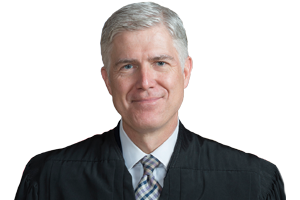
Neil Gorsuch
Joined by Thomas, Roberts, Sotomayor, Kavanaugh, Barrett, and Alito.
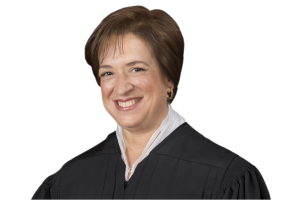
Elena Kagan
Joined by Thomas, Roberts, Sotomayor, Kavanaugh, Barrett, and Alito.
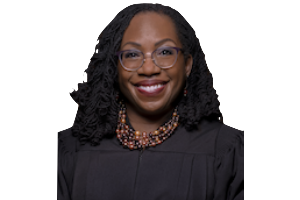
Ketanji Brown Jackson
Alone.
The holding
The First Amendment prohibits a state from applying a conversion therapy ban to a licensed counselor who uses only talk therapy, because such a law regulates speech based on viewpoint and therefore demands the most rigorous constitutional scrutiny. Justice Neil Gorsuch authored the 8-1 majority opinion. The First Amendment's core guarantee is that every person has the right to speak their mind free from government-imposed orthodoxy. Laws that restrict speech based on its subject matter — called "content-based" restrictions — are presumptively unconstitutional and require "strict scrutiny," meaning the government must prove the law is the most targeted possible means of serving a compelling public interest. Viewpoint discrimination — when a law permits speech on one side of a debate while silencing the other — is an even more serious violation. Colorado's law commits exactly that sin as applied to Chiles's practice. It expressly allows a therapist to offer clients acceptance and support for gender identity exploration or gender transition, but flatly forbids any therapeutic conversation aimed at reducing or changing a client's same-sex attractions, behaviors, or gender identity. Because the law picks winners and losers based on the message being delivered, it discriminates based on viewpoint and triggers the highest level of constitutional scrutiny, not the lenient "rational basis" review the lower courts applied. Colorado advanced several arguments for why its law should survive without strict scrutiny, and none succeeded. First, the state argued that talk therapy is "conduct," not "speech," so the First Amendment's full force should not apply. That argument fails because relabeling speech as a "treatment" or "therapeutic modality" cannot strip it of constitutional protection; the only thing Chiles does with her clients is talk, and the law targets only what she says. Second, Colorado argued the law only "incidentally" burdens speech because its primary purpose is to ban a harmful medical treatment. That argument misreads the Court's precedents: the speech-incident-to-conduct doctrine protects laws that restrict speech tied to separately unlawful acts, or laws that restrict expressive conduct for reasons unrelated to content. This law does neither — the behaviors the law restricts are not independently illegal, and the law explicitly targets speech based on its content and viewpoint. Third, Colorado invoked historical traditions of medical licensing, informed-consent laws, and malpractice liability as evidence of a long-recognized category of regulable professional speech. Those traditions fail at both the general and specific level: licensing laws have historically governed who may practice a profession, not what viewpoints practitioners must hold; informed-consent laws compel disclosure of objective facts tied to a specific medical procedure, not suppression of a perspective; and malpractice requires proof of actual harm, which "provides breathing room for protected speech" in a way this law does not. Justice Elena Kagan concurred, joined by Justice Sonia Sotomayor, agreeing that Colorado's law is plainly unconstitutional viewpoint discrimination, but writing separately to flag that the harder, unresolved question — whether a content-based but viewpoint-neutral law restricting therapeutic speech would survive First Amendment challenge — should be left for another day. Justice Ketanji Brown Jackson dissented, arguing that the majority misreads NIFLA v. Becerra (2018) and ignores a centuries-long tradition of states regulating medical professionals' treatment-related conduct; in her view, Colorado's law incidentally restricts Chiles's speech only as a byproduct of regulating a harmful medical treatment, which does not trigger heightened scrutiny, and the majority's holding dangerously undermines states' ability to enforce any standard of care administered through speech.
Argued by
- James A. Campbell for the Petitioner
- Hashim M. Mooppan for the United States, as amicus curiae, supporting the Petitioner
- Shannon W. Stevenson for the Respondents
Case path
- Mar 10, 2025 granted
- Oct 7, 2025 argued
- Mar 31, 2026 decided