Cox Communications v. Sony Music Entertainment
Petitioner Cox Communications, Inc. · Respondent Sony Music Entertainment
- Reporter
- 607 U.S. ___ (2026)
- From
- United States Court of Appeals for the Fourth Circuit
- How it got here
- writ of <i>certiorari</i>
Can an internet service provider be held liable, and found to have acted willfully, for copyright infringement just because it knew users were infringing and did not terminate their access?
Question before the CourtWhat happened
Cox Communications, Inc. is a major internet service provider selling internet, telephone, and cable television to millions across the United States. Between 2013 and 2014, some of Cox’s internet subscribers used peer-to-peer file-sharing networks, such as BitTorrent, to download and distribute copyrighted songs owned by numerous record companies and music publishers, including Sony Music Entertainment (the “Plaintiffs”). These record companies, through the Recording Industry Association of America (RIAA), hired a company called MarkMonitor to monitor illegal file sharing and notify internet service providers when infringement was detected. MarkMonitor sent Cox over 163,000 notices of infringement during the relevant period. In response, Cox operated a “thirteen-strike” policy, under which it warned or temporarily suspended subscribers after repeated notices, but in practice it rarely terminated service for copyright infringement, while regularly terminating service for nonpayment. Plaintiffs became frustrated with Cox’s limited enforcement against repeat infringers and sued Cox instead of its subscribers, alleging that Cox was secondarily liable for copyright infringement occurring on its network. Specifically, plaintiffs contended Cox either intentionally contributed to or benefited from its subscribers’ infringements by failing to take adequate steps to stop it, thereby inducing or materially contributing to the unlawful acts. The U.S. District Court for the Eastern District of Virginia denied Cox statutory safe harbor under the Digital Millennium Copyright Act (DMCA) and allowed the case to proceed to trial on theories of vicarious and contributory copyright infringement. The jury found Cox liable on both counts and awarded $1 billion in statutory damages. On appeal, the U.S. Court of Appeals for the Fourth Circuit affirmed the jury’s finding of willful contributory infringement, reversed the vicarious liability verdict, and vacated the damages award, remanding the case for a new trial on damages.
Unanimous.
All nine justices agreed on the outcome. Concurrences may differ on reasoning, but the Court spoke with one voice on the judgment.
The opinions 2
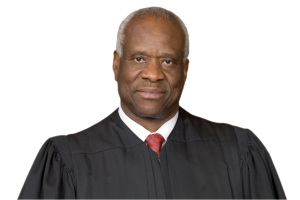
Clarence Thomas
Joined by Jackson, Roberts, Alito, Kagan, Barrett, Kavanaugh, and Gorsuch.
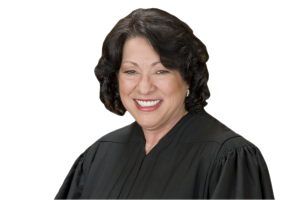
Sonia Sotomayor
Joined by Jackson, Roberts, Alito, Kagan, Barrett, Kavanaugh, and Gorsuch.
The holding
An internet service provider does not commit "contributory copyright infringement" — meaning legal responsibility for copyright violations committed by someone else — simply by continuing to provide internet service to subscribers it knows have been flagged for piracy. Justice Clarence Thomas authored the 7-2 majority opinion. Copyright law recognizes two ways a company can be held responsible for infringement it did not directly commit. First, a provider is liable if it actively induced infringement — meaning it took specific steps to encourage users to pirate content, as file-sharing companies did in MGM Studios v. Grokster (2005) when they marketed their software as a piracy tool. Second, a provider is liable if its service is tailored to infringement — meaning it has no substantial legitimate use, the standard established in Sony Corp. v. Universal City Studios (1984), where the Court held that selling VCRs to the public was lawful because the device served many legal purposes. Knowledge alone — knowing that some users will misuse a service — has never been enough to trigger liability under either standard. Cox satisfies neither test. Nothing in the record shows Cox encouraged or promoted piracy; to the contrary, Cox sent warnings, suspended accounts, and contractually prohibited infringing use. And basic internet access plainly serves countless lawful purposes. Sony's argument that the Digital Millennium Copyright Act's "safe harbor" provision — which shields ISPs from liability if they adopt policies to terminate repeat infringers — implies a baseline of liability for ISPs that ignore infringement misreads the statute. The DMCA creates a defense from liability; it does not create liability where none otherwise exists. Justice Sonia Sotomayor, joined by Justice Ketanji Brown Jackson, concurred in the judgment, agreeing Cox lacked the required intent but arguing the majority went too far by categorically limiting secondary copyright liability to only two theories, when prior precedent (Grokster) expressly left open the possibility that other common-law theories — such as aiding and abetting — could apply, and the majority's sweeping rule renders the DMCA safe harbor meaningless going forward.
Argued by
- E. Joshua Rosenkranz for the Petitioners
- Malcolm L. Stewart for the United States, as amicus curiae, supporting the Petitioners
- Paul D. Clement for the Respondents
Case path
- Jun 30, 2025 granted
- Dec 1, 2025 argued
- Mar 25, 2026 decided