Learning Resources v. Trump
Petitioner Learning Resources, Inc., et al. · Respondent Donald J. Trump, President of the United States, et al.
- Reporter
- 607 U.S. ___ (2026)
- From
- United States Court of Appeals for the District of Columbia Circuit
- How it got here
- writ of <i>certiorari</i>
Does the International Emergency Powers Act, 50 U.S.C. § 1701 (“IEEPA”), authorize the president to impose tariffs?
Question before the CourtWhat happened
Learning Resources, Inc. and hand2mind, Inc. are family-owned businesses that design and distribute educational products for children. Although their product development and some assembly occur domestically, most of their manufacturing is outsourced to international partners, including China. Beginning in early 2025, a series of executive orders from President Donald J. Trump, invoking the International Emergency Economic Powers Act (“IEEPA”), imposed unprecedented tariffs on imports, including goods from China. These included a 20% “trafficking” tariff and additional “reciprocal” tariffs that pushed rates on Chinese goods to over 145%. Petitioners’ imports were directly affected, and complying with the new tariffs would increase their import-related costs from $2.3 million in 2024 to over $100 million in 2025, putting their businesses at existential risk. The petitioners filed suit on April 22, 2025, in the U.S. District Court for the District of Columbia, challenging the legality of the IEEPA tariffs. The district court granted a preliminary injunction on May 29, 2025, holding that IEEPA does not authorize the president to impose tariffs and finding that the tariffs posed an existential threat to the petitioners. However, that ruling was stayed just days later, and the U.S. Court of Appeals for the District of Columbia Circuit docketed the case. Meanwhile, the U.S. Court of International Trade ruled similarly in related cases but its decision was also stayed by the U.S. Court of Appeals for the Federal Circuit.
Cross-aisle coalition.
The split did not track the usual ideological lines — justices from both wings landed on the same side.
The opinions 7
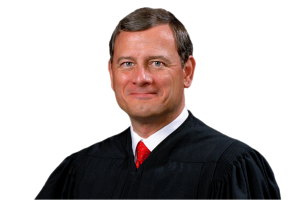
John G. Roberts Jr.
Joined by Sotomayor.
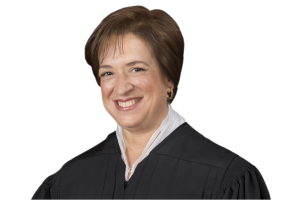
Elena Kagan
Joined by Sotomayor.
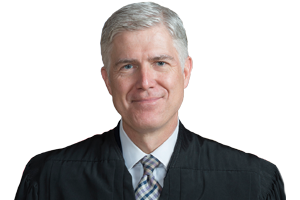
Neil Gorsuch
Joined by Sotomayor.

Amy Coney Barrett
Joined by Sotomayor.

Ketanji Brown Jackson
Joined by Sotomayor.
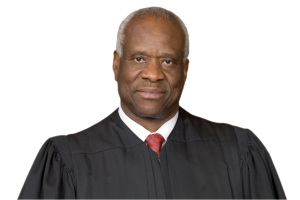
Clarence Thomas
Joined by Alito.
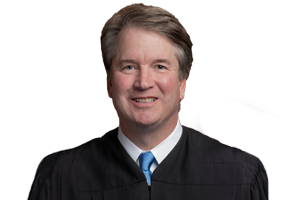
Brett M. Kavanaugh
Joined by Alito.
The holding
The International Emergency Economic Powers Act (IEEPA) does not authorize the President of the United States to impose tariffs. Chief Justice John Roberts authored the 6-3 majority opinion of the Court. The Constitution exclusively vests the power to lay and collect taxes, including the power to impose tariffs, in Congress. Because the Executive Branch enjoys no inherent authority to impose peacetime tariffs, any presidential power to do so must come from a clear congressional delegation. IEEPA grants the President authority to "regulate" the "importation" of goods during a national emergency, but this general regulatory power does not include the distinct and extraordinary power to tax. While taxes can accomplish regulatory goals, the everyday power to regulate commerce remains entirely separate from the power to raise revenue. The broader statutory text and congressional practice confirm that IEEPA lacks an implicit delegation of the taxing power. When Congress delegates the authority to impose customs duties—a federal tax levied on imported goods—it consistently uses explicit terms like "duty" or "surcharge" and imposes strict procedural limits. IEEPA lists nine specific actions the President may take regarding foreign commerce, such as investigating or prohibiting transactions, but notably omits any mention of tariffs or revenue-raising measures. Furthermore, interpreting the statute to allow taxation renders it partly unconstitutional, as IEEPA authorizes the President to regulate both importation and exportation, and the Constitution expressly forbids taxing exports. Justice Neil Gorsuch authored a concurring opinion arguing that the major questions doctrine, which requires clear congressional authorization for extraordinary assertions of executive power, protects the constitutional separation of powers. Justice Amy Coney Barrett authored a concurring opinion asserting that the major questions doctrine operates as an ordinary application of textualism that uses constitutional context to ascertain a statute's most natural meaning. Justice Elena Kagan authored an opinion concurring in part and concurring in the judgment, joined by Justices Sonia Sotomayor and Ketanji Brown Jackson, arguing that ordinary tools of statutory interpretation easily resolve the dispute without invoking the major questions doctrine. Justice Ketanji Brown Jackson authored an opinion concurring in part and concurring in the judgment emphasizing that legislative history proves Congress intended IEEPA only to authorize the freezing of foreign-owned property. Justice Clarence Thomas authored a dissenting opinion arguing that the constitutional nondelegation doctrine does not apply to foreign commerce, allowing Congress to freely delegate tariff-making powers. Justice Brett Kavanaugh authored a dissenting opinion, joined by Justices Clarence Thomas and Samuel Alito, arguing that historical practice, precedent, and the ordinary meaning of the word "regulate" establish that IEEPA authorizes presidential tariffs.
Argued by
- D. John Sauer for the federal parties
- Neal Kumar Katyal for the private parties
- Benjamin Gutman for the state parties
Case path
- Sep 9, 2025 granted
- Nov 5, 2025 argued
- Feb 20, 2026 decided