Montgomery v. Caribe Transport II
Petitioner Shawn Montgomery · Respondent Caribe Transport II, LLC
- From
- United States Court of Appeals for the Seventh Circuit
- How it got here
- writ of <i>certiorari</i>
Does 49 U.S.C. § 14501(c) preempt a state common-law claim against a broker for negligently selecting a motor carrier or driver?
Question before the CourtWhat happened
Shawn Montgomery was severely injured when his tractor-trailer, stopped on the shoulder of an Illinois highway, was struck by another truck. The other driver, Yosniel Varela-Mojena, was employed by the motor carrier Caribe Transport II, LLC (“Caribe”). C.H. Robinson Worldwide, Inc. (“Robinson”), a freight broker, had arranged for Caribe to haul the shipment. Robinson and Caribe operated under an agreement stating that Caribe was an independent contractor and retained exclusive control over its personnel and the manner of its performance. Montgomery sued the driver and Caribe, and also sued the broker, Robinson. His claims against Robinson alleged that the broker was vicariously liable for the driver’s negligence, arguing Caribe was Robinson’s agent. Montgomery also claimed Robinson had negligently hired the driver and the carrier. The district court granted judgment to Robinson on all claims. The U.S. Court of Appeals for the Seventh Circuit affirmed, holding that Caribe was an independent contractor, which defeated the vicarious liability claim, and that the Federal Aviation Administration Authorization Act preempted the state-law negligent hiring claim.
Unanimous.
All nine justices agreed on the outcome. Concurrences may differ on reasoning, but the Court spoke with one voice on the judgment.
The opinions 2
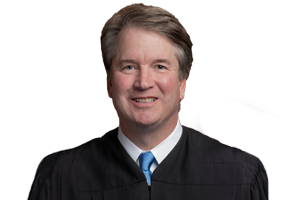
Brett M. Kavanaugh
Joined by Alito, Roberts, Thomas, Sotomayor, Kagan, Gorsuch, and Jackson.

Amy Coney Barrett
Joined by Alito, Roberts, Thomas, Sotomayor, Kagan, Gorsuch, and Jackson.
The holding
The Federal Aviation Administration Authorization Act (FAAAA) — a federal law that generally blocks states from regulating trucking industry prices, routes, and services — does not preempt state negligent-hiring lawsuits against transportation brokers, because those claims fall within the law's built-in safety exception preserving state authority to regulate motor vehicle safety. Justice Amy Coney Barrett authored the unanimous opinion of the Court. The FAAAA's preemption provision broadly blocks state laws "related to a price, route, or service" of motor carriers and brokers. But the safety exception carves back that prohibition: it "shall not restrict the safety regulatory authority of a State with respect to motor vehicles." State common-law duties — including negligent hiring, which requires a company to use reasonable care when selecting a contractor for dangerous work — qualify as exercises of that safety regulatory authority. The central question therefore becomes whether a negligent-hiring claim against a broker "concerns" motor vehicles, as the phrase "with respect to" ordinarily means. The FAAAA defines "motor vehicle" as trucks and trailers used on highways for transportation. A negligent-hiring claim against a broker directly concerns those vehicles: the whole point of hiring a carrier is to put trucks on the road, and requiring a broker to screen for carrier safety plainly concerns the trucks those carriers will operate. The safety exception does not collapse the preemption provision entirely. The exception rescues only a subset of claims — those tied to motor vehicle safety. Many state laws touching carrier prices, routes, or services have no safety connection and remain preempted. The broker's argument that this reading creates textual redundancy fails because any overlap stems from the word "safety" in the exception itself, not from the phrase "with respect to motor vehicles." The broker's separate argument — that a different FAAAA subsection preempts broker regulation for intrastate routes without any safety exception, creating an anomaly — cannot override the plain text of the safety exception in subsection (c)(2)(A). Justice Brett Kavanaugh concurred, joined by Justice Samuel Alito, agreeing with the result but emphasizing the case was closer than the majority suggested, noting that the FAAAA's mandatory insurance scheme and intrastate preemption provisions offered real textual support for the brokers' position, and that the outcome was ultimately driven by Congress's intent to pursue economic — not safety — deregulation, making it implausible that the law would simultaneously expose trucking companies to tort liability while shielding brokers from any such accountability.
Argued by
- Paul D. Clement for the Petitioner
- Theodore J. Boutrous Jr. for the Respondents
- Sopan Joshi for the United States, as amicus curiae, supporting the Respondents
Case path
- Oct 3, 2025 granted
- Mar 4, 2026 argued
- May 14, 2026 decided