Louisiana v. Callais
Appellant Louisiana · Appellee Phillip Callais, et al.
- From
- Federal district court
- How it got here
- appeal
Does Louisiana’s creation of a second majority-Black congressional district constitute unconstitutional racial gerrymandering, even when drawn in response to a federal court finding that the state’s prior single majority-Black district likely violated Section 2 of the Voting Rights Act?
Question before the CourtWhat happened
This case involves a challenge to Louisiana’s congressional redistricting map, specifically focusing on District 6, alleging that the map is an impermissible racial gerrymander. The map was created in response to a previous lawsuit, Robinson v. Ardoin, where plaintiffs argued that the prior map violated Section 2 of the Voting Rights Act by diluting minority votes. To address these issues, the Louisiana Legislature adopted a new map (Senate Bill 8) that included a second majority-Black district. However, the plaintiffs in this case claimed that this new map violated the Equal Protection Clause of the Fourteenth Amendment by prioritizing race in its creation. A three-judge panel concluded that District 6 of the new map did indeed violate the Equal Protection Clause, leading the court to issue an injunction against using this map in future elections.
6–0.
A narrow margin — the Court split hard on this one. Read the concurrences carefully.
The opinions 3

Samuel A. Alito Jr.
Joined by Roberts, Gorsuch, Kavanaugh, and Barrett.
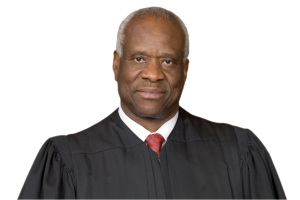
Clarence Thomas
Joined by Roberts, Gorsuch, Kavanaugh, and Barrett.
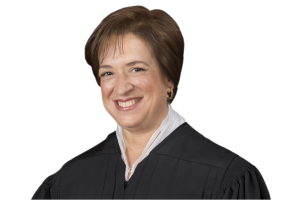
Elena Kagan
Joined by Sotomayor and Jackson.
The holding
A state violates the Equal Protection Clause of the Fourteenth Amendment by intentionally drawing legislative districts predominantly on the basis of race—unless such action is narrowly tailored to achieve a compelling governmental interest, such as genuine compliance with Section 2 of the Voting Rights Act (VRA) as properly interpreted. Because the VRA did not require Louisiana to create an additional majority-minority district, the state’s use of race in its SB8 congressional map lacked a compelling interest and constitutes an unconstitutional racial gerrymander. Justice Samuel Alito authored the 6-3 majority opinion. The Constitution almost never permits the government to use race as a factor in decision-making, especially in drawing legislative districts, unless doing so is needed to remedy specific, identified past discrimination or to avoid imminent safety risks. This triggers “strict scrutiny”; any use of race must serve a compelling government interest and be narrowly tailored to that interest. Here, the only compelling interest Louisiana claimed was compliance with Section 2 of the Voting Rights Act, which prohibits voting practices that result in minority groups having “less opportunity” than others to elect representatives of their choice. However, Section 2, as properly construed, only applies when there is strong evidence of intentional racial discrimination in the drawing of districts—not merely when districts could have more majority-minority seats. Section 2 does not require proportional representation, and it permits states to pursue nonracial districting goals, including political considerations. To prove a violation of Section 2, a plaintiff must show, through a careful and updated application of the Gingles framework, that minority voters have less opportunity than others due to intentional discrimination rather than politics or other race-neutral factors. Plaintiffs must show that: (1) an alternative majority-minority district could be drawn without using race as the districting criterion and while meeting all the state’s legitimate political and traditional districting goals; and (2) racially polarized voting patterns reflect racial, and not just partisan, divisions. Additionally, courts must focus on current and intentional acts of discrimination, not historical or societal effects alone. In this case, the evidence did not show that Louisiana's prior map denied Black voters equal electoral opportunity due to intentional racial discrimination—plaintiffs failed to disentangle race from politics and did not offer a workable alternative map satisfying all legitimate state goals. Thus, Section 2 did not require the state to create another majority-Black district, and using race for that purpose was unconstitutional. Justice Clarence Thomas, joined by Justice Neil Gorsuch, concurred, arguing that the VRA should not apply to districting at all and that Section 2 covers only ballot access, not how districts are drawn. Justice Elena Kagan, joined by Justices Sonia Sotomayor and Ketanji Brown Jackson, dissented, maintaining that Section 2’s “results” test focuses on the real-world effect of vote dilution, not discriminatory intent, and criticizing the majority for undermining Congress’s intent and making proof of intent an impossible barrier for future VRA plaintiffs.
Argued by
- J. Benjamin Aguinaga for the Appellant in No. 24-109 on argument and reargument
- Janai Nelson for the Appellants in 24-110 on reargument
- Stuart C. Naifeh for the Appellants in No. 24-110
- Edward D. Greim for the Appellees
- Hashim M. Mooppan for the United States, as amicus curiae, supporting the Appellees on reargument
Case path
- Nov 4, 2024 granted
- Mar 24, 2025 argued
- Oct 15, 2025 reargued
- Apr 29, 2026 decided