Rico v. United States
Petitioner Isabel Rico · Respondent United States of America
- Reporter
- 607 U.S. ___ (2026)
- From
- United States Court of Appeals for the Ninth Circuit
- How it got here
- writ of <i>certiorari</i>
Does the fugitive-tolling doctrine apply in the context of supervised release?
Question before the CourtWhat happened
In May 2018, Isabel Rico absconded from supervised release after serving only five months of her 42-month term. Rico had originally been convicted in the U.S. District Court for the Central District of California and was serving supervised release as part of her sentence. She remained a fugitive until January 2023, when authorities located her. In February 2023, the probation office filed violations based on her absconding and other conduct during her supervised release term. The district court revoked Rico’s supervised release and sentenced her to 16 months in prison followed by a new two-year term of supervised release. Rico appealed to the U.S. Court of Appeals for the Ninth Circuit, arguing that the district court lacked authority to revoke her supervised release because her original 42-month term would have expired during the time she was a fugitive, but the Ninth Circuit affirmed the lower court’s decision.
Unanimous.
All nine justices agreed on the outcome. Concurrences may differ on reasoning, but the Court spoke with one voice on the judgment.
The opinions 2
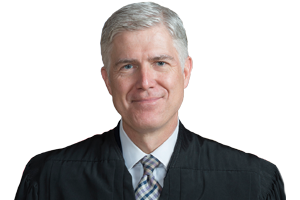
Neil Gorsuch
Joined by Thomas, Roberts, Sotomayor, Kagan, Barrett, Kavanaugh, and Jackson.

Samuel A. Alito Jr.
Alone.
The holding
When a person on supervised release — a court-ordered period of monitoring that follows release from federal prison — absconds (flees and stops reporting to their probation officer), their supervision term does not automatically extend beyond the end date a judge set. Justice Neil Gorsuch authored the 8-1 majority opinion. The Sentencing Reform Act sets clear boundaries on when supervised release begins, how long it may last, and exactly when courts may extend it. The Act starts the clock on the day a person leaves prison and caps the maximum term at one, three, or five years depending on the severity of the underlying crime. When Congress wanted to pause or extend that clock, it said so explicitly: courts may extend a term only after holding a hearing and only up to the statutory maximum; a separate provision allows courts to act after a term expires, but only if a warrant or summons issued before the term ended and only for violations that occurred during the term; and one narrow tolling rule — meaning a rule that stops the clock entirely — pauses the term only when a person is imprisoned for 30 or more consecutive days. The absence of any automatic-extension rule in this detailed statutory scheme signals that Congress deliberately chose not to create one. The government argued that because supervision requires actual "observation and direction," a person who absconds receives no credit toward completing their term, effectively stretching it until authorities locate them. That theory fails for two reasons: the statutory provisions the government cited describe only a probation officer's duties, not the duration of a term; and the theory produces a logical contradiction — it simultaneously treats the defendant as off supervised release (not earning credit) and on supervised release (bound by its conditions and punishable for new violations). The Act already gives courts powerful tools to address absconders, including revocation, re-imprisonment, and a new supervised release term. Adding an automatic extension on top of those tools is not a permissible reading of the statute — it is a new rule that only Congress can write. Justice Samuel Alito dissented, arguing the case did not require resolving the tolling question at all because the sentencing judge independently had statutory authority under 18 U.S.C. § 3583(e) to consider Rico's 2022 drug offense as a relevant sentencing factor when imposing punishment for her undisputed violations, making the majority's ruling unnecessary and the remand pointless.
Argued by
- Adam G. Unikowsky for the Petitioner
- Joshua K. Handell for the Respondent
Case path
- Jun 30, 2025 granted
- Nov 3, 2025 argued
- Mar 25, 2026 decided