Republic of Hungary v. Simon
Petitioner Republic of Hungary · Respondent Rosalie Simon
- Reporter
- 604 U.S. ___ (2025)
- From
- United States Court of Appeals for the District of Columbia Circuit
- How it got here
- writ of <i>certiorari</i>
1. Does historical commingling of assets suffice to establish that proceeds of seized property have a commercial nexus with the United States under the expropriation exception to the Foreign Sovereign Immunities Act? 2. Must a plaintiff make out a valid claim that an exception to the FSIA applies at the pleading stage, rather than merely raising a plausible inference? 3. Does a sovereign defendant bear the burden of producing evidence to affirmatively disprove that the proceeds of property taken in violation of international law have a commercial nexus with the United States under the expropriation exception to the FSIA?
Question before the CourtWhat happened
This case arises from the Hungarian government’s confiscation of Jewish-owned property during the Holocaust. In 1944, Hungary rapidly exterminated over half a million Jews and seized their property. Fourteen Holocaust survivors sued Hungary and its agency, Magyar Államvasutak Zrt., seeking compensation for this seized property. To overcome Hungary’s sovereign immunity, the plaintiffs invoked the Foreign Sovereign Immunities Act’s expropriation exception, asserting they were either stateless or Czechoslovakian nationals at the time of the takings, not Hungarian nationals. This claim was made in response to the Supreme Court’s recent ruling in Fed. Republic of Germany v. Philipp that a country’s taking of property from its own nationals is generally excluded from the FSIA’s expropriation exception. The case has a complex litigation history, with multiple appeals focusing on the plaintiffs’ nationality status and FSIA jurisdiction. The U.S. Court of Appeals for the D.C. Circuit ruled that the plaintiffs’ allegations were sufficient to shift the burden of proof to Hungary to disprove, contrasting with the Second Circuit’s decision that plaintiffs must demonstrate a link between the expropriated property’s funds and U.S. commercial activity.
Unanimous.
All nine justices agreed on the outcome. Concurrences may differ on reasoning, but the Court spoke with one voice on the judgment.
The opinions 1
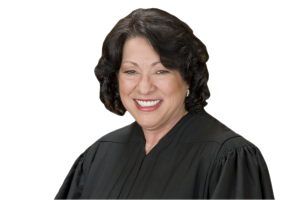
Sonia Sotomayor
Joined by Roberts, Thomas, Alito, Kagan, Gorsuch, Kavanaugh, Barrett, and Jackson.
The holding
An allegation that a foreign sovereign liquidated expropriated property, commingled the proceeds with other funds, and then used some of those commingled funds for commercial activities in the United States cannot alone satisfy the commercial nexus requirement of the expropriation exception in the Foreign Sovereign Immunities Act of 1976 (FSIA). Justice Sonia Sotomayor authored the unanimous opinion of the Court. The expropriation exception requires plaintiffs to establish a clear trace between expropriated property (or the proceeds from its sale) and property present in the United States in connection with commercial activity. While money is fungible, merely stating that proceeds from the liquidation of an expropriated asset were once mixed with other funds is insufficient. To satisfy the FSIA’s requirements, plaintiffs must show that specific funds or assets linked to the seized property are currently in the United States or were used for identifiable commercial transactions there. This interpretation aligns with the FSIA’s structure and purpose, which generally adopts the restrictive theory of sovereign immunity, shielding foreign states from suits arising from public (rather than commercial) acts. Congress designed the expropriation exception to conform closely to international law, avoiding excessive interference in foreign relations. The requirement to trace specific property reflects this cautious approach. Accepting the commingling theory alone would excessively broaden the FSIA’s expropriation exception, potentially undermining sovereign immunity principles and inviting retaliatory measures from foreign nations.
Argued by
- Joshua S. Glasgow for the Petitioners
- Sopan Joshi for the United States, as amicus curiae, supporting the Petitioners
- Shay Dvoretzky for the Respondents
Case path
- Jun 24, 2024 granted
- Dec 3, 2024 argued
- Feb 21, 2025 decided