E.M.D. Sales v. Carrera
Petitioner E.M.D. Sales, Inc. · Respondent Faustino Sanchez Carrera
- Reporter
- 604 U.S. ___ (2025)
- From
- United States Court of Appeals for the Fourth Circuit
- How it got here
- writ of <i>certiorari</i>
Is the burden of proof that employers must satisfy to demonstrate the applicability of a Fair Labor Standards Act exemption a mere preponderance of the evidence or clear and convincing evidence?
Question before the CourtWhat happened
E.M.D. Sales Inc. (EMD) is a distributor of Latin American, Caribbean, and Asian food products to grocery stores in the Washington, D.C. area. Three of EMD’s sales representatives—Faustino Sanchez Carrera, Magdaleno Gervacio, and Jesus David Muro—sued EMD and its CEO, Elda Devarie, in 2017 for allegedly violating the Fair Labor Standards Act (FLSA) by denying them overtime wages. The plaintiffs claimed they worked about 60 hours per week, paid on commission without overtime compensation. The sales representatives were assigned routes of stores, spending most of their time servicing chain stores and some independent groceries. Their duties included restocking shelves, managing inventory, and submitting orders for EMD products. While they could make some sales to independent stores, their ability to make sales at chain stores was limited, as high-level negotiations between EMD management and corporate buyers typically determined product placement. EMD argued that the sales representatives were exempt from overtime pay under the FLSA’s “outside sales” exemption. The case went to a bench trial, where the court had to determine whether the plaintiffs’ primary duty was making sales, qualifying them for the exemption, or if their work was primarily incidental to sales made by others. The district court ruled in favor of the plaintiffs, finding that EMD failed to prove the outside sales exemption applied, awarded both unpaid overtime wages and liquidated damages, but limited the damages to a two-year period after concluding that EMD's violation was not willful. The U.S. Court of Appeals for the Fourth Circuit affirmed.
Unanimous.
All nine justices agreed on the outcome. Concurrences may differ on reasoning, but the Court spoke with one voice on the judgment.
The opinions 2
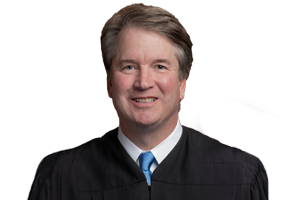
Brett M. Kavanaugh
Joined by Roberts, Alito, Thomas, Sotomayor, Kagan, Barrett, and Jackson.
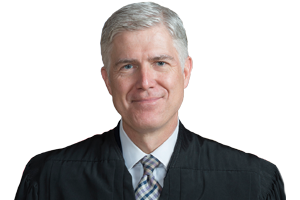
Neil Gorsuch
Joined by Roberts, Alito, Thomas, Sotomayor, Kagan, Barrett, and Jackson.
The holding
The preponderance-of-the-evidence standard applies when an employer seeks to show that an employee is exempt from the minimum-wage and overtime-pay provisions of the Fair Labor Standards Act (FLSA). Justice Brett Kavanaugh authored the unanimous opinion of the Court. The default standard of proof in American civil litigation is preponderance of the evidence, and courts only deviate from this standard in three specific circumstances: when a statute explicitly requires a heightened standard, when the Constitution requires it, or in certain rare cases where the government seeks unusual coercive action against an individual (like revoking citizenship). None of these exceptions applies to FLSA exemption cases. The FLSA itself is silent on the standard of proof, which typically means Congress intended the default preponderance standard to apply. The case does not implicate constitutional rights, and it does not involve unusual government coercion; instead, it is akin to Title VII employment discrimination cases where the Court has consistently applied the preponderance standard. Justice Neil Gorsuch authored a concurring opinion, in which Justice Clarence Thomas joined, clarifying that courts apply the default “preponderance” rule unless Congress alters it or the Constitution forbids it.
Argued by
- Lisa S. Blatt for the Petitioners
- Aimee W. Brown for the United States, as amicus curiae, supporting the Petitioners
- Lauren E. Bateman for the Respondents
Case path
- Jun 17, 2024 granted
- Nov 5, 2024 argued
- Jan 15, 2025 decided