Williams v. Reed
Petitioner Nancy Williams, et al. · Respondent Greg Reed, Secretary, Alabama Department of Workforce
- Reporter
- 604 U.S. ___ (2025)
- From
- Supreme Court of Alabama
- How it got here
- writ of <i>certiorari</i>
Does a Section 1983 claim brought in state court require the plaintiffs to first exhaust state administrative remedies?
Question before the CourtWhat happened
Dissatisfied with the Alabama Department of Labor’s handling of their unemployment benefits applications, 26 plaintiffs filed a complaint and motion for injunctive relief against Secretary Fitzgerald Washington and the Department. The plaintiffs, each having filed applications for benefits, alleged various grievances against the Department’s processing methods. Subsequently, Secretary Washington and the Department filed a motion to dismiss the complaint. In response, the plaintiffs amended their complaint, which resulted in the omission of several initial claims and the exclusion of the Department as a defendant. The remaining allegations in the suit were federal claims under 42 U.S.C. § 1983, accusing Secretary Washington of implementing policies and procedures that violated both the Social Security Act of 1935, 42 U.S.C. § 503(a)(1), and the Due Process Clause of the Fourteenth Amendment. The plaintiffs sought various forms of relief, including multiple permanent and preliminary injunctions to expedite the handling of unemployment compensation applications and improve communication clarity, as well as attorney fees. Secretary Washington again moved to dismiss the case, citing reasons such as lack of subject-matter jurisdiction, absence of a private cause of action, and the substantive meritlessness of the claims. The court granted the dismissal without stating the basis for it. The plaintiffs moved to alter, amend, or vacate the judgment, but the court denied their motion. They then appealed to the Alabama Supreme Court, which affirmed the dismissal, concluding that the lower court lacked jurisdiction over the suit because the plaintiffs had not yet exhausted mandatory administrative remedies.
Cross-aisle coalition.
The split did not track the usual ideological lines — justices from both wings landed on the same side.
The opinions 2
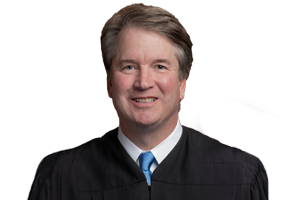
Brett M. Kavanaugh
Joined by Roberts, Sotomayor, Kagan, and Jackson.
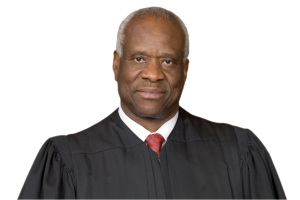
Clarence Thomas
Joined by Alito, Gorsuch, and Barrett.
The holding
Where a state court’s application of a state exhaustion requirement in effect immunizes state officials from 42 U.S.C. §1983 claims challenging delays in the administrative process, state courts may not deny those claims on failure-to-exhaust grounds. Justice Brett Kavanaugh authored the opinion of the Court on behalf of the 5-4 majority holding that Alabama may not enforce an administrative-exhaustion rule. When a state law or rule functionally immunizes government officials from suits under § 1983, that law is preempted and unenforceable. Section 1983 ensures that individuals can seek a federal remedy for violations of their constitutional rights. Alabama’s exhaustion requirement, applied to delays in benefits processing, creates a procedural barrier that prevents claimants from ever challenging those delays under §1983. This precedent follows decisions in Haywood v. Drown and Howlett v. Rose, which held that states cannot erect procedural obstacles that effectively nullify federally guaranteed rights. The Alabama Supreme Court’s ruling in this case violated that principle by conditioning § 1983 suits on completing the very process claimants sought to challenge for unreasonable delay. Characterizing Alabama’s rule as “jurisdictional” does not change this result. A state cannot use jurisdictional labels to avoid compliance with federal law, especially when the rule in question operates as an immunity provision. Nor does the potential availability of mandamus relief in Alabama courts justify the exhaustion rule, as requiring claimants to complete state-mandated processes before suing simply reinstates the same barrier. Because Alabama’s exhaustion rule functionally immunizes officials from § 1983 suits regarding administrative delays, it is preempted, and the judgment of the Alabama Supreme Court is reversed. Justice Clarence Thomas authored a dissenting opinion, in which Justices Samuel Alito, Neil Gorsuch, and Amy Coney Barrett joined in part.
Argued by
- Adam G. Unikowsky for the Petitioners
- Edmund G. LaCour, Jr. for the Respondent
Case path
- Jan 12, 2024 granted
- Oct 7, 2024 argued
- Feb 21, 2025 decided