Wisconsin Bell cv. United States, ex rel. Heath
Petitioner Wisconsin Bell, Inc · Respondent United States, ex rel. Todd Heath
- Reporter
- 604 U.S. ___ (2025)
- From
- United States Court of Appeals for the Seventh Circuit
- How it got here
- writ of <i>certiorari</i>
Do reimbursement requests submitted to the Federal Communications Commission's E-rate program qualify as “claims” under the False Claims Act?
Question before the CourtWhat happened
In 1996, Congress created the E-rate program to help schools and libraries afford telecommunications services. The program provides federal subsidies on a sliding scale, and service providers must follow the “lowest-corresponding-price” rule, offering schools and libraries the lowest price charged to similarly situated non-residential customers. Wisconsin Bell, aware of this rule since its inception, provided services to hundreds of eligible schools and libraries under the E-rate program. Despite knowing about the rule, Wisconsin Bell did not train its sales representatives or implement compliance mechanisms until 2009. The company admitted to treating pricing contracts for schools and libraries the same as other customers, often instructing sales representatives to offer the highest prices possible. In 2009, following a settlement by its parent company with the Department of Justice and FCC, Wisconsin Bell developed a compliance plan. In 2008, Todd Heath filed a qui tam action under the False Claims Act, alleging that Wisconsin Bell submitted false claims and certifications related to the E-rate program. After initial dismissal and subsequent appeal, the case proceeded to discovery, and the district court granted summary judgment in favor of Wisconsin Bell. The U.S. Court of Appeals for the Seventh Circuit reversed and remanded, finding that Heath identified enough specific evidence of discriminatory pricing to allow a reasonable jury to find that Wisconsin Bell, acting with the required scienter, charged specific schools and libraries more than it charged similarly situated customers.
Unanimous.
All nine justices agreed on the outcome. Concurrences may differ on reasoning, but the Court spoke with one voice on the judgment.
The opinions 3
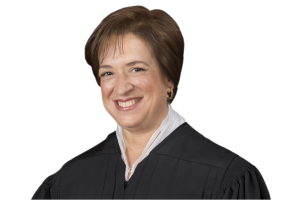
Elena Kagan
Joined by Roberts, Alito, Gorsuch, Sotomayor, Barrett, and Jackson.
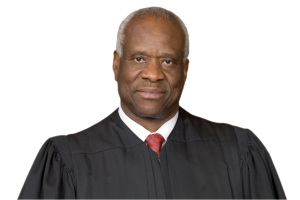
Clarence Thomas
Joined by Roberts, Alito, Gorsuch, Sotomayor, Barrett, and Jackson.
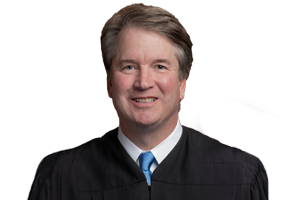
Brett M. Kavanaugh
Joined by Roberts, Alito, Gorsuch, Sotomayor, Barrett, and Jackson.
The holding
The False Claims Act (FCA) applies to E-Rate reimbursement requests because the government “provided” a portion of the money disbursed from the E-Rate program’s fund. Justice Elena Kagan authored the unanimous opinion of the Court. A request for money qualifies as an FCA “claim” if the government has provided “any portion” of the funds sought. The government contributed over $100 million to the E-Rate program in the relevant years through two sources: delinquent contributions from telecom carriers collected by the Federal Communications Commission (FCC) and Treasury Department and settlement payments the Justice Department secured in fraud enforcement actions. These sums were first received into government-controlled Treasury accounts before being transferred to the E-Rate fund for disbursement. Because even a fraction of the funds at issue flowed through the government’s hands, the statute’s plain text is satisfied: the government “provided” a portion of the money paid to E-Rate participants. Wisconsin Bell’s counterargument that the government did not “provide” these funds because they originated from private carriers fails. The statutory definition makes clear that the government’s title to the money is irrelevant. Even acting as an intermediary, the government still "provides" money when it receives and distributes funds in furtherance of its programs, as seen in tax collection and other funding mechanisms. Since the Court finds that at least some federal money entered and exited the public treasury before funding E-Rate reimbursements, the FCA applies, and Heath’s fraud claims may proceed. Justices Clarence Thomas and Brett Kavanaugh each authored a concurring opinion and joined the other’s, and Justice Samuel Alito joined Justice Thomas’s concurrence in part.
Argued by
- Allyson N. Ho for the Petitioner
- Tejinder Singh for the Respondent
- Vivek Suri for the United States, as amicus curiae, supporting the Respondent
Case path
- Jun 17, 2024 granted
- Nov 4, 2024 argued
- Feb 21, 2025 decided