Trump v. Anderson
Petitioner Donald J. Trump · Respondent Norma Anderson, et al.
- Reporter
- 601 U.S. ___ (2024)
- From
- Colorado Supreme Court
- How it got here
- writ of <i>certiorari</i>
Does Section Three of the Fourteenth Amendment disqualify Donald Trump from holding the office of President of the United States and thus from appearing on Colorado’s 2024 presidential primary ballot?
Question before the CourtWhat happened
In the 2016 U.S. presidential election, Donald Trump was elected as the 45th President, serving for four years. In the 2020 election, Joe Biden was elected as the 46th President, despite Trump's refusal to accept the results. The Electoral College confirmed Biden's victory with 306 votes to Trump's 232. Trump continued to challenge the outcome in court and media. On January 6, 2021, during a Congressional session to certify the election, Trump held a rally, claiming victory and urging supporters to protest at the Capitol. The next day, Vice President Pence certified Biden's win. Trump is currently seeking the Colorado Republican Party’s nomination for the 2024 presidential election. A group of Colorado electors, consisting of both registered Republicans and unaffiliated voters, filed a petition in the Denver District Court to prevent Trump from appearing on the Colorado Republican presidential primary ballot. Citing Colorado’s Uniform Election Code, they requested the court to direct Secretary of State Jena Griswold to exclude Trump’s name. Their argument centered on Section Three of the Fourteenth Amendment, claiming Trump was disqualified due to his involvement in the January 6, 2021, insurrection, violating his presidential oath to support the U.S. Constitution. The court found by clear and convincing evidence that Trump engaged in insurrection as those terms are used in Section Three but that Section Three does not apply to the president. Thus, the court denied the petition. On appeal, the Colorado Supreme Court reversed in part, concluding that Section Three disqualifies Trump from holding the office of President of the United States and thus that it would be unlawful under Colorado law to list him on the ballot.
Unanimous.
All nine justices agreed on the outcome. Concurrences may differ on reasoning, but the Court spoke with one voice on the judgment.
The opinions 4
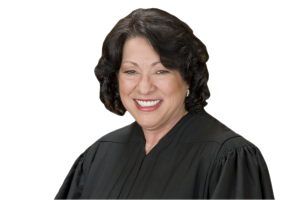
Sonia Sotomayor
Joined by Roberts, Thomas, Alito, Gorsuch, and Kavanaugh.
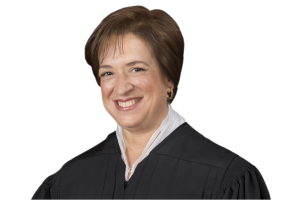
Elena Kagan
Joined by Roberts, Thomas, Alito, Gorsuch, and Kavanaugh.
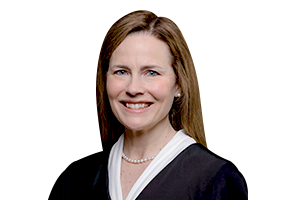
Amy Coney Barrett
Joined by Roberts, Thomas, Alito, Gorsuch, and Kavanaugh.
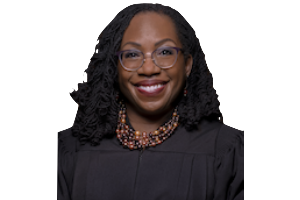
Ketanji Brown Jackson
Joined by Roberts, Thomas, Alito, Gorsuch, and Kavanaugh.
The holding
While states have the power to disqualify state officials under Section 3, they lack the authority to enforce Section 3 against federal officeholders and candidates. In a per curiam (unsigned) opinion, the Court reversed the Colorado Supreme Court decision that had excluded former President Donald Trump from the state's 2024 Republican primary ballot based on Section 3 of the Fourteenth Amendment. The Constitution does not delegate to the states any power to enforce Section 3 with respect to federal offices. The Fourteenth Amendment itself only speaks to enforcement by Congress under Section 5, and it would be incongruous to read the Amendment as silently granting enforcement power to the states. The Elections and Electors Clauses also do not implicitly authorize states to enforce Section 3 against federal candidates. Historically, it has been Congress, not the states, that has enforced Section 3 against federal officeholders. Allowing states to do so could lead to conflicting and disruptive outcomes in federal elections, especially presidential elections. Responsibility for enforcing Section 3 against federal officeholders and candidates rests solely with Congress. Justice Amy Coney Barrett authored an opinion concurring in part and concurring in the judgment, pointing out that the Court did not need to decide the question whether federal legislation is the exclusive vehicle through which Section 3 can be enforced. Justice Barrett argued that resolving that more complicated question would and did “amplify disagreement . . . in the volatile season of a Presidential election” Justices Sonia Sotomayor, Elena Kagan, and Ketanji Brown Jackson co-authored an opinion concurrring in the judgment but arguing that the Court departed from the principle of judicial restraint, which calls for deciding only as much as necessary to dispose of the issues in a case. By going further and announcing “novel rules” for how federal enforcement of Section 3 must operate, such as requiring specific legislation enacted by Congress, the majority unnecessarily decided momentous constitutional questions not before the Court, effectively limiting future efforts to disqualify presidential candidates under Section 3.
Argued by
- Jonathan F. Mitchell for the Petitioner
- Jason C. Murray for Respondents Anderson, et al.
- Shannon W. Stevenson for Respondent Griswold
Case path
- Jan 5, 2024 granted
- Feb 8, 2024 argued
- Mar 4, 2024 decided