Murthy v. Missouri
Appellant Vivek H. Murthy, U.S. Surgeon General, et al. · Appellee Missouri, et al.
- Reporter
- 603 U.S. ___ (2024)
- From
- United States Court of Appeals for the Fifth Circuit
- How it got here
- appeal
Did the federal government’s request that private social media companies take steps to prevent the dissemination of purported misinformation transform those companies’ content-moderation decisions into state action and thus violate users’ First Amendment rights?
Question before the CourtWhat happened
Multiple plaintiffs, including epidemiologists, consumer and human rights advocates, academics, and media operators, claimed that various defendants, including numerous federal agencies and officials, have engaged in censorship, targeting conservative-leaning speech on topics such as the 2020 presidential election, COVID-19 origins, mask and vaccine efficacy, and election integrity. The plaintiffs argue that the defendants used public statements and threats of regulatory action, such as reforming Section 230 of the Communications Decency Act, to induce social media platforms to suppress content, thereby violating the plaintiffs’ First Amendment rights. The States of Missouri and Louisiana also alleged harm due to the infringement of the free speech rights of their citizens. The U.S. District Court for the Western District of Louisiana granted the plaintiffs’ motion for a nationwide preliminary injunction prohibiting the federal government from meeting with social media companies or otherwise seeking to influence their content-moderation policies. The U.S. Supreme Court granted the government’s motion for an emergency stay and granted certiorari to review the case on the merits.
Cross-aisle coalition.
The split did not track the usual ideological lines — justices from both wings landed on the same side.
The opinions 2
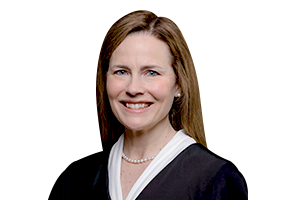
Amy Coney Barrett
Joined by Roberts, Sotomayor, Kagan, Kavanaugh, and Jackson.
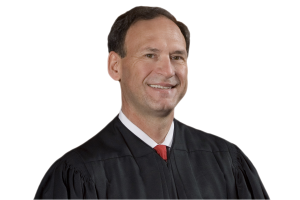
Samuel A. Alito Jr.
Joined by Thomas and Gorsuch.
The holding
Respondents—two States and five individual social-media users who sued Executive Branch officials and agencies, alleging that the Government pressured the platforms to censor their speech in violation of the First Amendment—lack Article III standing to seek an injunction. Justice Amy Coney Barrett authored the 6-3 majority opinion of the Court. The Court concluded that the petitioners lacked standing for two main reasons: First, the plaintiffs failed to establish a clear causal link between their past social media restrictions and the actions of the government defendants. Most of the plaintiffs could not demonstrate that their content was restricted due to government pressure rather than the platforms' independent moderation policies. Even for Jill Hines, who made the strongest case, the connections were tenuous and did not clearly show that her restrictions were likely traceable to government coercion rather than Facebook's own judgment. Second, the plaintiffs could not demonstrate a substantial risk of future injury traceable to the defendants' actions. By the time of the lawsuit, most of the government's communications with social media platforms about COVID-19 and election misinformation had significantly decreased. Without evidence of ongoing pressure from the government, it was speculative to assume that future content moderation decisions would be attributable to the defendants rather than the platforms' independent policies. The Court also found that an injunction against the government was unlikely to affect the platforms' content moderation decisions, creating a redressability problem. The Court emphasized that at the preliminary injunction stage, plaintiffs must make a clear showing that they are likely to establish each element of standing, which the petitioners failed to do based on the evidence presented. Justice Samuel Alito authored a dissenting opinion, in which Justices Clarence Thomas and Neil Gorsuch joined.
Argued by
- Brian H. Fletcher for the Petitioners
- J. Benjamin Aguinaga for the Respondents
Case path
- Oct 14, 2023 granted
- Mar 18, 2024 argued
- Jun 26, 2024 decided