Starbucks Corporation v. McKinney
Petitioner Starbucks Corporation · Respondent M. Kathleen McKinney
- Reporter
- 602 U.S. ___ (2024)
- From
- United States Court of Appeals for the Sixth Circuit
- How it got here
- writ of <i>certiorari</i>
What test must courts use to evaluate requests for injunctions under Section 10(j) of the National Labor Relations Act?
Question before the CourtWhat happened
In early January 2022, Nikki Taylor, a supervisor at a Memphis Starbucks, initiated union-organizing efforts, contacting Buffalo, New York, Starbucks employees and the Union for guidance. Conversations with colleagues about unionizing led to managerial scrutiny and disciplinary actions against Taylor for alleged insubordination and a dress code violation. Despite this, Taylor and coworkers held a meeting with Union representatives and drafted a letter to Starbucks's CEO announcing their intent to unionize. On January 18, following the public release of the unionization letter, the Memphis store was closed early by management under the pretext of understaffing, coinciding with a media event covering the unionization efforts. Subsequent investigations by Starbucks led to the February 8 firing of seven employees, including key organizing committee members, for policy violations during the media event. These terminations led to a reduced display of union support among the remaining staff and increased anxiety about unionizing in other Starbucks locations. However, the Memphis store voted to join the Union in June. The Union filed charges against Starbucks for unfair labor practices. Following an investigation, a district court ordered a temporary injunction, demanding the reinstatement of the terminated employees. On appeal, the U.S. Court of Appeals for the Sixth Circuit affirmed, finding that the NLRB satisfied its burden of showing “‘reasonable cause’ to believe that employers engaged in unfair labor practices and that an injunction protects the Board’s remedial power.”
Unanimous.
All nine justices agreed on the outcome. Concurrences may differ on reasoning, but the Court spoke with one voice on the judgment.
The opinions 2
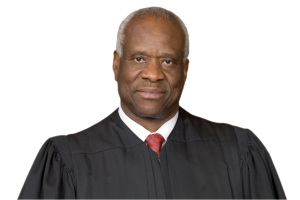
Clarence Thomas
Joined by Roberts, Alito, Sotomayor, Kagan, Gorsuch, Kavanaugh, and Barrett.

Ketanji Brown Jackson
Joined by Roberts, Alito, Sotomayor, Kagan, Gorsuch, Kavanaugh, and Barrett.
The holding
When considering requests for preliminary injunctions under §10(j) of the National Labor Relations Act, courts must apply the traditional four-factor test from Winter v. Natural Resources Defense Council: the plaintiff must clearly show likely success on the merits, likely irreparable harm without preliminary relief, that the balance of equities favors them, and that an injunction serves the public interest. This standard applies because when Congress authorizes courts to grant equitable relief, there is a strong presumption they will follow traditional equity principles unless Congress clearly directs otherwise. Justice Clarence Thomas authored the 8-1 majority opinion of the Court. Section 10(j)’s language authorizing “just and proper” relief simply invokes courts’ traditional equitable discretion rather than creating a different standard. The Board’s argument for a more lenient “reasonable cause” standard fails because this would improperly lower the bar for injunctions by requiring courts to defer to the Board’s preliminary views. While the Board’s final decisions receive deference on appeal, its preliminary positions in §10(j) petitions are merely litigation positions that do not warrant such deference. The Board remains free to reach its own conclusions in administrative proceedings regardless of how thoroughly courts examine the merits when considering preliminary injunctions. Justice Ketanji Brown Jackson authored an opinion concurring in part, dissenting in part, and concurring in the judgment.
Argued by
- Lisa S. Blatt for the Petitioner
- Austin L. Raynor for the Respondent
Case path
- Jan 12, 2024 granted
- Apr 23, 2024 argued
- Jun 13, 2024 decided