Department of State v. Munoz
Petitioner Department of State, et al. · Respondent Sandra Munoz, et al.
- Reporter
- 602 U.S. ___ (2024)
- From
- United States Court of Appeals for the Ninth Circuit
- How it got here
- writ of <i>certiorari</i>
Does the denial of a visa to the non-citizen spouse of a U.S. citizen infringe on a constitutionally protected interest of the citizen and, if so, did the government properly justify that decision in this case?
Question before the CourtWhat happened
Sandra Muñoz, a U.S. citizen, married Luis Asencio-Cordero, an El Salvadoran citizen, in 2010. They have a U.S. citizen child. Asencio-Cordero, who arrived in the U.S. in 2005 and has multiple tattoos, applied for an immigrant visa after Muñoz filed an approved immigrant-relative petition and waiver for his inadmissibility. In 2015, he returned to El Salvador for his visa interview, denying any gang affiliations. However, in December 2015, the U.S. Consulate denied his visa under 8 U.S.C. § 1182(a)(3)(A)(ii), suggesting his potential involvement in unlawful activities. Muñoz sought intervention from Congresswoman Judy Chu, but the State Department upheld the decision. A declaration from a gang expert, Humberto Guizar, stated that Asencio-Cordero’s tattoos were not gang-related. Despite this and further appeals, including to the State Department's Office of Inspector General, the decision remained unchanged, with authorities confirming the inadmissibility and indicating no grounds for appeal. Following the government’s denial of Asencio-Cordero’s immigrant visa application, the plaintiffs sought judicial review, arguing that the statute was unconstitutionally vague. The district court granted summary judgment to the defendants, invoking the doctrine of consular nonreviewability to prevent judicial scrutiny of the visa decision. However, the U.S. Court of Appeals for the Ninth Circuit found that the government failed to provide the constitutionally required notice within a reasonable time after the visa application was denied. As a result, the appellate court determined that the government was not entitled to summary judgment based on the doctrine of consular nonreviewability and vacated the district court's decision.
6–0.
A narrow margin — the Court split hard on this one. Read the concurrences carefully.
The opinions 3

Amy Coney Barrett
Joined by Roberts, Thomas, Alito, and Kavanaugh.

Sonia Sotomayor
Joined by Kagan and Jackson.
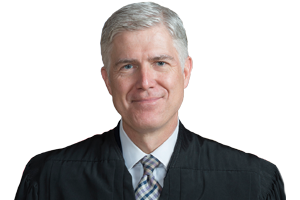
Neil Gorsuch
Joined by Roberts, Thomas, Alito, and Kavanaugh.
The holding
A U.S. citizen does not have a fundamental liberty interest in her noncitizen spouse being admitted to the country. Justice Amy Coney Barrett authored the majority opinion of the Court. The doctrine of consular nonreviewability holds that federal courts generally cannot review visa denial decisions made by consular officers, but there may be a narrow exception for decisions that abridge fundamental constitutional rights (the Court assumed but did not decide the possibility of such an exception). However, the right to bring a noncitizen spouse to the U.S. is not deeply rooted in the nation's history and tradition, as required by the Glucksberg test. Throughout the history of U.S. immigration law, the admission of noncitizens, including spouses, has consistently been treated as a matter of sovereign discretion rather than individual right. While Congress has the ability to prioritize family unity in immigration policy, there is no constitutional requirement to do so. Thus, U.S. citizens do not have a fundamental right to have their noncitizen spouses admitted to the country, nor do they have procedural due process rights in the visa proceedings of others. Justice Neil Gorsuch authored an opinion concurring in the judgment. Justice Sonia Sotomayor authored a dissenting opinion, in which Justices Elena Kagan and Ketanji Brown Jackson joined.
Argued by
- Curtis E. Gannon for the Petitioners
- Eric T. Lee for the Respondents
Case path
- Jan 12, 2024 granted
- Apr 23, 2024 argued
- Jun 21, 2024 decided