City of Grants Pass v. Johnson
Petitioner City of Grants Pass, Oregon · Respondent Gloria Johnson, et al.
- Reporter
- 603 U.S. ___ (2024)
- From
- United States Court of Appeals for the Ninth Circuit
- How it got here
- writ of <i>certiorari</i>
Does a city’s enforcement of public camping against involuntarily homeless people violate the Eighth Amendment’s protection against cruel and unusual punishment?
Question before the CourtWhat happened
The city of Grants Pass in southern Oregon has a population of approximately 38,000, and of that population, somewhere between 50 and 600 persons are unhoused. Whatever the exact number of unhoused persons, however, it exceeds the number of available shelter beds, requiring that at least some of them sleep on the streets or in parks. However, several provisions of the Grants Pass Municipal Code prohibit them from doing so, including an “anti-sleeping” ordinance, two “anti-camping” ordinances, a “park exclusion” ordinance, and a “park exclusion appeals” ordinance. In September 2018, a three-judge panel of the U.S. Court of Appeals for the Ninth Circuit decided Martin v. City of Boise, holding that “the Eighth Amendment prohibits the imposition of criminal penalties for sitting, sleeping, or lying outside on public property for homeless individuals who cannot obtain shelter.” While the Grants Pass Municipal Code provisions impose only civil penalties, they still can mature into criminal penalties. A district court certified a class of plaintiffs of involuntarily unhoused persons living in Grants Pass and concluded that, based on the unavailability of shelter beds, the City’s enforcement of its anti-camping and anti-sleeping ordinances violated the Cruel and Unusual Punishment Clause. A panel of the Ninth Circuit affirmed, and the Ninth Circuit denied rehearing en banc.
6–0.
A narrow margin — the Court split hard on this one. Read the concurrences carefully.
The opinions 3
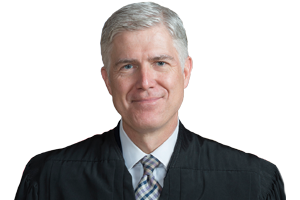
Neil Gorsuch
Joined by Roberts, Alito, Kavanaugh, and Barrett.
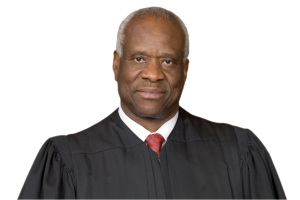
Clarence Thomas
Joined by Roberts, Alito, Kavanaugh, and Barrett.
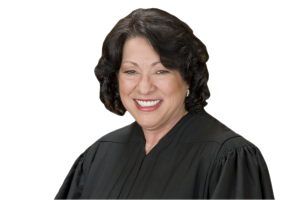
Sonia Sotomayor
Joined by Kagan and Jackson.
The holding
The enforcement of generally applicable laws regulating camping on public property does not constitute “cruel and unusual punishment” prohibited by the Eighth Amendment. Justice Neil Gorsuch authored the 6-3 majority opinion of the Court. The Eighth Amendment’s Cruel and Unusual Punishments Clause has historically focused on what punishments may follow a criminal conviction, not on what behaviors a government may criminalize. Although, in Robinson v. California, the Court prohibited criminalizing the mere status of drug addiction, that case is distinguishable from laws that prohibit specific conduct like public camping. The Court has previously declined to extend Robinson to cover “involuntary” acts resulting from a particular status. For example, in Powell v. Texas, the Court declined to prohibit punishing public drunkenness by alcoholics, even though their conduct might be considered involuntary. Expanding Robinson’s narrow holding would risk turning the judiciary into the ultimate arbiter of criminal responsibility across diverse areas of law, a role for which the Eighth Amendment provides no guidance. Such an expansion would lead to practical difficulties, as demonstrated by the Ninth Circuit's attempt to implement this approach in Martin v. City of Boise. Cities have faced numerous challenges in determining who qualifies as "involuntarily" homeless and what constitutes "adequate" shelter under Martin. These judicially created standards have proven unworkable and have interfered with local efforts to address homelessness, ultimately undermining the democratic process and federalism principles. Justice Clarence Thomas authored a concurring opinion. Justice Sonia Sotomayor authored a dissenting opinion, in which Justices Elena Kagan and Ketanji Brown Jackson joined.
Argued by
- Theane D. Evangelis for the Petitioner
- Kelsi B. Corkran for the Respondents
- Edwin S. Kneedler for the United States, as amicus curiae, supporting neither party
Case path
- Jan 12, 2024 granted
- Apr 22, 2024 argued
- Jun 28, 2024 decided