Diaz v. United States
Petitioner Delilah Guadalupe Diaz · Respondent United States
- Reporter
- 602 U.S. ___ (2024)
- From
- United States Court of Appeals for the Ninth Circuit
- How it got here
- writ of <i>certiorari</i>
Under Federal Rule of Evidence 704(b), may a governmental expert witness testify that couriers know they are carrying drugs and that drug-trafficking organizations do not entrust large quantities of drugs to unknowing transporters to prove that the defendant knew she was carrying illegal drugs?
Question before the CourtWhat happened
On August 17, 2020, Delilah Guadalupe Diaz was returning to California from Mexico. At the border, a “crunch-like sound” was heard when she rolled down the car window, leading the border agent to call for backup and check the car's door panels using a density measuring device. Inspectors found 27.98 kilos of methamphetamine hidden in these panels. Diaz claimed she was unaware of the drugs in the car, explaining that she had initially traveled to Mexico with her daughter, who returned early. Diaz stayed back to visit her boyfriend, and used his car to return home. She stated her boyfriend had told her he would retrieve the car from her in a few days. The government charged Diaz with importation of methamphetamine in violation of the Controlled Substances Act. One of the elements of that offense is that the defendant knew she was transporting drugs. 21 U.S.C. § 960(a)(1). To prove that element, the government called an expert to testify that “narcotic traffickers do not entrust large and valuable quantities of narcotics to unknowing couriers.” Diaz sought to exclude the expert evidence, arguing that it would violate Federal Rule of Evidence 704(b) by providing “a direct comment on the ultimate issue—Ms. Diaz’s knowledge.” However, the district court allowed the evidence, the jury found Diaz guilty, and the district court sentenced her to seven years in prison. On appeal, the U.S. Court of Appeals for the Ninth Circuit affirmed.
Cross-aisle coalition.
The split did not track the usual ideological lines — justices from both wings landed on the same side.
The opinions 3
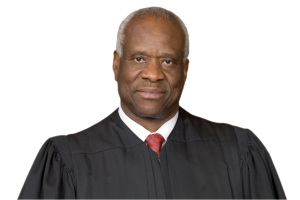
Clarence Thomas
Joined by Roberts, Alito, Kavanaugh, and Barrett.
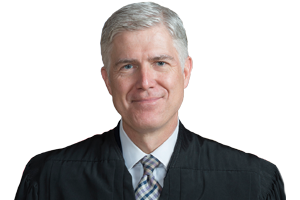
Neil Gorsuch
Joined by Sotomayor and Kagan.

Ketanji Brown Jackson
Joined by Roberts, Alito, Kavanaugh, and Barrett.
The holding
Expert testimony that “most people” in a group have a particular mental state is not an opinion about “the defendant” and thus does not violate Federal Rule of Evidence 704(b). Justice Clarence Thomas authored the 6-3 majority opinion of the Court. Federal Rule of Evidence 704(b) is a narrow exception to the general admissibility of ultimate issue opinions established by Rule 704(a). It only prohibits expert opinions about whether a specific defendant had a particular mental state that is an element of the crime or defense. It does not bar testimony about the mental states of people in general or groups that may include the defendant. Moreover, the language of Rule 704(b), particularly the word “about,” supports the conclusion that the rule targets specific conclusions about a defendant's mental state, not just any testimony related to mental states. This interpretation is further supported by the context of Rule 704(a), which allows opinions embracing ultimate issues, making Rule 704(b) a narrow exception to that broader rule. Justice Kentanji Brown Jackson authored a concurring opinion to emphasize that, as Congress designed it, Rule 704(b) is party agnostic. Justice Neil Gorsuch authored a dissenting opinion, in which Justices Sonia Sotomayor and Elena Kagan joined. Justice Gorsuch argued that the majority’s interpretation allows prosecutors to put an expert on the stand to testify as to what “most” people like the defendant think when they commit a legally proscribed act and then merely convince the jury that the defendant is like “most” people and convict.
Argued by
- Jeffrey L. Fisher for the Petitioner
- Matthew Guarnieri for the Respondent
Case path
- Nov 13, 2023 granted
- Mar 19, 2024 argued
- Jun 20, 2024 decided