Texas v. New Mexico and Colorado
Petitioner Texas · Respondent New Mexico and Colorado
- How it got here
- original jurisdiction
May a court enter a consent decree among Texas, New Mexico, and Colorado regarding the Rio Grande Compact without the consent of the United States, who intervened in the action?
Question before the CourtWhat happened
This is a continuation of an action involving a dispute over the waters of the Rio Grande Basin and Elephant Butte. The Supreme Court previously held that the United States may intervene in the action, which it did. When the Special Master filed the Third Interim Report, Colorado, Texas, and New Mexico moved for entry of a proposed "Consent Decree" that would resolve the dispute without the consent of the United States. The United States claims that the Court should deny the motion because (1) a court's approval of a consent decree cannot dispose of the valid claims of nonconsenting intervenors—i.e., the United States in this case; (2) the consent decree would impose obligations on a party, to wit, the United States, without that party's consent; and (3) the consent decree would be "contrary to the Compact."
Cross-aisle coalition.
The split did not track the usual ideological lines — justices from both wings landed on the same side.
The opinions 2

Ketanji Brown Jackson
Joined by Roberts, Sotomayor, Kagan, and Kavanaugh.
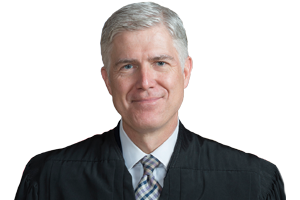
Neil Gorsuch
Joined by Thomas, Alito, and Barrett.
The holding
Because the proposed consent decree would dispose of the United States’ Compact claims without its consent, the States’ motion to enter the consent decree is denied. Justice Ketanji Brown Jackson authored the 5-4 majority opinion of the Court. Consent decrees have a dual nature; they embody agreements between parties (contractual) and are enforceable as judicial decrees. While intervenors can present evidence and objections, they cannot block a consent decree merely by withholding consent unless the settlement affects their claims. Additionally, a consent decree cannot dispose of the claims of nonconsenting intervenors without their agreement. Here, the Court needed to determine whether the United States has valid Compact claims and if the proposed consent decree would dispose of those claims. Its interests in the Rio Grande Project and compliance with treaty obligations constitute distinctively federal interests, justifying its intervention. However, the proposed consent decree would resolve the United States’ claims without addressing its allegations, making it inappropriate for approval without the United States' consent. Justice Neil Gorsuch authored a dissenting opinion, in which Justices Clarence Thomas, Samuel Alito, and Amy Coney Barrett joined. Justice Gorsuch argued that the federal government seeks to prolong this original jurisdiction dispute, a form of litigation usually reserved for disputes between States, over the objection of both Texas and New Mexico.
Argued by
- Frederick Liu for the United States
- Lanora C. Pettit for Texas
- Jeffrey J. Wechsler for New Mexico
Case path
- Jan 29, 2024 granted
- Mar 20, 2024 argued
- Jun 21, 2024 decided