United States v. Rahimi
Petitioner United States · Respondent Zackey Rahimi
- Reporter
- 602 U.S. ___ (2024)
- From
- United States Court of Appeals for the Fifth Circuit
- How it got here
- writ of <i>certiorari</i>
Does 18 U.S.C. § 922(g)(8), which prohibits the possession of firearms by persons subject to domestic-violence restraining orders, violate the Second Amendment?
Question before the CourtWhat happened
Between December 2020 and January 2021, Zackey Rahimi was involved in a series of violent incidents in Arlington, Texas, including multiple shootings and a hit-and-run. Rahimi was under a civil protective order for alleged assault against his ex-girlfriend, which explicitly prohibited him from possessing firearms. Police searched his home and found a rifle and a pistol, leading to Rahimi’s indictment for violating federal law 18 U.S.C. § 922(g)(8), which makes it unlawful for someone under a domestic violence restraining order to possess firearms. Rahimi moved to dismiss the indictment on constitutional grounds but was denied, as his argument was foreclosed by United States v. McGinnis, 956 F.3d 747 (5th Cir. 2020). Rahimi pleaded guilty but continued his constitutional challenge on appeal. As the appeal was pending, the U.S. Supreme Court decided New York State Rifle & Pistol Association, Inc. v. Bruen, 579 U.S. __ (2022). Rahimi argued that Bruen overruled McGinnis and thus that § 922(g)(8) was unconstitutional, and the U.S. Court of Appeals for the Fifth Circuit agreed.
Unanimous.
All nine justices agreed on the outcome. Concurrences may differ on reasoning, but the Court spoke with one voice on the judgment.
The opinions 7

John G. Roberts Jr.
Joined by Alito and Kagan.
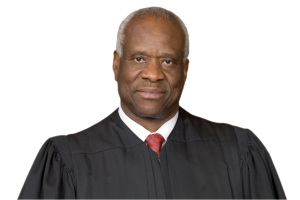
Clarence Thomas
Alone.

Sonia Sotomayor
Joined by Alito and Kagan.
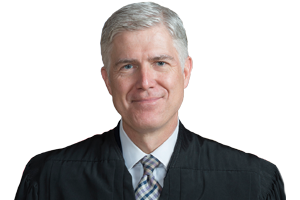
Neil Gorsuch
Joined by Alito and Kagan.
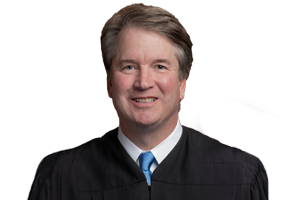
Brett M. Kavanaugh
Joined by Alito and Kagan.

Amy Coney Barrett
Joined by Alito and Kagan.

Ketanji Brown Jackson
Joined by Alito and Kagan.
The holding
When an individual has been found by a court to pose a credible threat to the physical safety of another, that individual may be temporarily disarmed consistent with the Second Amendment. Chief Justice John Roberts authored the 8-1 majority opinion of the Court. The Second Amendment right to keep and bear arms is fundamental but not unlimited. When examining a challenged regulation, the Court considers whether it is consistent with historical principles, not necessarily identical to historical laws. The key factors are why and how the regulation burdens the right. Section 922(g)(8) fits within this tradition. Historically, two legal regimes addressed firearms violence: surety laws and “going armed” laws. Surety laws allowed magistrates to require bonds from individuals suspected of future misbehavior, including firearm misuse. “Going armed” laws prohibited carrying weapons in a way that terrified the public. Both regimes targeted individuals who posed threats to others’ safety. Section 922(g)(8) is relevantly similar to these historical laws. It applies to individuals found by a court to threaten others’ physical safety, just as the historical laws did. The burden it imposes—temporary disarmament based on a judicial finding—is also consistent with historical practice. While not identical to historical laws, Section 922(g)(8) aligns with the principles underlying the Second Amendment and historical firearm regulations aimed at preventing violence. Justice Sonia Sotomayor authored a concurring opinion, in which Justice Elena Kagan joined, opining that the Court correctly applied its decision in Bruen, but she continues to believe that Bruen was incorrectly decided. Justice Neil Gorsuch authored a concurring opinion, emphasizing that while Section 922(g)(8) can be constitutional in some applications, the Court’s ruling is narrow and leaves open many questions about the law’s constitutionality in other specific circumstances. Justice Brett Kavanaugh authored a concurring opinion to review the proper roles of text, history, and precedent in constitutional interpretation. Justice Ketanji Brown Jackson authored a concurring opinion, noting that two years’ after Bruen, it is now clear that the unclear legal standard established in Bruen is difficult for lower courts to apply. Justice Amy Coney Barrett authored a concurring opinion, acknowledging lower courts’ struggle to apply Bruen but pointing out that in this case, the Court settles on just the right level of generality Justice Clarence Thomas authored a dissenting opinion, arguing that not a single historical regulation justifies the statute at issue.
Argued by
- Elizabeth B. Prelogar for the Petitioner
- J. Matthew Wright for the Respondent
Case path
- Jun 30, 2023 granted
- Nov 7, 2023 argued
- Jun 21, 2024 decided