Smith v. Arizona
Petitioner Jason Smith · Respondent State of Arizona
- Reporter
- 602 U.S. ___ (2024)
- From
- State appellate court
- How it got here
- writ of <i>certiorari</i>
Does the Confrontation Clause of the Sixth Amendment permit the prosecution in a criminal trial to present testimony by a substitute expert conveying the testimonial statements of a nontestifying forensic analyst?
Question before the CourtWhat happened
In December 2019, law enforcement officers executed a search warrant at Jason Smith's father's property, which had multiple structures. They detected a strong odor of marijuana from a shed, where they found Smith and later discovered various drugs and paraphernalia. Smith was charged with multiple felonies related to drug possession. During the trial, a forensic scientist testified that the seized substances were indeed illegal drugs. Smith's defense argued he was merely at the property to care for his ill father and was not involved in any illegal activities. Smith was found guilty on several counts, including possession of marijuana for sale, and was sentenced to four years in prison. Smith appealed the decision, claiming, among other things, that the admission of drug-analysis testimony violated his confrontation rights because the testifying expert relied on data generated by a non-testifying expert. The appellate court affirmed.
Unanimous.
All nine justices agreed on the outcome. Concurrences may differ on reasoning, but the Court spoke with one voice on the judgment.
The opinions 4
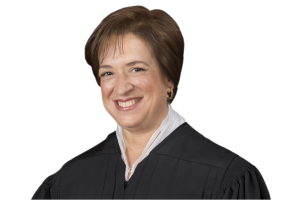
Elena Kagan
Joined by Roberts, Sotomayor, Kavanaugh, Barrett, and Jackson.
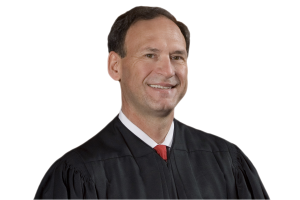
Samuel A. Alito Jr.
Joined by Roberts, Sotomayor, Kavanaugh, Barrett, and Jackson.
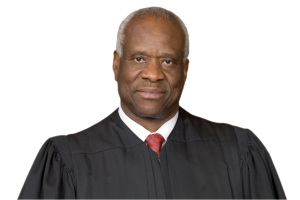
Clarence Thomas
Joined by Roberts, Sotomayor, Kavanaugh, Barrett, and Jackson.
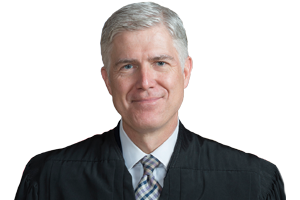
Neil Gorsuch
Joined by Roberts, Sotomayor, Kavanaugh, Barrett, and Jackson.
The holding
When an expert conveys an absent lab analyst’s statements in support of the expert’s opinion, and the statements provide that support only if true, then the statements come into evidence for their truth, and thus implicate the Sixth Amendment’s Confrontation Clause. Justice Elena Kagan authored the majority opinion of the Court. The Confrontation Clause applies to “testimonial hearsay,” that is, out-of-court statements introduced for their truth. The key question is whether the non-testifying analyst’s lab statements were introduced for their truth or for another purpose. The Court rejected Arizona’s argument that the statements were only used to show the basis of the non-testifying expert opinion, not for their truth. Evidentiary rules do not control whether a statement is admitted for its truth; this is a constitutional question. When an expert conveys out-of-court statements to support their opinion, and those statements only support the opinion if true, then the statements have been offered for their truth. The jury cannot evaluate the expert’s credibility without assessing the truth of the underlying statements. In this case, the expert’s testimony relied entirely on accepting the non-testifying analyst’s statements as true. His opinions were predicated on the truth of what the analyst reported about her lab work. Allowing this practice would undermine previous decisions in Melendez-Diaz and Bullcoming and allow easy evasion of the Confrontation Clause. Therefore, the non-testifying analyst’s statements were introduced for their truth, violating Smith's confrontation rights if the statements were testimonial. The Court remanded for determination of whether the statements were testimonial by looking at each statement’s “primary purpose.” Justices Clarence Thomas and Neil Gorsuch did not join the Court’s analysis of when a statement is “testimonial,” and each wrote separately to explain how they differed. Justice Samuel Alito authored an opinion concurring in the judgment in which Chief Justice John Roberts joined, arguing that the majority unnecessarily complicated the matter and should have found that the testimony sought to prove the truth of the statements and was, therefore, inadmissible hearsay subject to the Confrontation Clause.
Argued by
- Hari Santhanam for the Petitioner
- Alexander W. Samuels for the Respondent
- Eric J. Feigin for the United States, as amicus curiae, supporting neither party
Case path
- Sep 29, 2023 granted
- Jan 10, 2024 argued
- Jun 21, 2024 decided