Securities and Exchange Commission v. Jarkesy
Petitioner Securities and Exchange Commission · Respondent George R. Jarkesy, Jr., et al.
- Reporter
- 603 U.S. ___ (2024)
- From
- United States Court of Appeals for the Fifth Circuit
- How it got here
- writ of <i>certiorari</i>
Does the statutory scheme that empowers the Securities and Exchange Commission violate the Seventh Amendment, the nondelegation doctrine, or Article II of the U.S. Constitution?
Question before the CourtWhat happened
George Jarkesy established two hedge funds, with Patriot28 as the investment adviser, managing $24 million in assets from over 100 investors. The SEC initiated an investigation in 2011, eventually bringing an in-house action alleging fraud under multiple acts. Jarkesy challenged the SEC’s proceedings in the U.S. District Court for the District of Columbia, citing constitutional infringements, but both the district court and the U.S. Court of Appeals for the D.C. Circuit denied the injunction, finding that the district court lacked jurisdiction. After an evidentiary hearing by an Administrative Law Judge (ALJ), Jarkesy was found guilty of securities fraud. Jarkesy sought review by the Commission, and while that petition was pending, the U.S. Supreme Court decided Lucia v. SEC, holding that SEC ALJs were improperly appointed. Jarkesy, however, waived his right to a new hearing. The Commission affirmed the fraud findings, imposed penalties, and rejected several constitutional arguments. He then filed a petition for review in the U.S. Court of Appeals for the Fifth Circuit, which reversed and remanded, finding multiple constitutional violations.
6–0.
A narrow margin — the Court split hard on this one. Read the concurrences carefully.
The opinions 3
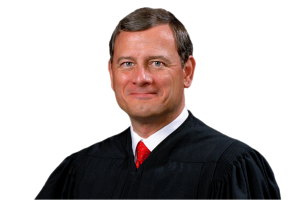
John G. Roberts Jr.
Joined by Thomas, Alito, Kavanaugh, and Barrett.
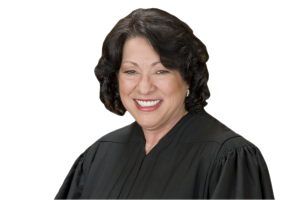
Sonia Sotomayor
Joined by Kagan and Jackson.
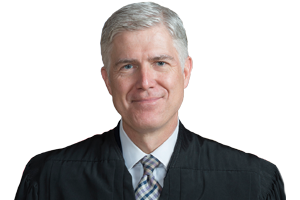
Neil Gorsuch
Joined by Thomas, Alito, Kavanaugh, and Barrett.
The holding
When the Securities and Exchange Commission seeks civil penalties against a defendant for securities fraud, the Seventh Amendment entitles the defendant to a jury trial. Chief Justice John Roberts authored the 6-3 majority opinion of the Court. First, the Seventh Amendment right to a jury trial applies to this SEC enforcement action. The claims are "legal in nature" and closely resemble common law fraud actions. The substance of the claim matters more than its statutory origin or which branch of government brings the action. Moreover, the civil penalties sought are punitive in nature, which is a type of remedy traditionally provided by courts of law rather than courts of equity. Second, the "public rights" exception to the Seventh Amendment does not apply here because this case does not fall within the narrow categories of matters that have historically been exclusively determined by the executive and legislative branches. The mere facts that Congress assigned the matter to an agency and that the government is the plaintiff do not change this outcome. Unlike the novel regulatory scheme in Atlas Roofing, these SEC fraud claims have close analogues in traditional common law actions that were historically adjudicated by courts with juries. Because this action is essentially a common law fraud suit seeking punitive remedies, it must be heard by an Article III court with a jury, despite Congress assigning it to an administrative proceeding. This conclusion preserves the constitutional separation of powers and the role of juries in adjudicating traditional legal claims. Justice Neil Gorsuch authored a concurring opinion, in which Justice Clarence Thomas joined. Justice Sonia Sotomayor authored a dissenting opinion, in which Justices Elena Kagan and Ketanji Brown Jackson joined.
Argued by
- Brian H. Fletcher for the Petitioner
- S. Michael McColloch for the Respondents
Case path
- Jun 30, 2023 granted
- Nov 29, 2023 argued
- Jun 27, 2024 decided