Alexander v. South Carolina State Conference of the NAACP
Appellant Thomas C. Alexander, in His Official Capacity as President of the South Carolina Senate, et al. · Appellee The South Carolina State Conference of the NAACP, et al.
- Reporter
- 602 U.S. ___ (2024)
- From
- Federal district court
- How it got here
- appeal
Does the South Carolina legislature’s redistricting map, which has the effect of moving tens of thousands of Black voters to a different district, constitute an impermissible racial gerrymander, even if the legislators’ purported intent was merely a political gerrymander?
Question before the CourtWhat happened
After the 2020 Census, South Carolina’s Republican-controlled legislature adopted a new congressional map that moved tens of thousands of Black voters to a different district, effectively making the district a safe seat for Republicans. The South Carolina State Conference of the NAACP sued, and a three-judge panel concluded that the district was an unconstitutional racial gerrymander. The legislators appealed directly to the Supreme Court, arguing that the map was actually a political gerrymander (which is permissible) that merely had a racial effect.
6–0.
A narrow margin — the Court split hard on this one. Read the concurrences carefully.
The opinions 3

Samuel A. Alito Jr.
Joined by Roberts, Gorsuch, Kavanaugh, and Barrett.
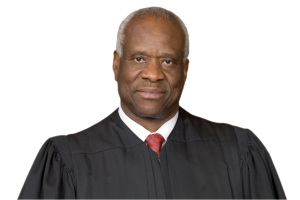
Clarence Thomas
Joined by Roberts, Gorsuch, Kavanaugh, and Barrett.
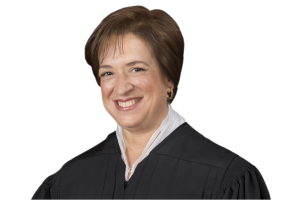
Elena Kagan
Joined by Sotomayor and Jackson.
The holding
The district court’s finding that race predominated in the design of South Carolina’s first congressional district was clearly erroneous, so its racial-gerrymandering and vote-dilution holdings are reversed. Justice Samuel Alito authored the 6-3 majority opinion of the Court. To prove unconstitutional racial gerrymandering, a plaintiff must show that race was the “predominant factor motivating the legislature’s decision to place a significant number of voters within or without a particular district.” To make that showing, a plaintiff must prove that the State “subordinated” race-neutral districting criteria such as compactness, contiguity, and core preservation to “racial considerations.” Racial considerations predominate when “[r]ace was the criterion that, in the State’s view, could not be compromised” in the drawing of district lines. However, when partisanship and race correlate, a constitutionally permissible partisan gerrymandered map can look very similar to a racially gerrymandered map. District courts must presume that legislatures acted in good faith in drawing a districting map. Here, the plaintiffs provided no direct evidence, and only weak circumstantial evidence, of a racial gerrymander. The four experts whose testimony the plaintiffs proffered, and on which the district court relied, are flawed because they “ignored certain traditional districting criteria” such as geographical constraints and the legislature’s partisan interests. Further, the plaintiffs failed to provide a substitute map that shows how the State “could have achieved its legitimate political objectives” while producing “significantly greater racial balance.” An alternative map of this sort is crucial in helping plaintiffs disentangle race and politics. In light of the weak circumstantial evidence of racial gerrymandering and the absence of an alternative map, the district court's finding that race predominated the redistricting map was clearly erroneous. Justice Clarence Thomas authored an opinion concurring in part, arguing that the Court’s review of the expert reports exceeds the proper scope of clear-error review. Justice Thomas argued that the district court’s failure to evaluate evidence reflecting the correlation between race and politics with the necessary presumption of legislative good faith and its failure to properly account for the plaintiffs’ failure to produce an alternative map are alone reversible legal errors. Justice Elena Kagan authored a dissenting opinion, in which Justices Sonia Sotomayor and Ketanji Brown Jackson joined, criticizing the “pick[ing] and choos[ing] evidence to its liking.” Justice Kagan argued that rather than giving the district court’s view of the evidence “significant deference” as is required by “clear error” review, the majority inverts the clear-error standard by using the presumption that a legislature acted in good faith and by treating any “possibility” that favors the state as “dispositive.”
Argued by
- John M. Gore for the Appellants
- Leah C. Aden for the Appellees
- Caroline A. Flynn for the United States, as amicus curiae, supporting neither party
Case path
- May 15, 2023 granted
- Oct 11, 2023 argued
- May 23, 2024 decided