Wilkinson v. Garland
Petitioner Situ Kamu Wilkinson · Respondent Merrick B. Garland, Attorney General
- Reporter
- 601 U.S. ___ (2024)
- From
- United States Court of Appeals for the Third Circuit
- How it got here
- writ of <i>certiorari</i>
Is an agency determination that a given set of established facts does not rise to the statutory standard of “exceptional and extremely unusual hardship” a mixed question of law and fact reviewable under 8 U.S.C. § 1252(a)(2)(D), or instead a discretionary judgment call unreviewable under Section 1252(a)(2)(B)(i)?
Question before the CourtWhat happened
Situ Wilkinson, originally from Trinidad and Tobago, overstayed his tourist visa in the U.S., built a life, and fathered a U.S.-citizen son. In 2019, after being arrested for selling crack cocaine, he faced deportation proceedings. Wilkinson conceded his deportability but sought either cancellation or withholding of removal based on the “exceptional and extremely unusual hardship” it would cause his son and the threat to his own life or freedom if he returned to Trinidad due to his “membership in a particular social group,” specifically people who have filed complaints against Trinidadian police. The immigration judge and the Board of Immigration Appeals rejected both of Wilkinson's claims. On appeal, the U.S. Court of Appeals for the Third Circuit held that it lacked jurisdiction to review the hardship claim because was discretionary. The Third Circuit also concluded that Wilkinson’s claim of belonging to a “particular social group” did not meet the requirements for withholding of removal, as it was not socially distinct within Trinidadian society. Therefore, the Third Circuit dismissed in part and denied in part Wilkinson’s petition for review.
Cross-aisle coalition.
The split did not track the usual ideological lines — justices from both wings landed on the same side.
The opinions 4
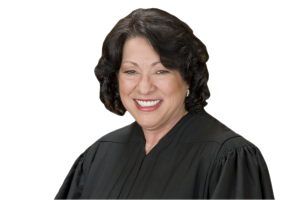
Sonia Sotomayor
Joined by Kagan, Gorsuch, Kavanaugh, and Barrett.
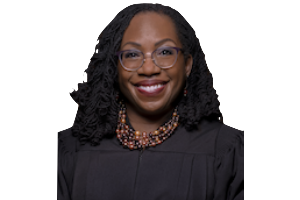
Ketanji Brown Jackson
Joined by Kagan, Gorsuch, Kavanaugh, and Barrett.
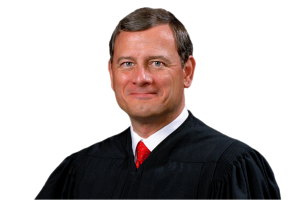
John G. Roberts Jr.
Joined by Thomas.
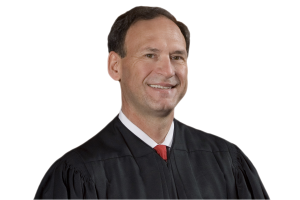
Samuel A. Alito Jr.
Joined by Thomas.
The holding
An immigration judge’s discretionary decision that a given set of established facts does not satisfy 8 U.S.C. § 1229b(b)(1)(D)’s “exceptional and extremely unusual” hardship standard for determining eligibility for cancellation of removal is a mixed question of law and fact, reviewable under §1252(a)(2)(D)’s jurisdiction restoring exception for “questions of law.” Justice Sonia Sotomayor authored the majority opinion of the Court. The application of the statutory hardship standard to an established set of facts presents a quintessential mixed question of law and fact. While this determination requires close examination of the facts, under the Court’s precedent in Guerrero-Lasprilla v. Barr, a mixed question that requires factual analysis is still a mixed question and therefore a “question of law” that courts have jurisdiction to review. The Court rejected the government’s arguments that Guerrero-Lasprilla should be limited to judicially created standards, that the statutory history precludes review, and that a primarily factual mixed question is a question of fact. Nothing in § 1252(a)(2)(D) suggests “questions of law” is limited to only certain types of mixed questions. While courts still cannot review the underlying factual determinations, the application of the hardship standard to those facts is reviewable as a mixed question of law and fact, albeit under a deferential standard of review given the factual nature of the inquiry. The Third Circuit’s holding that it lacked jurisdiction to review hardship determinations was therefore erroneous. Justice Ketanji Brown Jackson authored an opinion concurring in the judgment, expressing skepticism that Congress intended the phrase “questions of law” in § 1252(a)(2)(D) to encompass all mixed questions of law and fact, as the majority concluded. However, she agreed with the majority’s judgment based on the controlling precedent of Guerrero-Lasprilla. Chief Justice John Roberts authored a dissenting opinion in which he agreed with Justice Samuel Alito’s dissent that while Guerrero-Lasprilla was correctly decided, the majority erred in this case by reading the language in that case too broadly. Justice Alito, joined by Chief Justice Roberts and Justice Clarence Thomas, dissented, arguing that the Court’s broad reading of “questions of law” in Guerrero-Lasprilla defies common sense and would result in the exception nearly swallowing the rule, which Congress could not have intended when it enacted §1252(a)(2)(B) and §1252(a)(2)(D). He contended that the hardship determination is overwhelmingly a factual question that should not be classified as a reviewable “question of law.”
Argued by
- Jaime A. Santos for the Petitioner
- Colleen E. Roh Sinzdak for the Respondent
Case path
- Jun 30, 2023 granted
- Nov 28, 2023 argued
- Mar 19, 2024 decided