Pulsifer v. United States
Petitioner Mark E. Pulsifer · Respondent United States
- Reporter
- 601 U.S. ___ (2024)
- From
- United States Court of Appeals for the Eighth Circuit
- How it got here
- writ of <i>certiorari</i>
Must a defendant show he does not meet any of the criteria listed in 18 U.S.C. § 3553(f) to qualify for a sentence lower than the statutory minimum?
Question before the CourtWhat happened
Mark Pulsifer pleaded guilty to distributing at least fifty grams of methamphetamine. Relying on 18 U.S.C. § 3553(f), Pulsifer asked the district court for a sentence lower than the otherwise applicable statutory minimum term of imprisonment. That provision, permits a district court to impose a sentence lower than the statutory minimum upon finding that the defendant does not have: “(A) more than 4 criminal history points, excluding any criminal history points resulting from a 1-point offense, as determined under the sentencing guidelines; (B) a prior 3-point offense, as determined under the sentencing guidelines; and (C) a prior 2-point violent offense, as determined under the sentencing guidelines.” It was undisputed that Pulsifer had a criminal history that meets the criteria in subsections (A) and (B), due to having more than four criminal history points and a prior three-point offense. The district court concluded that this history alone made him ineligible for sentencing under § 3553(f), notwithstanding that he did not also have a prior two-point violent offense that would meet the condition in subsection (C). It therefore denied his request under 18 U.S.C. § 3553(f). Pulsifer appealed, and the U.S. Court of Appeals for the Eighth Circuit affirmed, concluding the statutory word “and” means a defendant must not have any of the criteria, not that he must not have all of them.
Cross-aisle coalition.
The split did not track the usual ideological lines — justices from both wings landed on the same side.
The opinions 2
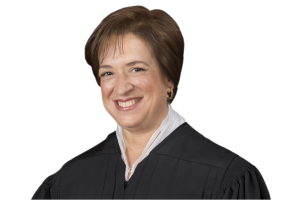
Elena Kagan
Joined by Roberts, Thomas, Alito, Barrett, and Kavanaugh.
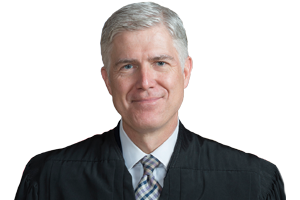
Neil Gorsuch
Joined by Sotomayor and Jackson.
The holding
A defendant must satisfy individually each of the three conditions of the “safety valve” provision of 18 U.S.C. §3553(f)(1) to be eligible for sentencing relief. Justice Elena Kagan authored the 6-3 majority opinion of the Court. The Court acknowledged that each party offered a grammatically permissible reading of Paragraph (f)(1). However, the text and context of that paragraph, as read against the Guidelines more generally, support the Government’s reading. Pulsifer’s reading—that a defendant is eligible as long as he does not have all three characteristics in combination—would render part (A) superfluous, since a defendant with a 3-point offense under (B) and a 2-point violent offense under (C) would always have more than 4 criminal history points under (A). Additionally, Pulsifer's reading would allow relief for some defendants with more serious criminal histories while denying it to those with less serious records, contrary to the provision’s purpose of sorting defendants based on the seriousness of their prior offenses. Finally, the rule of lenity does not apply because there is no genuine ambiguity in the statutory language because, while there are two grammatically permissible readings, the context supports only one of those readings. Thus, Pulsifer was ineligible for safety valve relief because he had two prior 3-point offenses. Justice Neil Gorsuch authored a dissenting opinion, in which Justices Sonia Sotomayor and Ketanji Brown Jackson joined, arguing that the majority for engaged in “implicit distribution,” reading words into and out of the statute to manufacture a superfluity problem that does not actually exist. Justice Gorsuch further argued that the majority elevated unexpressed congressional purposes over the statutory text and dismissed variations in Congress’s use of ‘and” and “or” as sloppy mistakes, even though Congress expressly distributed phrases elsewhere in the statute when it wanted to.
Argued by
- Shay Dvoretzky for the Petitioner
- Frederick Liu for the Respondent
Case path
- Feb 27, 2023 granted
- Oct 2, 2023 argued
- Mar 15, 2024 decided