Relentless v. Department of Commerce
Petitioner Relentless, Inc., et al. · Respondent Department of Commerce, et al.
- From
- United States Court of Appeals for the First Circuit
- How it got here
- writ of <i>certiorari</i>
1. Should Chevron v. Natural Resources Defense Council be overruled? 2. Does statutory silence concerning controversial powers expressly but narrowly granted elsewhere in the statute constitute an ambiguity requiring deference to the agency?
Question before the CourtWhat happened
The Atlantic herring fishery is regulated by the Magnuson-Stevens Fishery Conservation and Management Act (MSA), aimed at preventing overfishing and promoting conservation. The MSA sets up regional councils, including the New England Fishery Management Council, which oversees the Atlantic herring fishery. These councils create fishery management plans (FMPs) to set conservation measures, which must align with ten National Standards and other laws. The Secretary of Commerce, through the National Marine Fisheries Service (NMFS), reviews and publishes these plans for public comment. In 2000, the New England Council established an FMP for Atlantic herring, updated with an industry-funded monitoring program in 2020. The program partially shifts the cost of at-sea monitoring to vessel owners but aims for a 50% target of monitored herring trips, which will cause reduced profits for the fishing industry and communities. Owners of two fishing vessels, Relentless Inc., Huntress Inc., and Seafreeze Fleet LLC, challenged the Rule, arguing that the monitoring requirement disproportionately burdens them because of their longer trips and inability to qualify for exemptions. The district court granted summary judgment in favor of the Agency, ruling that the MSA’s ambiguity on industry-paid monitors allows for agency interpretation under Chevron deference, that the Rule complies with the MSA’s National Standards and the Regulatory Flexibility Act, and does not violate the Commerce Clause. The U.S. Court of Appeals for the First Circuit affirmed.
6–0.
A narrow margin — the Court split hard on this one. Read the concurrences carefully.
The opinions 4

John G. Roberts Jr.
Joined by Alito, Kavanaugh, and Barrett.
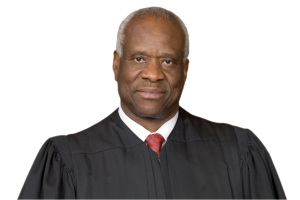
Clarence Thomas
Joined by Alito, Kavanaugh, and Barrett.

Elena Kagan
Joined by Sotomayor and Jackson.
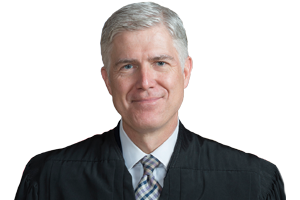
Neil Gorsuch
Joined by Alito, Kavanaugh, and Barrett.
The holding
The Administrative Procedure Act requires courts to exercise their independent judgment in deciding whether an agency has acted within its statutory authority, and courts may not defer to an agency interpretation of the law simply because a statute is ambiguous. Chevron U.S.A. Inc. v. Natural Resources Defense Council, Inc., 467 U.S. 837, is overruled. Chief Justice John Roberts authored the majority opinion of the Court (which also decided the consolidated case, Relentless, Inc. v. Department of Commerce, No. 22-1219). The Administrative Procedure Act (APA) of 1946 requires courts to "decide all relevant questions of law" when reviewing agency actions. This means courts should use their own judgment to interpret laws, not defer to agencies' interpretations. The Chevron doctrine, established in the 1984 case Chevron U.S.A. v. Natural Resources Defense Council, Inc., 467 U.S. 837, contradicts this principle. Chevron required courts to defer to agency interpretations of ambiguous statutes if those interpretations were reasonable. Chevron was based on a flawed assumption that Congress intends to delegate interpretive authority to agencies whenever a law is ambiguous. This assumption doesn't reflect reality and goes against the traditional role of courts. Chevron has been difficult to apply consistently and has led to confusion in lower courts. It has also been gradually limited by subsequent Supreme Court decisions. Thus, Chevron should be overruled because it contradicts the APA, is based on faulty reasoning, has proven unworkable in practice, and hasn't created the kind of settled expectations that would justify keeping it in place. However, this decision does not necessarily overturn the specific outcomes of past cases that used Chevron. Those outcomes would need to be challenged separately. Justices Clarence Thomas and Neil Gorsuch each filed concurring opinions. Justice Elena Kagan authored a dissenting opinion, in which Justice Sonia Sotomayor joined, and Justice Ketanji Brown Jackson joined as to No. 22-1219. Justice Jackson took no part in the consideration or decision of No. 22-451.
Argued by
- Roman Martinez for the Petitioners
- Elizabeth B. Prelogar for the Respondents
Case path
- Oct 13, 2023 granted
- Jan 17, 2024 argued