Warner Chappell Music v. Nealy
Petitioner Warner Chappell Music, Inc., et al. · Respondent Sherman Nealy, et al.
- Reporter
- 601 U.S. ___ (2024)
- From
- United States Court of Appeals for the Eleventh Circuit
- How it got here
- writ of <i>certiorari</i>
Under the discovery accrual rule applied by the circuit courts and the Copyright Act’s statute of limitations for civil actions, 17 U.S.C. § 507(b), may a copyright plaintiff recover damages for acts that allegedly occurred more than three years before the filing of a lawsuit?
Question before the CourtWhat happened
In the early 1980s, Sherman Nealy and Tony Butler formed Music Specialist, Inc. (MSI), a Florida corporation involved in the music industry. Nealy, a newcomer to the sector, financed the operation while Butler, an experienced disc jockey, authored or co-authored the musical works at the heart of the case. MSI released an album and several singles from 1983 to 1986 before dissolving as a corporation, although its business activities continued until 1989. During Nealy’s subsequent incarceration for drug offenses, Butler formed a new company, 321 Music, LLC, and began licensing rights to MSI’s musical works. This included an agreement in 2008 with Atlantic to interpolate one of MSI’s works into a song by artist Flo Rida. Upon his release, Nealy discovered third-party usage of MSI’s catalog but took no decisive action. He was unaware of ensuing litigation over the works among various entities including Warner Chappell Music, Inc., Artist Publishing Group, LLC, Atlantic Recording Corporation, and Butler's 321 Music. It wasn't until post-release from a second prison term that he learned of the prior litigation and alleged unauthorized transfers of rights. Finally, in December 2018, Nealy and MSI filed a lawsuit alleging copyright infringement by Atlantic, Artist, and Warner for activities dating back to 2008. Following a pre-trial stipulation framing the case as an “ownership dispute,” the defendants moved for summary judgment, which the district court granted in part and denied in part. On an interlocutory appeal, the U.S. Court of Appeals for the Eleventh Circuit held that when a copyright plaintiff has a timely claim under the discovery accrual rule for infringement that occurred more than three years before the lawsuit was filed, the plaintiff may recover damages for that infringement.
Cross-aisle coalition.
The split did not track the usual ideological lines — justices from both wings landed on the same side.
The opinions 2
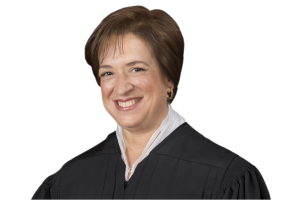
Elena Kagan
Joined by Roberts, Sotomayor, Kavanaugh, Barrett, and Jackson.
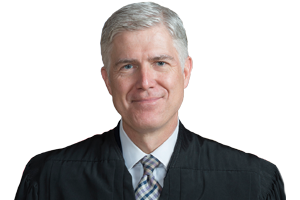
Neil Gorsuch
Joined by Thomas and Alito.
The holding
The Copyright Act entitles a copyright owner to obtain monetary relief for any timely infringement claim, no matter when the infringement occurred. Justice Elena Kagan authored the 6-3 majority opinion of the Court. The Copyright Act’s statute of limitations provision establishes a three-year period for filing a copyright infringement suit, which begins to run when the claim accrues. This case assumes that a copyright claim accrues upon discovery of the infringement (the “discovery rule”), rather than when the infringement occurred, although the Court has not definitively resolved which rule applies. If a plaintiff has a timely claim under the discovery rule, the Act’s remedial provisions do not impose any separate time limit on the recovery of damages. Those provisions state, without qualification, that an infringer is liable for either statutory damages or the owner’s actual damages and the infringer’s profits. The Second Circuit’s view, relying on language from the Court’s decision in Petrella v. MGM, that damages are limited to the three years prior to filing suit, even if earlier infringements are timely under the discovery rule, lacks textual support and effectively nullifies the discovery rule. The Court’s decision in Petrella does not support such a damages cap, as the Court merely described how the limitations provision works when a plaintiff, as in that case, has no timely claims for infringing acts more than three years old. In contrast, if a plaintiff like Nealy in this case has timely claims for earlier infringements under the discovery rule, he may obtain damages for those infringements, as the Copyright Act contains no separate time-based limit on monetary recovery. Justice Neil Gorsuch authored a dissenting opinion, in which Justices Clarence Thomas and Samuel Alito joined, arguing that the discovery rule of accrual, which the majority assumes without deciding in this case, is decidedly incorrect, and thus that any decision that relies on that rule is likely to soon become a “dead letter.”
Argued by
- Kannon K. Shanmugam for the Petitioners
- Joe Wesley Earnhardt for the Respondents
- Yaira Dubin for the United States, as amicus curiae, supporting the Respondents
Case path
- Sep 29, 2023 granted
- Feb 21, 2024 argued
- May 9, 2024 decided