Sheetz v. County of El Dorado, California
Petitioner George Sheetz · Respondent County of El Dorado, California
- Reporter
- 601 U.S. ___ (2024)
- From
- State appellate court
- How it got here
- writ of <i>certiorari</i>
Is a monetary exaction imposed by a local government as a condition for a building permit exempt from the “essential nexus” and “rough proportionality” requirements established in Nollan v. Cal. Coastal Comm’n and Dolan v. City of Tigard, simply because the exaction is authorized by local legislation?
Question before the CourtWhat happened
The County of El Dorado, California, has a Traffic Impact Mitigation (TIM) Fee Program that imposes a traffic-impact fee on any property owner applying for a building permit. The fee consists of two components: the “Highway 50 Component” and the “Local Road Component,” and is determined by the geographic zone in which the project is located and the type of construction proposed. The fee is mandatory regardless of the actual impact the project may have on existing or future roads. The TIM Fee Program stipulates that new developments bear the full cost of road construction and widening, even though these roads are used and benefitted from by existing residents and non-residents alike. In 2012, the County Board passed a resolution establishing new TIM Fee rates, which were subsequently applied to George Sheetz’s project. Sheetz applied for a building permit in July 2016 to construct a 1,854-square-foot manufactured house for his family. The County required him to pay $23,420 in traffic-mitigation fees based on the type and location of his project, even though no individualized assessment was made to correlate the fee with the project’s actual impact on local or state roads. Sheetz paid the fee under protest and later filed a legal action against the County, alleging the fee was an unconstitutional condition under the Nollan and Dolan standards and seeking a refund of the fee paid. Under the unconstitutional-conditions doctrine, “the government may not deny a benefit to a person because he exercises a constitutional right.” The U.S. Supreme Court in Nollan (1987) and Dolan (1994) recognized that land-use permit applicants “are especially vulnerable to the type of coercion that the unconstitutional conditions doctrine prohibits.” Under those cases, the government may condition approval of a land-use permit on the owner’s dedication of property to public use if the government can prove that an “essential nexus” and “rough proportionality” exist between the demanded property and the impacts of the owner’s project. The superior court ruled against Sheetz, concluding that legislative exactions are exempt from Nollan/Dolan review. The California Court of Appeal affirmed.
Unanimous.
All nine justices agreed on the outcome. Concurrences may differ on reasoning, but the Court spoke with one voice on the judgment.
The opinions 4

Amy Coney Barrett
Joined by Roberts, Thomas, Alito, Kagan, and Jackson.
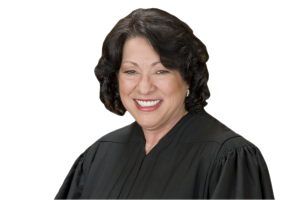
Sonia Sotomayor
Joined by Roberts, Thomas, Alito, Kagan, and Jackson.
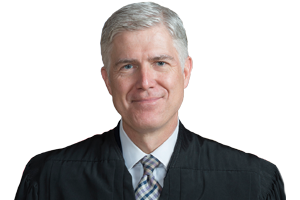
Neil Gorsuch
Joined by Roberts, Thomas, Alito, Kagan, and Jackson.
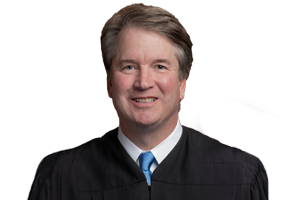
Brett M. Kavanaugh
Joined by Roberts, Thomas, Alito, Kagan, and Jackson.
The holding
The Fifth Amendment’s Takings Clause does not distinguish between legislative and administrative land-use permit conditions. Justice Amy Coney Barrett authored the opinion for a unanimous Court, holding that the California Court of Appeal erred in holding that the Nollan/Dolan test does not apply to permit conditions imposed by legislatures. The Takings Clause requires the government to provide just compensation when it takes private property for public use, and this applies equally to all branches of government. Neither the text of the Constitution, the historical understanding of eminent domain (the power of the government to take private property for public use), nor the Court's own precedents support exempting legislatures from the requirements of the Nollan/Dolan test. This test, which is based on the unconstitutional conditions doctrine, requires that permit conditions have an “essential nexus” to a legitimate government interest and be “roughly proportional” to the impact of the proposed development. These principles apply consistently across physical takings, regulatory takings, and the unconstitutional conditions doctrine, regardless of whether the condition is imposed by a legislature or an administrative agency. Justice Sonia Sotomayor authored a concurring opinion, in which Justice Ketanji Brown Jackson joined, pointing out an antecedent question that was not raised in this case: whether the permit condition would be a compensable taking if imposed outside the permitting context. Justice Neil Gorsuch authored a concurring opinion to argue that the Nollan/Dolan test cannot operate differently when an alleged taking affects a “class of properties” rather than “a particular development.” Justice Brett Kavanaugh authored a concurring opinion, in which Justices Kagan and Jackson joined, clarifying that the Court has not previously decided—and in this case explicitly declined to decide—whether “a permit condition imposed on a class of properties must be tailored with the same degree of specificity as a permit condition that targets a particular development.”
Argued by
- Paul J. Beard II for the Petitioner
- Aileen M. McGrath for the Respondent
- Erica L. Ross for the United States, as amicus curiae, supporting the Respondent
Case path
- Sep 29, 2023 granted
- Jan 9, 2024 argued
- Apr 12, 2024 decided