Pugin v. Garland
Petitioner Jean Francois Pugin · Respondent Merrick B. Garland, Attorney General
- Reporter
- 599 U.S. ___ (2023)
- From
- United States Court of Appeals for the Fourth Circuit
- How it got here
- writ of <i>certiorari</i>
Is Virginia’s offense of accessory after the fact to a felony an “offense relating to obstruction of justice” under the Immigration and Nationality Act?
Question before the CourtWhat happened
Jean Francois Pugin is a citizen of Mauritius who has lived in the United States as a lawful permanent resident for nearly 40 years. The government began deportation proceedings against Pugin after he was found guilty of being an accessory after the fact to a felony. The Immigration and Nationality Act authorizes removal upon conviction for an “aggravated felony,” including felonies relating to obstruction of justice. Despite Pugin’s argument to the contrary, the Board of Immigration appeals concluded that Virginia’s accessory after the fact to a felony constituted an offense relating to obstruction of justice, and the U.S. Court of Appeals for the Fourth Circuit affirmed.
Cross-aisle coalition.
The split did not track the usual ideological lines — justices from both wings landed on the same side.
The opinions 3
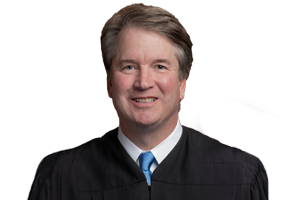
Brett M. Kavanaugh
Joined by Roberts, Thomas, Alito, and Barrett.

Sonia Sotomayor
Joined by Kagan and Gorsuch.

Ketanji Brown Jackson
Joined by Roberts, Thomas, Alito, and Barrett.
The holding
Virginia’s offense of accessory after the fact to a felony is an offense “relating to” obstruction of justice under the Immigration and Nationality Act’s definition of an “aggravated felony.” Justice Brett Kavanaugh authored the 6-3 majority opinion of the Court. An offense can be categorized as “relating to obstruction of justice” under §1101(a)(43)(S) without a requirement for an ongoing investigation or proceeding. This understanding is supported by dictionary definitions, federal and state laws, and the Model Penal Code. Obstruction of justice can occur even if no formal investigation or proceeding is active. The phrase “relating to” in the statute further broadens its applicability, ensuring it encompasses offenses connected to obstruction of justice, irrespective of a pending investigation. Even if certain provisions might require a pending investigation or proceeding, §1101(a)(43)(S) has a more expansive definition. Historical interpretations do not mandate a pending investigation for obstruction of justice. The rule of lenity, which favors defendants in ambiguous criminal laws, does not apply because traditional interpretation tools clearly defined the statute’s intent. Justice Ketanji Brown Jackson joined the majority opinion in full but concurred separately to note that when Congress inserted the phrase “offense relating to obstruction of justice” into §1101(a)(43)(S), it might well have been referencing a specific and previously designated category of offenses of obstruction, many of which do not have a pending-proceeding requirement. Justice Sonia Sotomayor authored a dissenting opinion, in which Justices Neil Gorsuch and Elena Kagan joined, arguing that the Court “subverts” the commonly understood meaning of “obstruction of justice.”
Argued by
- Martha Hutton for the Petitioner in 22-23 (Pugin)
- Mark C. Fleming for the Respondent in 22-331 (Cordero-Garcia)
- Curtis E. Gannon for Merrick B. Garland, Attorney General
Case path
- Jan 13, 2023 granted
- Apr 17, 2023 argued
- Jun 22, 2023 decided