United States v. Hansen
Petitioner United States · Respondent Helaman Hansen
- Reporter
- 599 U.S. ___ (2023)
- From
- United States Court of Appeals for the Ninth Circuit
- How it got here
- writ of <i>certiorari</i>
Does the federal prohibition on encouraging or inducing unlawful immigration for commercial advantage or private financial gain violate the First Amendment of the U.S. Constitution?
Question before the CourtWhat happened
Helaman Hansen ran an immigration-advising service charging undocumented immigrants for (incorrect) advice on how to achieve U.S. citizenship. Hansen was convicted and sentenced for, among other federal crimes, two counts of encouraging or inducing illegal immigration for private financial gain, in violation of 8 U.S.C. § 1324(a)(1)(A)(iv) and (B)(i). Two years earlier, in United States v. Sineneng-Smith, the U.S. Supreme Court unanimously reversed a Ninth Circuit decision striking down those two statutory provisions. Its reversal was based not on the merits of the constitutional challenge, but on the procedure the Ninth Circuit had used to entertain the challenge. Hansen’s case again raises the constitutional challenge.
Cross-aisle coalition.
The split did not track the usual ideological lines — justices from both wings landed on the same side.
The opinions 3

Amy Coney Barrett
Joined by Roberts, Alito, Kagan, Gorsuch, and Kavanaugh.
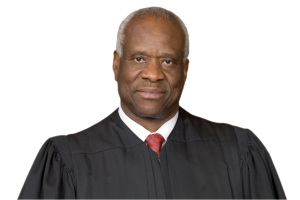
Clarence Thomas
Joined by Roberts, Alito, Kagan, Gorsuch, and Kavanaugh.
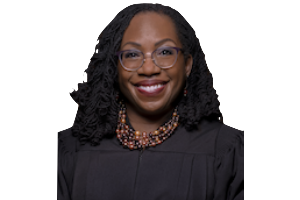
Ketanji Brown Jackson
Joined by Sotomayor.
The holding
The federal law criminalizing “encouraging or inducing” illegal immigration—forbids only the purposeful solicitation and facilitation of specific acts known to violate federal law and is not unconstitutionally overbroad. Justice Amy Coney Barrett authored the 7-2 majority opinion of the Court. A law is unconstitutionally overbroad if it prohibits a significant amount of protected speech compared to its legitimate applications. The federal laws at issue, 8 U.S.C. § 1324(a)(1)(A)(iv) and (B)(i) prohibit “encouraging or inducing” illegal immigration, but in this context, they refer to the specialized legal terms of solicitation and facilitation, not their colloquial meanings. Because (A)(iv) targets only the intentional solicitation and facilitation of specific illegal acts, and these acts are generally non-expressive conduct, it is unlikely to stifle protected speech. Justice Clarence Thomas joined the majority’s opinion in full but wrote separate concurrence to criticize the facial overbreadth doctrine, which he argued “lacks any basis in the text or history of the First Amendment” and “distorts the judicial role.” Justice Ketanji Brown Jackson wrote a dissenting opinion, in which Justice Sonia Sotomayor joined, arguing that the majority “departs from ordinary principles of statutory interpretation” to interpret the “encouraging or inducing” as meaning something much narrower than the words plainly mean.
Argued by
- Brian H. Fletcher for the Petitioner
- Esha Bhandari for the Respondent
Case path
- Dec 9, 2022 granted
- Mar 27, 2023 argued
- Jun 23, 2023 decided