Dubin v. United States
Petitioner David Fox Dubin · Respondent United States
- Reporter
- 599 U.S. ___ (2023)
- From
- United States Court of Appeals for the Fifth Circuit
- How it got here
- writ of <i>certiorari</i>
Does a person commit aggravated identity theft any time they mention or otherwise recite someone else’s name while committing a predicate offense?
Question before the CourtWhat happened
William Joseph Dubin was a licensed psychologist in Texas and ran a psychology practice called “Psychological A.R.T.S., P.C.” (PARTS). His son, David Dubin, worked for PARTS in a business capacity. PARTS was an enrolled Medicaid provider, which means it is required to comply with Medicaid laws and regulations. Among other alleged violations, David Dubin used patients’ Medicaid reimbursement numbers—to obtain reimbursements for services PARTS did not provide those patients. This conduct formed the basis of a charge of identity theft under 18 U.S.C. §§ 2 and 1028A, which requires a two-year sentence for “[w]hoever ... knowingly transfers, possesses, or uses, without lawful authority, a means of identification of another person" during the commission of an enumerated felony.” William and David Dubin were convicted, and the U.S. Court of Appeals for the Fifth Circuit affirmed. The court granted rehearing en banc to consider the sufficiency of the evidence and affirmed the panel.
Unanimous.
All nine justices agreed on the outcome. Concurrences may differ on reasoning, but the Court spoke with one voice on the judgment.
The opinions 2

Sonia Sotomayor
Joined by Roberts, Thomas, Alito, Kagan, Kavanaugh, Barrett, and Jackson.
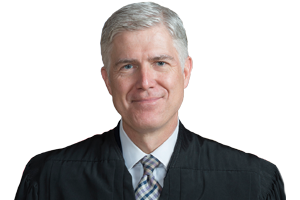
Neil Gorsuch
Joined by Roberts, Thomas, Alito, Kagan, Kavanaugh, Barrett, and Jackson.
The holding
A person commits “aggravated identity theft,” if he “uses” another person’s means of identification “in relation to” a predicate offense when the use is at the crux of—rather than merely peripheral to—what makes the conduct criminal. Justice Sonia Sotomayor authored the majority opinion of the Court. The meaning of each of the two key phrases—”uses” and “in relation to”—depends heavily on context. First, the very title of Section 1028A(a)(1), “Aggravated identity theft,” suggests that identity theft is at the core of that provision, particularly in contrast to a neighboring provision with a much broader title and scope. The language of 1028A(a)(1) further supports this reading. The provision applies when a defendant “knowingly transfers, possesses, or uses” another’s identification without lawful authority. From this context, it is clear that “uses” refers to conduct akin to theft, rather than its broader meaning of “virtually any function.” Finally, the list of predicate offenses suggests that the means of identification is at the crux of the underlying criminality, not just a peripheral feature. Justice Neil Gorsuch authored an opinion concurring in the judgment in which he argues that the statute is too vague and the majority’s opinion does little to clarify its meaning.
Argued by
- Jeffrey L. Fisher for the Petitioner
- Vivek Suri for the Respondent
Case path
- Nov 10, 2022 granted
- Feb 27, 2023 argued
- Jun 8, 2023 decided