Andy Warhol Foundation for the Visual Arts v. Goldsmith
Petitioner Andy Warhol Foundation for the Visual Arts, Inc. · Respondent Lynn Goldsmith, et al.
- Reporter
- 598 U.S. ___ (2023)
- From
- United States Court of Appeals for the Second Circuit
- How it got here
- writ of <i>certiorari</i>
What is the proper test for whether a work is “transformative” under the first factor of the Copyright Act’s fair use doctrine?
Question before the CourtWhat happened
Artist Andy Warhol created a series of silkscreen prints and pencil illustrations (“Prince Series”) based on a copyrighted 1981 photograph of the musician Prince, taken by Lynn Goldsmith. Warhol made some aesthetic changes to Goldsmith’s original photograph, but they remained “recognizably derived” from the original. Goldsmith sued the Andy Warhol Foundation, successor to Warhol’s copyright in the Prince Series, for copyright infringement. The Foundation raised fair use as a defense. The district court granted summary judgment for the Foundation, concluding that Warhol had “transformed” the original photograph by giving it a new “meaning and message.” The U.S. Court of Appeals for the Second Circuit, holding that because the Prince Series remained “recognizably derived” from the original, it failed to transform and was thus not fair use.
Cross-aisle coalition.
The split did not track the usual ideological lines — justices from both wings landed on the same side.
The opinions 3

Sonia Sotomayor
Joined by Thomas, Alito, Kavanaugh, Barrett, and Jackson.

Elena Kagan
Joined by Roberts.
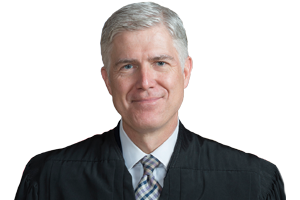
Neil Gorsuch
Joined by Thomas, Alito, Kavanaugh, Barrett, and Jackson.
The holding
The “purpose and character” of the Andy Warhol Foundation (AWF)’s particular commercial use of Lynn Goldsmith’s photograph of the musician Prince does not favor AWF’s fair use defense to copyright infringement. Justice Sonia Sotomayor authored the 7-2 majority opinion of the Court. The fair use defense to copyright infringement promotes creativity by recognizing that some secondary works make unauthorized use of original works but serve a different purpose, add new expression, or convey new ideas. Andy Warhol’s “Orange Prince,” one of the Prince Series that was derived from the photograph by Lynn Goldsmith, appeared on the cover of a Vanity Fair magazine commemorating the late musician for a fee of $10,000—all of which to AWF and of which Goldsmith received none. In contrast, Goldsmith’s photographs were licensed and used on several other magazine covers commemorating Prince. AWF’s use of Orange Prince on the cover of Vanity Fair served essentially the same commercial purpose as Goldsmith’s original. Thus, the first fair-use factor—the purpose and character of use, including whether the use is for commercial or nonprofit purpose—weighs against the conclusion that AWF’s use of Goldsmith’s photograph for the specific purpose of a magazine cover commemorating Prince was fair. Justice Neil Gorsuch authored a concurring opinion, in which Justice Ketanji Brown Jackson joined, emphasizing the narrowness of the majority’s opinion and its appropriate focus on the specific use challenged. Justice Elena Kagan authored a dissenting opinion, in which Chief Justice John Roberts joined, criticizing the majority of stifling creativity and disregarding the reality that creativity relies upon the borrowing of works that came before.
Argued by
- Roman Martinez for the Petitioner
- Lisa S. Blatt for the Respondents
- Yaira Dubin for the United States, as amicus curiae, supporting the Respondents
Case path
- Mar 28, 2022 granted
- Oct 12, 2022 argued
- May 18, 2023 decided