Haaland v. Brackeen
Petitioner Deb Haaland, Secretary of the Interior, et al. · Respondent Chat Everet Brackeen
- Reporter
- 599 U.S. ___ (2023)
- From
- United States Court of Appeals for the Fifth Circuit
- How it got here
- writ of <i>certiorari</i>
Do the Indian Child Welfare Act’s restrictions on placement of Native American children violate anti-commandeering principles of the Tenth Amendment?
Question before the CourtWhat happened
The Indian Child Welfare Act (ICWA), a federal law enacted in 1978, restricts the removal of Native American children from their families and establishes a preference that Native children who are removed from their families be placed with extended family members or Native foster homes. Several individuals and states filed a lawsuit challenging the law as violating constitutional anti-commandeering principles of the Tenth Amendment. The plaintiffs include several couples who wished to adopt or foster Native children, a woman who wished for her Native biological child to be adopted by non-Natives, and the states of Texas, Louisiana, and Indiana. The district court ruled for the plaintiffs, striking down portions of the ICWA. The defendants appealed, and a panel of the U.S. Court of Appeals for the Fifth Circuit reversed. In a fractured ruling, the Fifth Circuit sitting en banc upheld portions of the district court’s decision and reversed other portions.
Cross-aisle coalition.
The split did not track the usual ideological lines — justices from both wings landed on the same side.
The opinions 4

Amy Coney Barrett
Joined by Roberts, Sotomayor, Kagan, Kavanaugh, and Jackson.
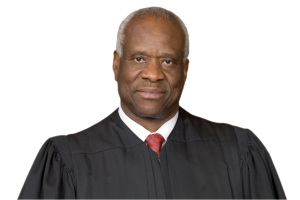
Clarence Thomas
Alone.

Samuel A. Alito Jr.
Alone.
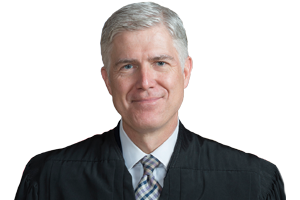
Neil Gorsuch
Joined by Roberts, Sotomayor, Kagan, Kavanaugh, and Jackson.
The holding
The Indian Child Welfare Act (ICWA) is consistent with Congress’s Article I authority and does not violate anti-commandeering principles of the Tenth Amendment; the parties lack standing to litigate their other challenges to ICWA’s placement preferences. Justice Amy Coney Barrett authored the 7-2 majority opinion of the Court. The Court has consistently recognized the “plenary and exclusive”—though not absolute—power of Congress to legislate with respect to Indian tribes. The challengers claim that ICWA infringes on the states’ authority over family law, but Court precedent establishes that when Congress validly exercises its Article I powers, federal law preempts conflicting state family laws. While the Constitution does not expressly grant Congress the power to regulate custody proceedings of Indian children, the Court has interpreted the Constitution to authorize Congress to regulate “Indian affairs,” which is broadly inclusive. The anti-commandeering arguments similarly fail. Two of the challenged provisions apply not only to government entities, but also to private parties. A demand that public or private actors can satisfy does not require the use of sovereign power and thus does not violate anti-commandeering principles. A third challenged provision requires the states to maintain certain records related to child placement and provide them upon request to the Secretary or the Indian child’s tribe. This provision also does not violate anti-commandeering principles, which apply “distinctively” to a state court’s adjudicative responsibilities. Congress may impose ancillary recordkeeping requirements related to state-court proceedings without violating the Tenth Amendment. Finally, while the challengers also raise equal protection and non-delegation challenges to ICWA’s placement preferences, they must first show they have standing by demonstrating that they have suffered an injury in fact that is “‘fairly traceable to the defendant’s allegedly unlawful conduct and likely to be redressed by the requested relief.” The challengers cannot make this showing and thus lack standing on these claims. Justice Neil Gorsuch authored a concurring opinion, in which Justices Sonia Sotomayor and Ketanji Brown Jackson joined in part, to elaborate on the history of the relationship between the federal government and Indian tribes. Justice Clarence Thomas authored a dissenting opinion, arguing that because there is no express constitutional provision that authorizes Congress to enact ICWA, it must be unconstitutional. Justice Samuel Alito authored a dissenting opinion, arguing that the majority’s decision is contrary to the best interests of the children affected.
Argued by
- Matthew D. McGill for Chad Everet Brackeen, et al.
- Judd E. Stone, II for Texas
- Edwin S. Kneedler for the federal parties
- Ian H. Gershengorn for the tribal parties
Case path
- Feb 28, 2022 granted
- Nov 9, 2022 argued
- Jun 15, 2023 decided