Glacier Northwest v. International Brotherhood of Teamsters
Petitioner Glacier Northwest, Inc. · Respondent International Brotherhood of Teamsters
- Reporter
- 598 U.S. ___ (2023)
- From
- Washington Supreme Court
- How it got here
- writ of <i>certiorari</i>
Does the National Labor Relations Act preempt a state-court lawsuit against a union for intentionally destroying an employer’s property during a labor dispute?
Question before the CourtWhat happened
Glacier Northwest is a Washington corporation that sells and delivers ready-mix concrete to businesses in the state. It employs approximately 80-90 truck drivers to deliver concrete, and Local 174 is the exclusive union representative for Glacier’s truck drivers in King County. In 2017, during negotiations for a new collective bargaining agreement (CBA), Glacier truck drivers went on strike, resulting in the loss of some of Glacier’s concrete. Glacier sued Local 174 in state court for six tort claims arising from Local 174’s alleged role that resulted in Glacier’s loss of concrete. The trial court dismissed the claims arising before the CBA was reached, finding they were preempted by the federal National Labor Relations Act, and it granted summary judgment dismissal of the remaining claims primarily on state law grounds. The appellate court reversed as to the pre-CBA claims, finding the NLRA did not preempt those claims. The state supreme court reversed as to the preemption issue.
Unanimous.
All nine justices agreed on the outcome. Concurrences may differ on reasoning, but the Court spoke with one voice on the judgment.
The opinions 4

Amy Coney Barrett
Joined by Roberts, Gorsuch, Sotomayor, Kagan, and Kavanaugh.
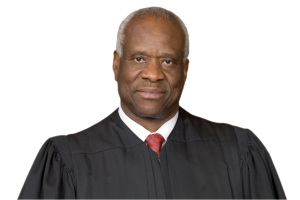
Clarence Thomas
Joined by Roberts, Gorsuch, Sotomayor, Kagan, and Kavanaugh.

Samuel A. Alito Jr.
Joined by Roberts, Gorsuch, Sotomayor, Kagan, and Kavanaugh.

Ketanji Brown Jackson
Alone.
The holding
The National Labor Relations Act (NLRA) did not preempt Glacier’s state-court lawsuit alleging that the union intentionally destroyed the company’s property during a labor dispute. Justice Amy Coney Barrett authored the majority opinion of the Court. The position of the National Labor Relations Board (NLRB) is that while the NLRA generally recognizes the right of workers to strike, it does not protect from liability strikers who fail to take “reasonable precautions” to protect their employer’s property from foreseeable harms caused by the sudden cessation of work. At the motion to dismiss stage, the court accepts the allegations in the complaint as true. Accepting the allegations here as true, the Union failed to take reasonable precautions to protect Glacier’s property, as the Union knew that concrete is highly perishable and, if left to harden in a truck’s drum, will cause significant damage to the truck. Because the Union knew of this risk—and indeed intended that result—the strike went beyond the conduct protected by the NLRA. Because the strike was not protected by federal law, the state tort claims were not preempted. Justice Clarence Thomas authored an opinion concurring in the judgment, in which Justice Neil Gorsuch joined. Justice Thomas would reach the same conclusion that the state-court claims are not preempted based on adherence to the Court’s decision in ___. He wrote separately to emphasize the “oddity” of the “broad pre-emption regime” in the case the majority relied on—San Diego Building Trades Council v. Garmon, 359 U.S. 236 (1959)—and suggesting that the Court reassess its holding in that case. Justice Samuel Alito authored an opinion concurring in the judgment, in which both Justices Thomas and Gorsuch joined. Justice Alito would reach the same conclusion based solely on the Court’s longstanding position that the NLRA does not immunize strikers who engage in trespass or violence against the employer’s property. Justice Ketanji Brown Jackson authored a dissenting opinion, pointing out that the test in Garmon is only whether the conduct at issue is “arguably” protected by the NLRA, as determined by the Board. She criticized the Court for stepping in to make that determination instead of allowing the Board to do so.
Argued by
- Noel J. Francisco for the Petitioner
- Darin M. Dalmat for the Respondent
- Vivek Suri for the United States, as amicus curiae, supporting neither party
Case path
- Oct 3, 2022 granted
- Jan 10, 2023 argued
- Jun 1, 2023 decided