Ciminelli v. United States
Petitioner Louis Ciminelli · Respondent United States
- Reporter
- 598 U.S. ___ (2023)
- From
- United States Court of Appeals for the Second Circuit
- How it got here
- writ of <i>certiorari</i>
Does the Second Circuit’s “right to control” theory of fraud state a valid basis for liability under the federal wire fraud statute?
Question before the CourtWhat happened
In 2012, New York Governor Andrew Cuomo launched an initiative, known as the “Buffalo Billion” initiative, to develop the greater Buffalo area. Alain Kaloyeros strategically secured a highly influential role in the initiative and used that role to award contracts to certain developers of his choosing based on his knowledge and control over the process. Once the scheme came to light, the participants were charged and convicted of conspiracy to engage in wire fraud. In 2018, a jury returned a verdict of guilty on all counts, and the defendants were sentenced to prison terms of varying lengths. On appeal, the U.S. Court of Appeals for the Second Circuit affirmed the wire fraud convictions, relying on a “right-to-control theory” of wire fraud that allows for conviction on “a showing that the defendant, through the withholding or inaccurate reporting of information that could impact on economic decisions, deprived some person or entity of potentially valuable economic information.”
Unanimous.
All nine justices agreed on the outcome. Concurrences may differ on reasoning, but the Court spoke with one voice on the judgment.
The opinions 2
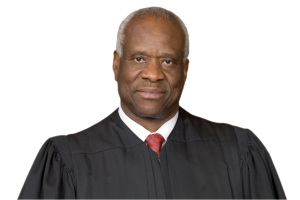
Clarence Thomas
Joined by Roberts, Sotomayor, Kagan, Gorsuch, Kavanaugh, Jackson, and Barrett.

Samuel A. Alito Jr.
Joined by Roberts, Sotomayor, Kagan, Gorsuch, Kavanaugh, Jackson, and Barrett.
The holding
The Second Circuit’s right-to-control theory cannot form the basis for a conviction under the federal fraud statutes because the right to control is not grounded in a traditional property interest. Justice Clarence Thomas authored the unanimous opinion of the Court. The federal wire fraud statute prohibits the use of interstate wires for “any scheme or orifice to defraud, or for obtaining money or property by means of false or fraudulent pretenses, representations, or promises.” When the statute was enacted, the common understanding of the verb “to defraud” related to property rights. Although lower courts have interpreted the statute to include interests unconnected to traditional property rights, the Supreme Court in McNally v. United States, 483 U.S. 350 (1987), held that the statutes protect only individual property rights. The right-to-control theory has no roots in a traditional property interest and thus cannot be the basis for a conviction under the federal fraud statutes.
Argued by
- Michael R. Dreeben for the Petitioner
- Eric J. Feigin for the Respondent
Case path
- Jun 30, 2022 granted
- Nov 28, 2022 argued
- May 11, 2023 decided