Mallory v. Norfolk Southern Railway Co.
Petitioner Robert Mallory · Respondent Norfolk Southern Railway Co.
- Reporter
- 600 U.S. ___ (2023)
- From
- Supreme Court of Pennsylvania
- How it got here
- writ of <i>certiorari</i>
Does a state registration statute for out-of-state corporations that purports to confer general personal jurisdiction over the registrant violate the Due Process Clause of the Fourteenth Amendment?
Question before the CourtWhat happened
Robert Mallory sued Norfolk Southern Railway Co. in the Philadelphia County Court of Common Pleas for claims arising under the Federal Employer’s Liability Act (FELA). According to his complaint, Mallory was exposed to harmful carcinogens while employed by Defendant in Ohio and Virginia between 1988 through 2005. He did not allege that he suffered any harmful occupational exposures in Pennsylvania but sued in Pennsylvania court on a theory that the court could exercise jurisdiction over the Virginia company because it had registered to do business in Pennsylvania. Under Pennsylvania law, a foreign corporation “may not do business in this Commonwealth until it registers” with the Department of State of the Commonwealth. State law further establishes that registration constitutes a sufficient basis for Pennsylvania courts to exercise general personal jurisdiction over that foreign corporation. Norfolk Southern Railway objected to the exercise of personal jurisdiction, arguing that the exercise violated the Due Process Clause of the Fourteenth Amendment. The trial court agreed and held Pennsylvania’s statutory scheme unconstitutional. The Pennsylvania Supreme Court affirmed.
Cross-aisle coalition.
The split did not track the usual ideological lines — justices from both wings landed on the same side.
The opinions 4
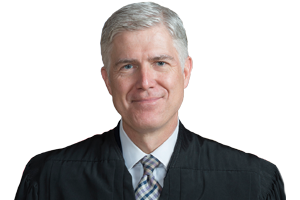
Neil Gorsuch
Joined by Thomas and Sotomayor.

Ketanji Brown Jackson
Joined by Thomas and Sotomayor.
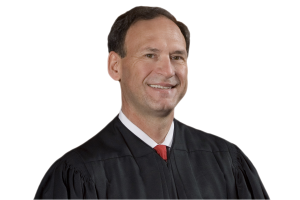
Samuel A. Alito Jr.
Joined by Thomas and Sotomayor.

Amy Coney Barrett
Joined by Roberts, Kagan, and Kavanaugh.
The holding
A Pennsylvania law requiring out-of-state companies that register to do business in Pennsylvania to agree to appear in Pennsylvania courts on “any cause of action” against them comports with the Due Process Clause. Justice Neil Gorsuch authored the main opinion of the Court. The outcome in this case is controlled by the Court’s decision in Pennsylvania Fire Insurance Co. v. Gold Issue Mining & Milling Co., 243 U.S. 93 (1917), which held that suits based on the defendant’s consent to jurisdiction do not deny the defendant due process of law. The Pennsylvania Supreme Court concluded otherwise based on its erroneous belief that the Court had “implicitly overruled Pennsylvania Fire in International Shoe Co. v. Washington, 326 U.S. 310 (1945). However, rather than displace Pennsylvania Fire, International Shoe merely paved an additional road to jurisdiction over out-of-state corporations. Thus, the facts of this case fall squarely within Pennsylvania Fire, and there is no due process violation. Justice Ketanji Brown Jackson authored a concurring opinion noting another precedent, Insurance Corp. of Ireland v. Compagnie des Bauxites de Guinee, 456 U.S. 694 (1982), which she finds “particularly instructive.” Justice Samuel Alito authored an opinion concurring in part and concurring in the judgment. Justice Alito agreed with the plurality that exercising jurisdiction pursuant to the state registration statute does not violate the Due Process Clause, but he opined that the statute might be unconstitutional on other grounds not before the Court. Justice Amy Coney Barrett authored a dissenting opinion, in which Chief Justice John Roberts and Justices Elena Kagan and Brett Kavanaugh joined, arguing that compelled state registration does not constitute “consent.”
Argued by
- Ashley C. Keller for the Petitioner
- Carter G. Phillips for the Respondent
- Curtis E. Gannon for the United States, as amicus curiae, supporting the Respondent
Case path
- Apr 25, 2022 granted
- Nov 8, 2022 argued
- Jun 27, 2023 decided