Wilkins v. United States
Petitioner Larry Steven Wilkins, et al. · Respondent United States
- Reporter
- 598 U.S. ___ (2023)
- From
- United States Court of Appeals for the Ninth Circuit
- How it got here
- writ of <i>certiorari</i>
Is the Quiet Title Act’s statute of limitations a jurisdictional requirement or a claim-processing rule?
Question before the CourtWhat happened
Robbins Gulch Road runs between Highway 93 and the Bitterroot National Forest, crossing the private properties of Larry Wilkins and Jane Stanton near Connor, Montana. The previous owners of each of their properties had granted the United States an easement for Robbins Gulch Road in 1962. In 2018, Wilkins and Stanton sued the United States under the Quiet Title Act (QTA) to confirm that the easement does not permit public use of the road and to enforce the government’s obligations to patrol and maintain the road against unrestricted public use. The district court granted the federal government’s motion to dismiss for lack of subject-matter jurisdiction, and the U.S. Court of Appeals for the Ninth Circuit affirmed.
Cross-aisle coalition.
The split did not track the usual ideological lines — justices from both wings landed on the same side.
The opinions 2
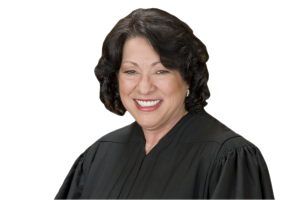
Sonia Sotomayor
Joined by Kagan, Gorsuch, Kavanaugh, Barrett, and Jackson.
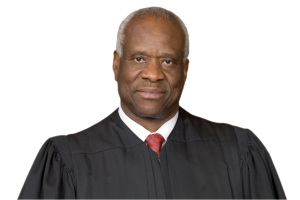
Clarence Thomas
Joined by Roberts and Alito.
The holding
The Quiet Title Act’s 12-year statute of limitations is a claim-processing rule, not a jurisdictional requirement. Justice Sonia Sotomayor authored the 6-3 majority opinion of the Court holding that Wilkins's and Stanton's lawsuit may proceed. Jurisdictional rules tend to disrupt litigation, whereas procedural rules (including claim-processing rules) seek to facilitate the litigation process. Given the risk of disruption and waste that accompanies the jurisdictional label, courts will view a procedural requirement as jurisdictional only if Congress “clearly states” that it is. As a general rule, most statutes of limitations are nonjurisdictional. The 12-year statute of limitations described in 28 U.S.C. § 2409a(g) lacks a jurisdictional clear statement, and nothing in its text or context supports departing from the general rule that statutes of limitations are nonjurisdictional. Nor do any of the three cases the government cites definitively interpreted Section 2409a(g) as jurisdictional. Thus, the provision at issue is a claim-processing rule, not a jurisdictional one. Justice Clarence Thomas dissented, arguing that the Court has long treated conditions on waivers of sovereign immunity, such as the one at issue in this case, as jurisdictional, and he would recognize the Court’s precedents as resolving the question.
Argued by
- Jeffrey W. McCoy for the Petitioners
- Benjamin W. Snyder for the Respondent
Case path
- Jun 6, 2022 granted
- Nov 30, 2022 argued
- Mar 28, 2023 decided