Students for Fair Admissions v. President and Fellows of Harvard College
Petitioner Students for Fair Admissions, Inc. · Respondent President & Fellows of Harvard College
- Reporter
- 600 U.S. ___ (2023)
- From
- United States Court of Appeals for the First Circuit
- How it got here
- writ of <i>certiorari</i>
May institutions of higher education use race as a factor in admissions? If so, does Harvard College’s race-conscious admissions process violate Title VI of the Civil Rights Act of 1964?
Question before the CourtWhat happened
Petitioner Students for Fair Admissions (SFFA) sued Harvard College over its admissions process, alleging that the process violates Title VI of the Civil Rights Act of 1964 by discriminating against Asian American applicants and white applicants in favor of “underrepresented” minority applicants. Harvard admits that it uses race as one of many factors in its admissions process but argues that its process adheres to the requirements for race-based admissions outlined in the Supreme Court’s decision in Grutter v. Bollinger. After a 15-day bench trial, the district court issued a detailed opinion in favor of Harvard. SFFA appealed, and the U.S. Court of Appeals for the First Circuit affirmed. The case was originally consolidated for oral argument with a similar case challenging the admissions policies at the University of North Carolina under the Fourteenth Amendment of the Constitution, but the Court severed the cases.
6–0.
A narrow margin — the Court split hard on this one. Read the concurrences carefully.
The opinions 5

John G. Roberts Jr.
Joined by Alito and Barrett.
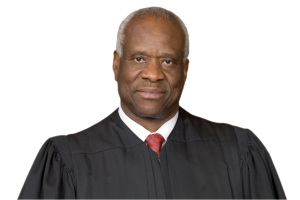
Clarence Thomas
Joined by Alito and Barrett.
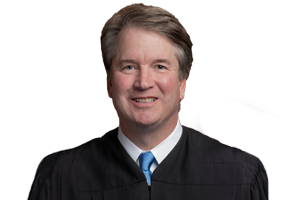
Brett M. Kavanaugh
Joined by Alito and Barrett.
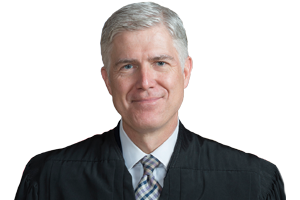
Neil Gorsuch
Joined by Alito and Barrett.

Sonia Sotomayor
Joined by Kagan and Jackson.
The holding
The Harvard admissions program violates the Equal Protection Clause of the Fourteenth Amendment. Chief Justice John Roberts authored the 6-3 majority opinion. First, the Court concluded that Students for Fair Admissions (SFFA) had organizational standing because it is a voluntary membership organization with identifiable members who support its mission and whom SFFA represents in good faith. Second, while the original purpose of the Fourteenth Amendment's Equal Protection Clause was to ensure that laws apply equally to everyone, regardless of race, both the Supreme Court and the nation failed to uphold this principle, most notably in Plessy v. Ferguson, which sanctioned “separate but equal” facilities. However, the landmark case Brown v. Board of Education overturned this, and the equal protection principle has since expanded to various areas of life. Any exceptions to equal protection must satisfy “strict scrutiny”; that is, the government must show that the racial classification serves a compelling interest and is narrowly tailored to achieve that interest. In Regents of the University of California v. Bakke, Justice Lewis Powell’s opinion became the touchstone for evaluating the constitutionality of race-based admissions, reasoning that diversity in the student body could be a “compelling state interest,” but that race could only be used as a “plus” in admissions and not as a quota. In Grutter v. Bollinger, the Court adopted Powell's viewpoint, while also setting limits to ensure race-based admissions did not result in stereotyping or harm to non-minority applicants, and stating that such race-based programs should eventually come to an end. Harvard’s (and UNC’s, in the consolidated case) race-based admissions systems fail to meet the strict scrutiny, non-stereotyping, and termination criteria established by Grutter and Bakke. Specifically, the universities could not demonstrate their compelling interests in a measurable way, failed to avoid racial stereotypes, and did not offer a logical endpoint for when race-based admissions would cease. As a result, the programs violate the Equal Protection Clause of the Fourteenth Amendment. However, the Court noted that nothing prohibits universities from considering an applicant’s discussion of how race affected the applicant’s life, so long as that discussion is concretely tied to a quality of character or unique ability that the particular applicant can contribute to the university. Justices Clarence Thomas, Neil Gorsuch, and Brett Kavanaugh each wrote a concurring opinion. Justice Sonia Sotomayor wrote a dissenting opinion, in which Justices Elena Kagan and Ketanji Brown Jackson joined (except Justice Jackson took no part in the consideration or decision of the case against Harvard).
Argued by
- Cameron T. Norris for the Petitioner
- Seth P. Waxman for the Respondent
- Elizabeth B. Prelogar for the United States, as amicus curiae, supporting the Respondent
Case path
- Jan 24, 2022 granted
- Oct 31, 2022 argued
- Jun 29, 2023 decided