Ramirez v. Collier
Petitioner John H. Ramirez · Respondent Bryan Collier, Executive Director, Texas Department of Criminal Justice, et al.
- Reporter
- 595 U.S. ___ (2022)
- From
- United States Court of Appeals for the Fifth Circuit
- How it got here
- writ of <i>certiorari</i>
Does Texas’s decision to allow Ramirez’s pastor to enter the execution chamber but not to lay hands on the parishioner as he dies, sing, pray, or read scripture violate the Free Exercise Clause of the First Amendment or the Religious Land Use and Institutionalized Persons Act?
Question before the CourtWhat happened
State laws differ and have vacillated as to whether and to what extent spiritual advisers may be present in the execution chamber. In 2019, the Court upheld Alabama’s refusal to allow an imam present at the execution of a Muslim man, even though the state at the time permitted a Christian chaplain to be present. A month later, the Court prohibited Texas from executing a Buddhist inmate unless he was allowed to have a Buddhist priest present. As a result, Texas passed a law prohibiting all spiritual advisers from the execution chamber but then after another legal challenge reversed course to allow their presence. The Court subsequently prohibited another Alabama death-row inmate’s execution without his pastor present, so the state executed him eight months later with his pastor at his side, praying with him and touching his leg. John Ramirez, a Texas death-row inmate, brought a lawsuit asking that he be permitted to have his pastor present at his execution and that his pastor be allowed to pray audibly and touch him while he is being executed.
Unanimous.
All nine justices agreed on the outcome. Concurrences may differ on reasoning, but the Court spoke with one voice on the judgment.
The opinions 4
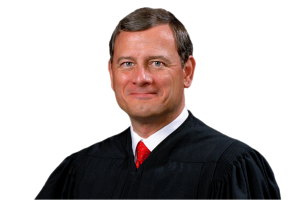
John G. Roberts Jr.
Joined by Alito, Breyer, Gorsuch, Barrett, and Kagan.
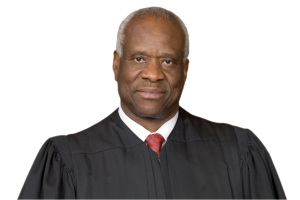
Clarence Thomas
Alone.

Sonia Sotomayor
Joined by Alito, Breyer, Gorsuch, Barrett, and Kagan.
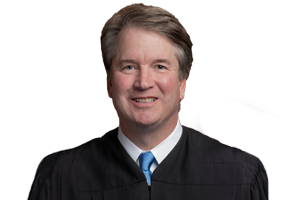
Brett M. Kavanaugh
Joined by Alito, Breyer, Gorsuch, Barrett, and Kagan.
The holding
Texas’s restrictions on religious touch and audible prayer in the execution chamber violate the Religious Land Use and Institutionalized Persons Act (RLUIPA) because they burden religious exercise and are not the least restrictive means of furthering the State’s compelling interests. Chief Justice John Roberts authored the 8-1 majority opinion holding that Ramirez satisfied the test for a preliminary injunction and reversing the court below. As a threshold matter, Ramirez properly exhausted his administrative remedies before seeking a judicial remedy. As to the merits, Ramirez satisfied all of the requirements of a preliminary injunction—likelihood of success on the merits, risk of irreparable harm, and balance of equities and public interest. First, Ramirez demonstrated a likelihood of success on the merits. RLUIPA prohibits the state from imposing a substantial burden on an inmate unless imposition of that burden is the least restrictive means of achieving a compelling government interest. Texas’s ban on audible prayer and touch imposed a substantial burden on Ramirez because the laying on of hands and prayer are significant parts of his religious exercise. Although the state has compelling interests in monitoring an inmate’s condition during the lethal injection process and in preventing disruptions in the execution chamber, the State failed to show that its refusal to grant Ramirez’s request is the least restrictive means of achieving those interests. Further, even though the State has compelling interests in security in the execution chamber, preventing unnecessary suffering of the prisoner, and avoiding further emotional trauma to the victim’s family members, it failed to show that a categorical ban on touch is the least restrictive means of accomplishing any of these goals. Second, Ramirez is likely to suffer irreparable harm because without injunctive relief, he would be prohibited from engaging in protected religious exercise in the final moments of his life. Finally, the balance of equities and public interest tilt in Ramirez’s favor because it is possible to accommodate Ramirez’s sincere religious beliefs without delaying or impeding his execution. Justice Sonia Sotomayor joined the majority opinion in full but wrote a separate concurring opinion to underscore the importance of the legal obligation of prison officials to set clear grievance processes. Justice Brett Kavanaugh also joined the majority opinion in full but wrote a separate concurring opinion to point out the need for states to treat all religions equally; to highlight how difficult it is under RLUIPA to determine whether a state interest is “compelling” and whether a particular rule is the “least restrictive means”; and to call upon states to clarify their processes to ensure efficient executions in the future. Justice Clarence Thomas dissented, arguing that Ramirez was simply seeking to further delay his execution and that his claims either do not warrant equitable relief or are procedurally barred.
Argued by
- Seth Kretzer for the Petitioner
- Judd E. Stone, II for the Respondents
- Eric J. Feigin for the United States, as amicus curiae, supporting neither party
Case path
- Sep 8, 2021 granted
- Nov 9, 2021 argued
- Mar 24, 2022 decided