Morgan v. Sundance
Petitioner Robyn Morgan · Respondent Sundance, Inc.
- Reporter
- 596 U.S. ___ (2022)
- From
- United States Court of Appeals for the Eighth Circuit
- How it got here
- writ of <i>certiorari</i>
Does the arbitration-specific requirement that the proponent of a contractual waiver defense prove prejudice violate the Supreme Court’s instruction that lower courts must “place arbitration agreements on an equal footing with other contracts”?
Question before the CourtWhat happened
In September 2018, Robyn Morgan sued Sundance, Inc. for violations of the Fair Labor Standards Act, alleging that Sundance failed to pay her for overtime work. The district court denied Sundance’s motion to dismiss. Sundance then answered Morgan's complaint but did not assert its right to arbitrate Morgan's claims. After filing its answer, Morgan participated in a settlement mediation with plaintiffs in another similar lawsuit in Michigan. The Michigan case settled, but Morgan's case moved forward. Nearly eight months after the filing of Morgan's complaint, Sundance moved to compel arbitration. The district court denied the motion, concluding Sundance's participation in the litigation waived its right to arbitration. The U.S. Court of Appeals for the Eighth Circuit reversed.
Unanimous.
All nine justices agreed on the outcome. Concurrences may differ on reasoning, but the Court spoke with one voice on the judgment.
The opinions 1
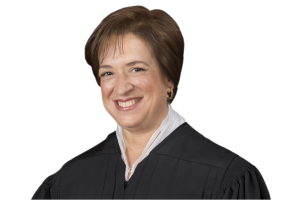
Elena Kagan
Joined by Roberts, Thomas, Breyer, Alito, Sotomayor, Gorsuch, Kavanaugh, and Barrett.
The holding
Federal courts may not adopt an arbitration-specific rule conditioning a waiver of the right to arbitrate on a showing of prejudice. Justice Elena Kagan authored the unanimous opinion of the Court. Outside of the arbitration context, a federal court assessing whether a party has waived a right does not generally ask about prejudice. Rather, waiver is “the intentional relinquishment or abandonment of a known right.” It focuses on the actions of the person who held the right, not the effects on the opposing party. Although the FAA may express policy favoring arbitration, that policy does not authorize federal courts to invent special arbitration-preferring procedural rules. Federal courts thus may not adopt an arbitration-specific rule requiring that a party show prejudice in order to prevail on a claim of waiver.
Argued by
- Karla A. Gilbride for the Petitioner
- Paul D. Clement for the Respondent
Case path
- Nov 15, 2021 granted
- Mar 21, 2022 argued
- May 23, 2022 decided