Patel v. Garland
Petitioner Pankajkumar S. Patel, et al. · Respondent Merrick B. Garland, Attorney General
- Reporter
- 596 U.S. ___ (2022)
- From
- United States Court of Appeals for the Eleventh Circuit
- How it got here
- writ of <i>certiorari</i>
Does 8 U.S.C. § 1252(a)(2)(B)(i) preserve the jurisdiction of federal courts to review a nondiscretionary determination that a noncitizen is ineligible for certain types of discretionary relief?
Question before the CourtWhat happened
Pankajkumar Patel is a citizen of India who entered the United States without inspection. In 2012, the Department of Homeland Security charged Patel as removable for being present without inspection. At a hearing, Patel conceded that he was removable but sought discretionary relief from removal on the grounds that he had an approved I-140 employment authorization document. To be eligible for discretionary relief from removal, a noncitizen must show, among other things, “clearly and beyond doubt” that he is not inadmissible. However, Patel’s admissibility is in doubt because, when he applied for a Georgia driver’s license in 2008, he falsely represented himself when he checked a box indicating he is a U.S. citizen. At his removal hearing, Patel argued that it was simply a mistake and was immaterial since citizenship was not required to obtain the driver’s license. The immigration judge (IJ) rejected Patel’s arguments and denied his application for adjustment of status. The Board of Immigration Appeals affirmed, finding no clear error in the factual findings. A panel of the U.S. Court of Appeals for the Eleventh Circuit held that it lacked jurisdiction to review the factual findings of the IJ, based on 8 U.S.C. § 1252(a)(2)(B), which provides that “no court shall have jurisdiction to review” “any judgment regarding the granting of relief” for certain enumerated categories of discretionary relief, including the relief for which Patel applied.
5–0.
A narrow margin — the Court split hard on this one. Read the concurrences carefully.
The opinions 2

Amy Coney Barrett
Joined by Roberts, Thomas, Alito, and Kavanaugh.
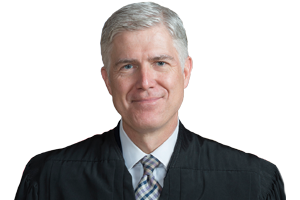
Neil Gorsuch
Joined by Breyer, Sotomayor, and Kagan.
The holding
Federal courts lack jurisdiction to review facts found as part of any judgment relating to the granting of discretionary-relief in immigration proceedings enumerated under 8 U.S.C. §1252(a)(2)(B)(i). Justice Amy Coney Barrett authored the 5-4 majority opinion of the Court. Section 1252(a)(2)(B)(i) strips courts of jurisdiction to review “any judgment regarding the granting of relief” under § 1255. Best understood, the word “judgment” in that phrase refers to any authoritative decision relating to the granting or denying of discretionary relief. Although this interpretation prohibits review of some factual determinations made in the discretionary-relief context that would be reviewable if made elsewhere in removal proceedings, that distinction reflects Congress’s choice to provide reduced procedural protection for discretionary relief. Justice Neil Gorsuch authored a dissenting opinion, in which Justices Stephen Breyer, Sonia Sotomayor, and Elena Kagan joined. Justice Gorsuch argued that the majority’s opinion permits a bureaucratic factual mistake to have life-changing consequences for an immigrant applying for legal residency and is an assertion of “raw administrative power” that neither the agency nor the Executive Branch endorses.
Argued by
- Mark C. Fleming for the Petitioners
- Austin L. Raynor for the Respondent supporting reversal
- Taylor A.R. Meehan for the judgment below
Case path
- Jun 28, 2021 granted
- Dec 6, 2021 argued
- May 16, 2022 decided