United States v. Zubaydah
Petitioner United States · Respondent Zayn al-Abidin Muhammad Husayn, aka Abu Zubaydah, et al.
- From
- United States Court of Appeals for the Ninth Circuit
- How it got here
- writ of <i>certiorari</i>
Did the U.S. Court of Appeals for the Ninth Circuit err in rejecting the federal government’s assertion of the state-secrets privilege based on its own assessment of the potential harms to national security that would result from disclosure of information pertaining to clandestine CIA activities?
Question before the CourtWhat happened
Zayn Husayn, also known as Abu Zubaydah, is a former associate of Osama bin Laden. U.S. military forces captured him in Pakistan and detained him abroad before moving him to the detention facility at Guantanamo Bay, where he is currently being held. Zubaydah alleged that, before being transferred to Guantanamo, he was held at a CIA “dark site” in Poland, where two former CIA contractors used “enhanced interrogation techniques” against him. Zubaydah intervened in a Polish criminal investigation into the CIA’s conduct in that country, and he sought to compel the U.S. government to disclose evidence connected with that investigation. The government has declassified some information about Zubaydah’s treatment in CIA custody, but it has asserted the state-secrets privilege to protect other information. The U.S. Court of Appeals for the Ninth Circuit rejected the government’s assertion of state-secrets privilege based on its own assessment of potential harms to national security and allowed discovery in the case to proceed.
Cross-aisle coalition.
The split did not track the usual ideological lines — justices from both wings landed on the same side.
The opinions 4
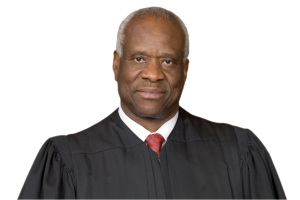
Clarence Thomas
Joined by Breyer, Roberts, Barrett, and Alito.
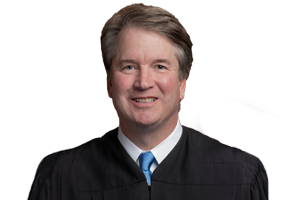
Brett M. Kavanaugh
Joined by Breyer, Roberts, Barrett, and Alito.
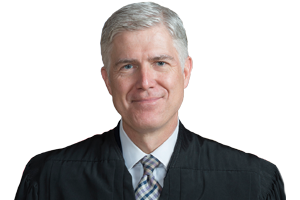
Neil Gorsuch
Joined by Sotomayor.
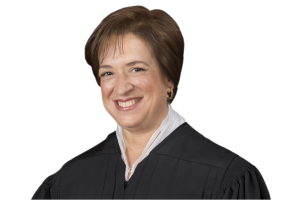
Elena Kagan
Joined by Breyer, Roberts, Barrett, and Alito.
The holding
The Ninth Circuit erred in holding, based on its own assessment, that the state secrets privilege did not apply to information that could confirm or deny the existence of a CIA detention site in Poland. Justice Stephen Breyer authored the 7-2 majority opinion. To invoke the state secrets privilege, the government must show a reasonable danger of harm to national security. In a declaration supporting its claim of privilege, the Government submitted a declaration from the Director of the CIA stating that a response to the discovery requests would significantly harm our national security interests by confirming or denying the existence of a CIA detention site in Poland. Although some publicly available sources claim that such a site exists, the CIA has made no official statement. The specific language of Zubaydah’s discovery requests would elicit information that tends to confirm or deny the existence of such a site, so the government is entitled to invoke the state secrets privilege in response to those requests. Justice Breyer, writing on behalf of himself, Chief Justice John Roberts, and four other Justices, would dismiss the application for discovery. Justice Clarence Thomas authored an opinion concurring in part and concurring in the judgment, in which Justice Samuel Alito joined. Justice Thomas argued that Zubaydah’s “dubious” need for discovery requires dismissal of his discovery application regardless of the government’s reasons for invoking the state secrets privilege. Justice Brett Kavanaugh authored an opinion concurring in part, in which Justice Amy Coney Barrett joined. Justice Kavanaugh clarified the process by which a court assesses invocation of the state secrets privilege, with great deference to the Executive Branch. Justice Elena Kagan authored an opinion concurring in part and dissenting in part, arguing that even when the government meets its burden of showing a “reasonable danger” of harm to national security (as she agreed it did in this case), that does not require dismissal of the case. Rather, it is possible to segregate the classified location information from the unclassified treatment information and allow discovery of the latter. Justice Neil Gorsuch authored a dissenting opinion, in which Justice Sonia Sotomayor joined. Justice Gorsuch pointed out that the events took place two decades ago and have since been declassified and the subject of numerous books, movies, and official reports. As such, while dismissing the suit might save the government “embarrassment,” doing so will not “safeguard any secret.”
Argued by
- Brian H. Fletcher for the Petitioner
- David F. Klein For the Respondents
Case path
- Apr 26, 2021 granted
- Oct 6, 2021 argued
- Mar 3, 2022 decided